

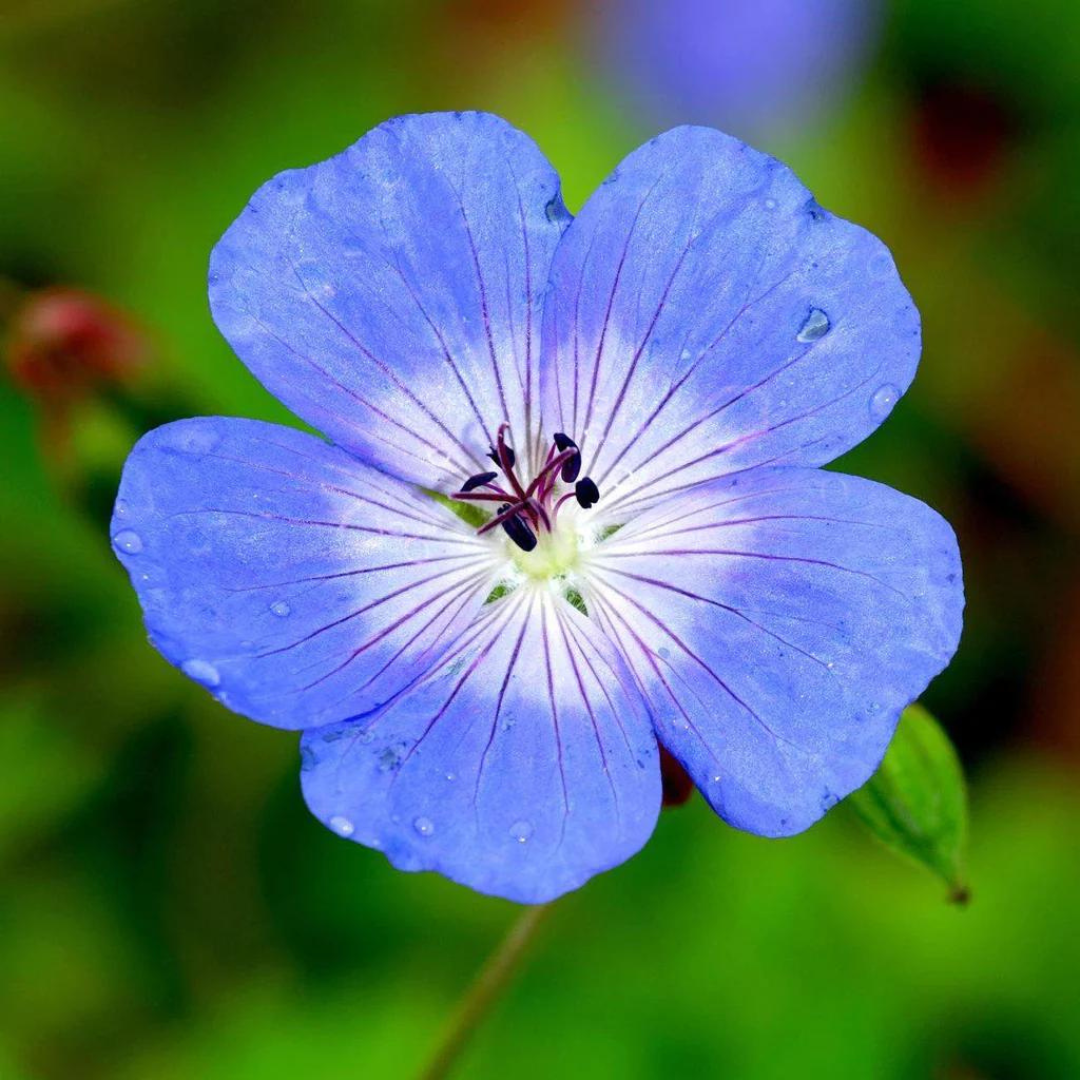
Geranium 'Johnson's Blue'
- In stock, ready for delivery
Geranium 'Johnson's Blue': The Cottage Garden's Favourite Blue
Some plants need a pep talk. This one just shows up in that lavender-blue, darker veins and all, looking like the coolest shirt at the cottage. CLASSIC. CALM. NEVER OUT OF STYLE.
Plant Characteristics:
- Botanical Name: Geranium × johnsonii 'Johnson's Blue'
- Common Name: Cranesbill, Hardy Geranium
- Height: 30–60 cm (1–2 ft)
- Spread: 60–75 cm (24–30 in)
- Flowers: Lavender-blue with darker veins, about 5 cm (2 in) across
- Bloom Time: Early to midsummer (June to July)
- Foliage: Deeply lobed, medium green leaves in a loose mound
- Features: Rabbit resistant, good for cutting
Where to Plant: Use it at the front or middle of a cottage-style border or let it spill over a low wall, and it makes a useful filler as early bloomers fade. It is very hardy and handles most soils, including heavier clay, as long as it isn't waterlogged.
Companion Plants: Plant 'Johnson's Blue' in a sunny or part-shade cottage bed with peonies, pink spikes and a blue clematis. Paeonia 'Top Brass' opens ivory and canary bomb peonies at 80 cm in May and June. Veronica 'Perfectly Picasso' adds pink spikes at 56 to 66 cm in July and August. Clematis 'Stand by Me' brings nodding blue bells at 86 to 97 cm from June to August. Miscanthus 'Purpurascens' rises behind at 120 to 180 cm, turning red-orange in fall.
Plant Care: Plant in full sun to part sun, in average, well-drained soil that stays a little moist. In hot spots, afternoon shade keeps the leaves fresh. Water regularly the first season and during dry spells. After the main bloom, the stems can flop. Cut the plant back hard. It quickly makes a fresh mound of leaves and sometimes a few more flowers. Divide every few years in spring or fall to keep it vigorous.
History: 'Johnson's Blue' is a hybrid between the European meadow cranesbill, Geranium pratense, and Geranium himalayense from the Himalayas. It was selected from seedlings grown by A.T. Johnson and introduced around 1950 by B. Ruys of the Royal Moerheim Nursery in the Netherlands.
Final Thoughts: Cut a few for the table, then watch the rabbits sulk off empty-handed. BLUE MOOD, GOOD MOOD.