

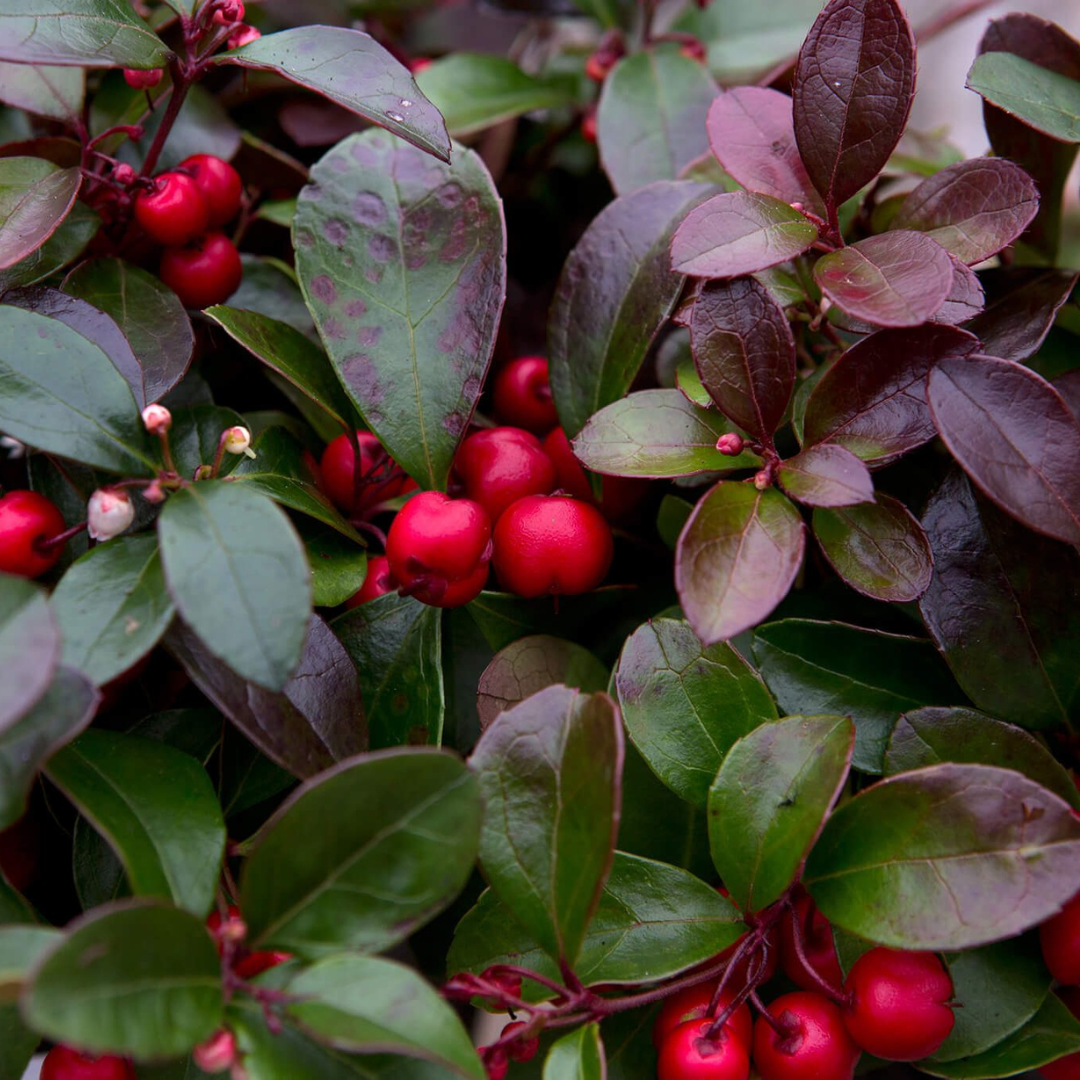
Gaultheria procumbens
- In stock, ready for delivery
Gaultheria procumbens: Red Berries and a Minty Secret
Wintergreen is a native that smells like the breath mint you forgot to pack. Glossy evergreen leaves, tiny pink-white bells, then scarlet berries just when the rest of the garden has gone to bed. MINTY FRESH, ALL WINTER LONG.
Plant Characteristics:
- Botanical Name: Gaultheria procumbens
- Common Name: Wintergreen, also called teaberry or checkerberry
- Height: 10–15 cm (4–6 in)
- Spread: 30 cm (12 in) or more, slowly creeping by underground stems
- Flowers: Small, nodding, white to pale pink bells, followed by round scarlet berries
- Bloom Time: Summer (June to August)
- Foliage: Glossy, oval, dark green and evergreen, turning reddish bronze in winter. Wintergreen-scented when crushed.
- Features: Evergreen, winter berries that feed birds and small wildlife
Where to Plant: Wintergreen belongs in woodland gardens and shady plantings with acidic soil. It makes a low, fine-textured edging along a shady path and is lovely tucked between rocks. Think of it as a slow, polite groundcover for a small area, not a fast lawn replacement.
Companion Plants: Plant wintergreen in a shady native woodland bed with acidic, leafy soil and other evergreen and woodland natives. Stylophorum diphyllum opens yellow wood poppies at 30 to 45 cm in May and June. Symphyotrichum cordifolium adds pale blue wood asters at 60 to 90 cm in September and October. Dryopteris filix-mas rises behind at 60 to 120 cm with upright fern fronds. Carex pensylvanica fills in at 15 to 30 cm with fine, arching blades.
Plant Care: Plant in part shade to full shade in acidic, humus-rich soil that stays evenly moist but drains well. Sandy or peaty soil amended with leaf mould or pine needles suits it. It sulks in heavy clay and in alkaline soil, so improve the planting area before it goes in. Water regularly through the first season and during dry spells. Mulch with shredded leaves or pine needles to keep the roots cool and moist. No cutting back is needed, since it is evergreen. It spreads slowly by underground stems. You can carefully separate rooted pieces in spring, but it is generally happiest left undisturbed.
History: Wintergreen is native to eastern North America, from Newfoundland and Manitoba south through the Appalachians, and its leaves contain methyl salicylate, the oil that gives wintergreen its scent and flavour. Indigenous peoples and early settlers used the leaves for tea, which is where the name teaberry comes from, and the oil was once distilled from the plant to flavour gum, candy and root beer.
Final Thoughts: Plant a carpet of it in the shade and let the birds raid the berry buffet. Crush a leaf whenever your date leans in. YOU'RE WELCOME.