

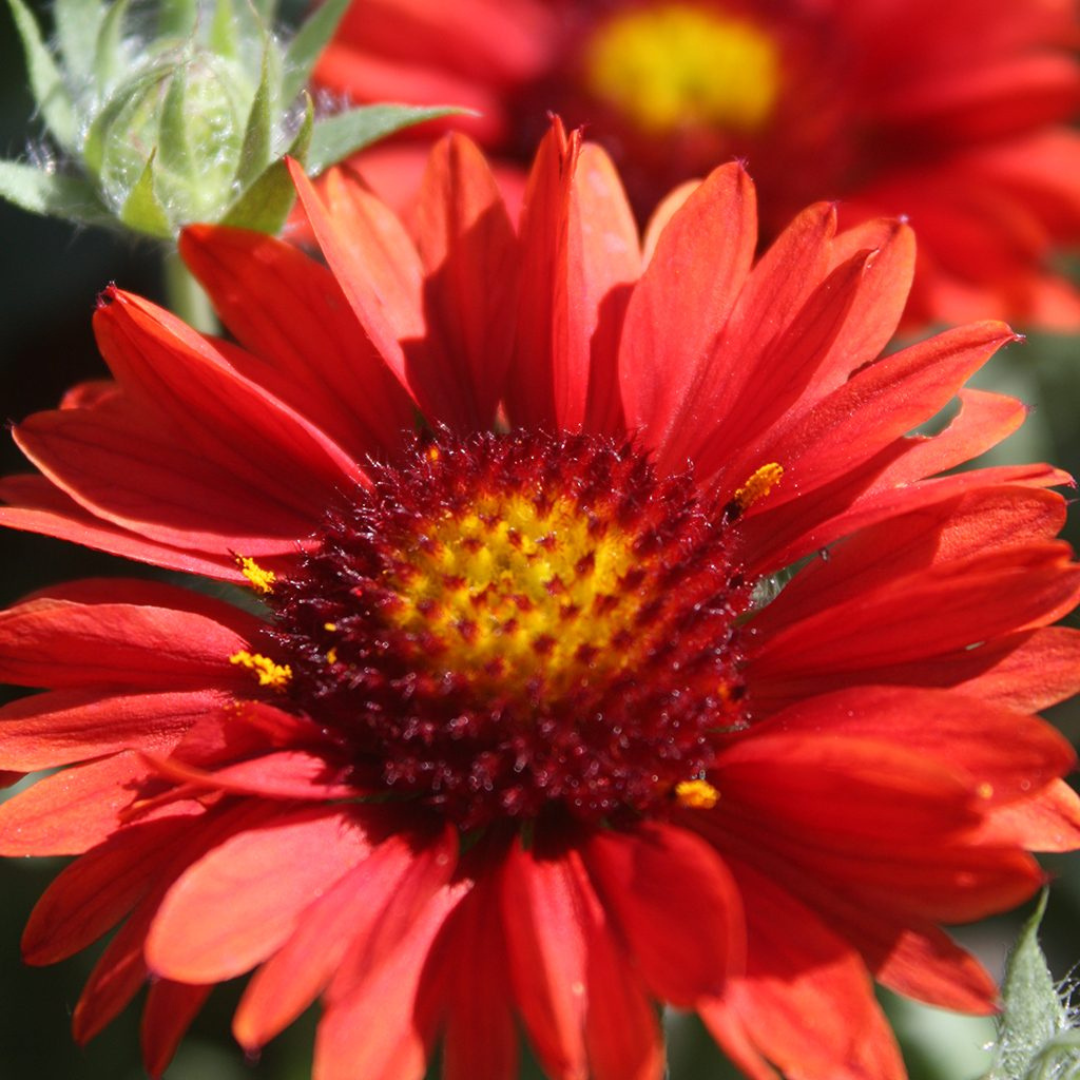
Gaillardia 'Arizona Red Shades'
- In stock, ready for delivery
Gaillardia 'Arizona Red Shades': Curbside-Tough Red Daisies
Crimson-red daisies with dark centres, and every so often one shows up with yellow tips like it ignored the dress code. 'Arizona Red Shades' loves sun and dry soil, acting like the desert is its HOME TURF.
Plant Characteristics:
- Botanical Name: Gaillardia aristata 'Arizona Red Shades'
- Common Name: Blanket Flower
- Series: Arizona series
- Height: 25–30 cm (10–12 in)
- Spread: 30 cm (12 in)
- Flowers: Large, crimson-red daisies with dark centres. About 20% show slight yellow tips.
- Bloom Time: Early summer to early fall (June to September)
- Foliage: Green, lance-shaped leaves in a low, well-branched mound
- Features: Salt tolerant
Where to Plant: Use it at the front of a sunny border, in rock gardens and gravel beds, along hot driveways and sidewalks, or in containers, and it is a staple of pollinator gardens. Because it tolerates salt, it is a good pick for the strip where winter road salt lands.
Companion Plants: Plant 'Arizona Red Shades' at the front of a sunny, dry bed with red catchfly, white phlox and tall yellow hollyhocks. Silene Forged By Fire™ adds bright red stars at 38 to 45 cm in May and June. Phlox Confetti Cake™ brings white and pink heads at 60 to 75 cm from June to August. Alcea 'Sunshine' rises at the back to 150 to 180 cm with yellow hollyhocks from July to September. Panicum 'Shenandoah' stands behind at 90 to 120 cm, its blades turning burgundy by fall.
Plant Care: Plant in full sun, in average to poor, well-drained soil. Don't enrich the soil. Rich soil and heavy watering make blanket flower floppy and shorter-lived. It doesn't tolerate heavy, wet clay, so add grit or plant in a raised spot if your soil stays wet. Water regularly through the first season, then only during long dry spells. Deadhead spent flowers to keep blooms coming, or leave some late-season seed heads for the birds. Blanket flowers are naturally short-lived. Cutting the plant back by about half in late summer, or dividing it every couple of years in spring, helps keep it going. Leave stems standing over winter and tidy them in spring.
History: Gaillardia aristata is native to the dry, open grasslands of western North America, including the Canadian prairies, and the genus is named for Gaillard de Charentonneau, an 18th-century French patron of botany. The Arizona series was bred to be compact and to flower in its first year.
Final Thoughts: Plant it in that blazing strip where the lawn gave up. THE DEAD ZONE JUST GOT A PULSE.