

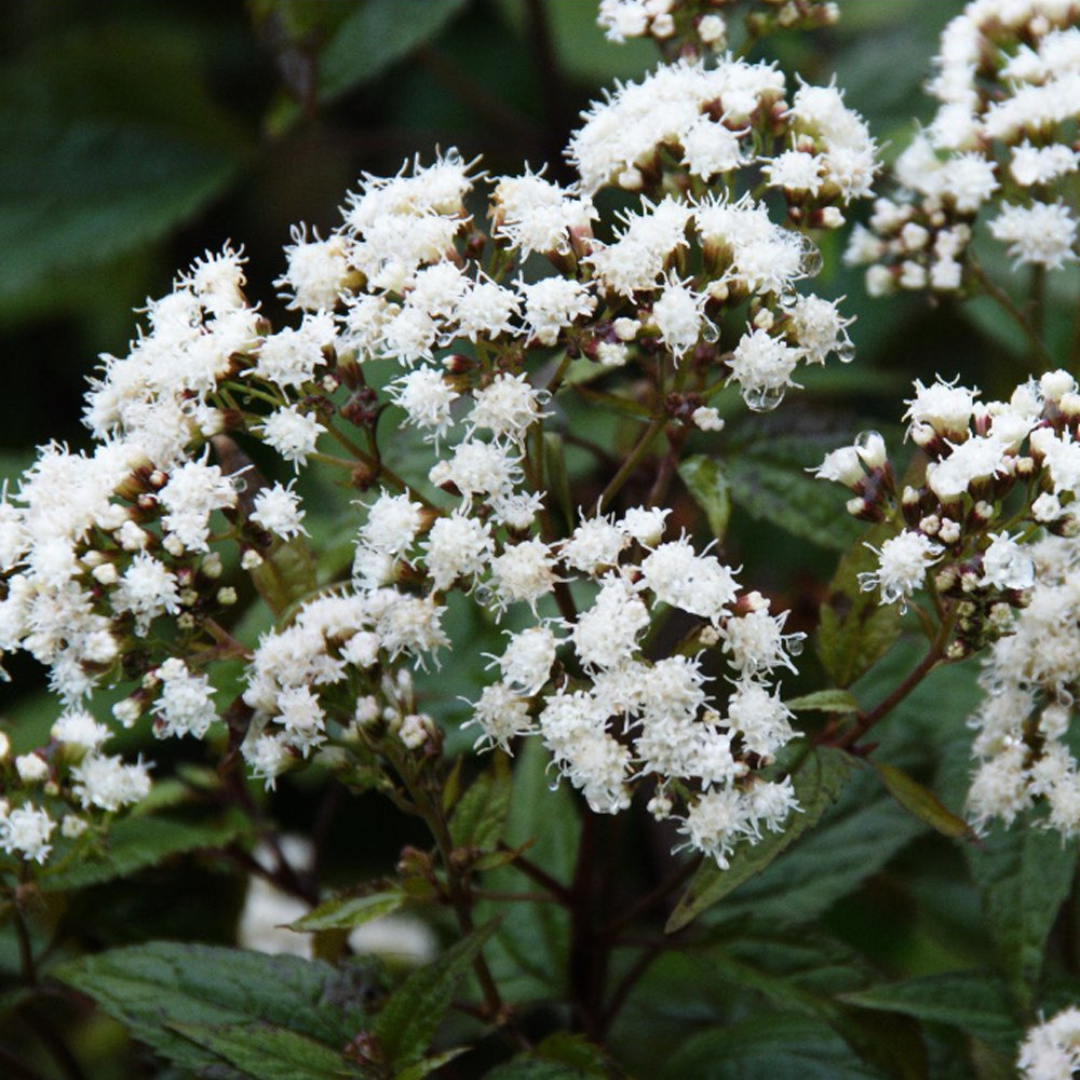
Eupatorium 'Chocolate'
- In stock, ready for delivery
Eupatorium 'Chocolate': Chocolate Leaves With a Lacy White Encore
Dark, purple-brown leaves that look like somebody dipped the whole plant in chocolate, then topped it with fluffy white flowers late in the season. 'Chocolate' is the dessert course of the garden. ZERO CALORIES, ALL INDULGENCE.
Plant Characteristics:
- Botanical Name: Ageratina altissima 'Chocolate' (sold as Eupatorium rugosum 'Chocolate')
- Common Name: White Snakeroot
- Height: 90–120 cm (3–4 ft)
- Spread: 60–90 cm (2–3 ft)
- Flowers: Fluffy, flat-topped clusters of small white flowers
- Bloom Time: Late summer to fall (August to October)
- Foliage: Toothed, purple-brown to bronze leaves on dark stems, darkest in spring and early summer and in sunnier spots, greening somewhat in heat
- Features: Selection of a species native to Ontario and Quebec
Where to Plant: Use it for contrast in the middle of a border, at a woodland edge, or in a naturalistic planting, where the dark leaves stand out and the white fall flowers light up a shady edge. It is toxic if eaten, so keep it out of pasture and livestock areas.
Companion Plants: Plant 'Chocolate' in a moist bed in sun or part shade where its dark leaves set off red and pink. Acorus 'Oborozuki' edges the front with golden, grass-like blades at 25 to 30 cm. Iris 'Snow Queen' opens ivory Siberian iris at 45 to 70 cm in May and June. Chelone obliqua adds rose-pink turtleheads at 60 to 90 cm in August and September. Hibiscus Summerific® 'Valentine's Crush' brings bright red blooms at 150 cm in July and August.
Plant Care: Plant in average, evenly moist, well-drained soil in full sun or part shade. A little afternoon shade helps in hot summers, though the foliage colour is richest with more sun. Water during dry spells, especially in the first year. It self-seeds readily, and seedlings are usually green-leaved. Deadhead after bloom if you want to keep the dark colour true and avoid volunteers. Cut the stems back in late fall or early spring, and divide crowded clumps in spring.
History: 'Chocolate' was selected at Mt. Cuba Center in Delaware from white snakeroot, a woodland wildflower native from the Great Plains east, including southern Ontario and Quebec, which botanists have since moved to Ageratina. In the 1800s, cattle that grazed white snakeroot passed a toxin into their milk, causing milk sickness in people who drank it.
Final Thoughts: Plant it where you need moody foliage and a late pollinator stop. SAVE ROOM FOR DESSERT.