

Echinacea 'Magnus Superior'
- In stock, ready for delivery
Echinacea 'Magnus Superior': A Darker, Bolder Sequel
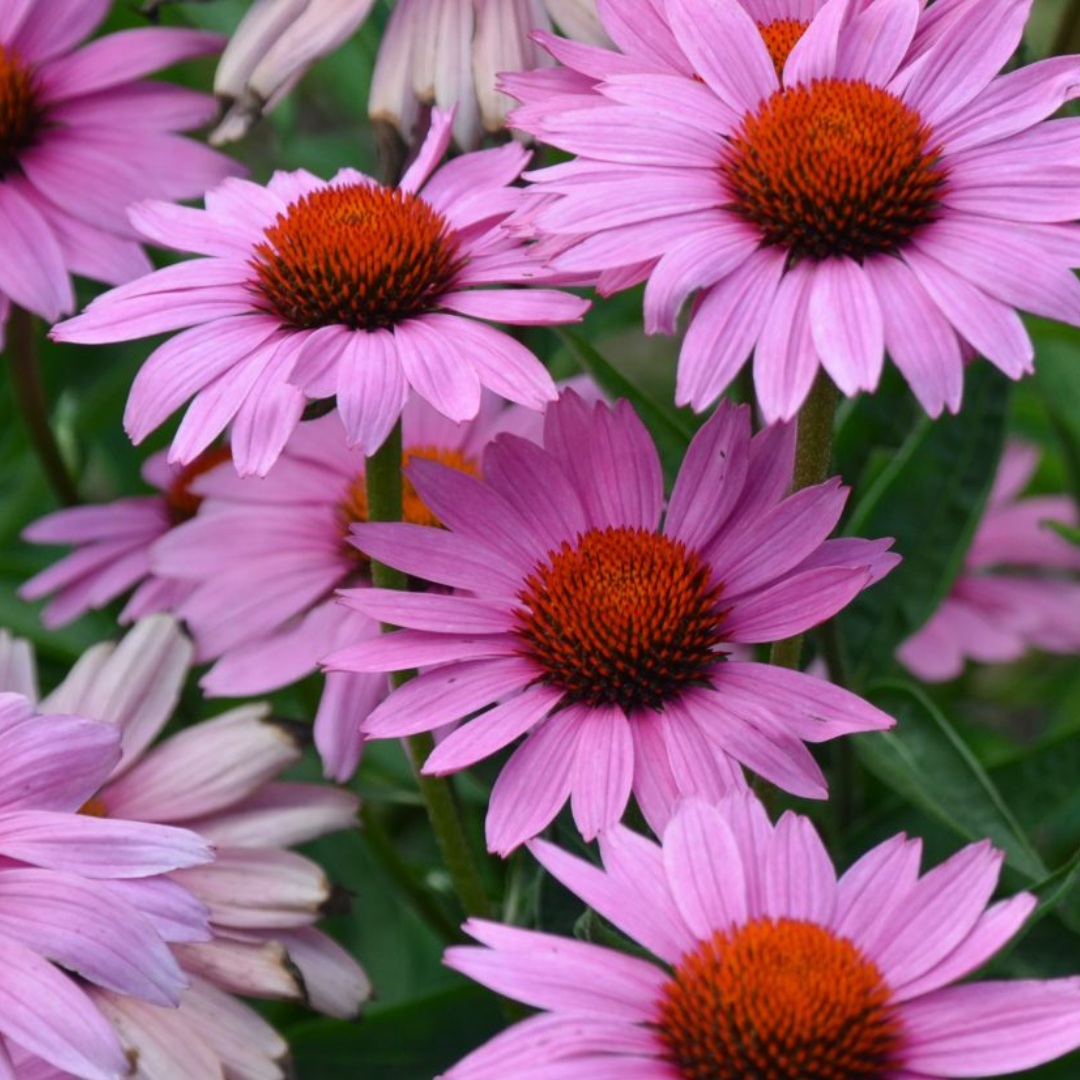
The original 'Magnus' was already a big deal. 'Magnus Superior' walked in with darker stems, deeper carmine-pink petals held perfectly flat, and the quiet arrogance of a sequel that's BETTER THAN THE FIRST ONE.
Plant Characteristics:
- Botanical Name: Echinacea purpurea 'Magnus Superior'
- Common Name: Coneflower
- Height: 90–100 cm (3–3.3 ft)
- Spread: 45–60 cm (18–24 in)
- Flowers: Large, deep carmine-pink daisies with flat, horizontal petals around an orange-brown cone
- Bloom Time: Midsummer to early fall (July to September)
- Foliage: Dark green, coarse leaves on dark stems, in an upright clump
- Features: Seed heads feed finches, good cut flower
Where to Plant: Plant it in the middle of a sunny border, in a pollinator garden or in a prairie-style bed. It is a strong cut flower, and the cones stay standing through winter for the birds.
Companion Plants: Plant 'Magnus Superior' in a sunny, dry bed with blue tufts in front and variegated iris beside it. Sedum acre carpets the edge at 3 to 10 cm with bright yellow stars in June and July. Dianthus 'Paint the Town Fancy' adds rosy fuchsia pinks at 15 to 20 cm from June to September. Iris pallida 'Albovariegata' brings cream-striped leaves and lavender-blue flowers at about 60 cm in May and June. Festuca 'Elijah Blue' adds powder-blue tufts at 20 to 30 cm.
Plant Care: Plant in full sun, or part sun with at least six hours of light, in average, well-drained soil. Skip the rich compost and heavy feeding, which make stems lean. Water regularly the first season, then only during long dry spells. Deadhead through summer to keep flowers coming. Let the last flowers go to seed in fall for finches and winter interest, then cut back in early spring. Divide every four years or so in spring if the clump gets crowded. It may self-seed a little.
History: Jelitto Perennial Seeds in Germany introduced 'Magnus Superior' in 2010 to mark the 25th anniversary of 'Magnus', the 1998 Perennial Plant of the Year®. Jelitto selected the new strain for darker flowers and stems and more consistent growth.
Final Thoughts: Plant it at the back where it can look down on everybody. THE FINCHES WILL DROP BY FOR THE SEEDS. LET THEM.