

Echinacea pallida
- In stock, ready for delivery
Echinacea pallida: Droopy Pale Petals With Prairie Swagger
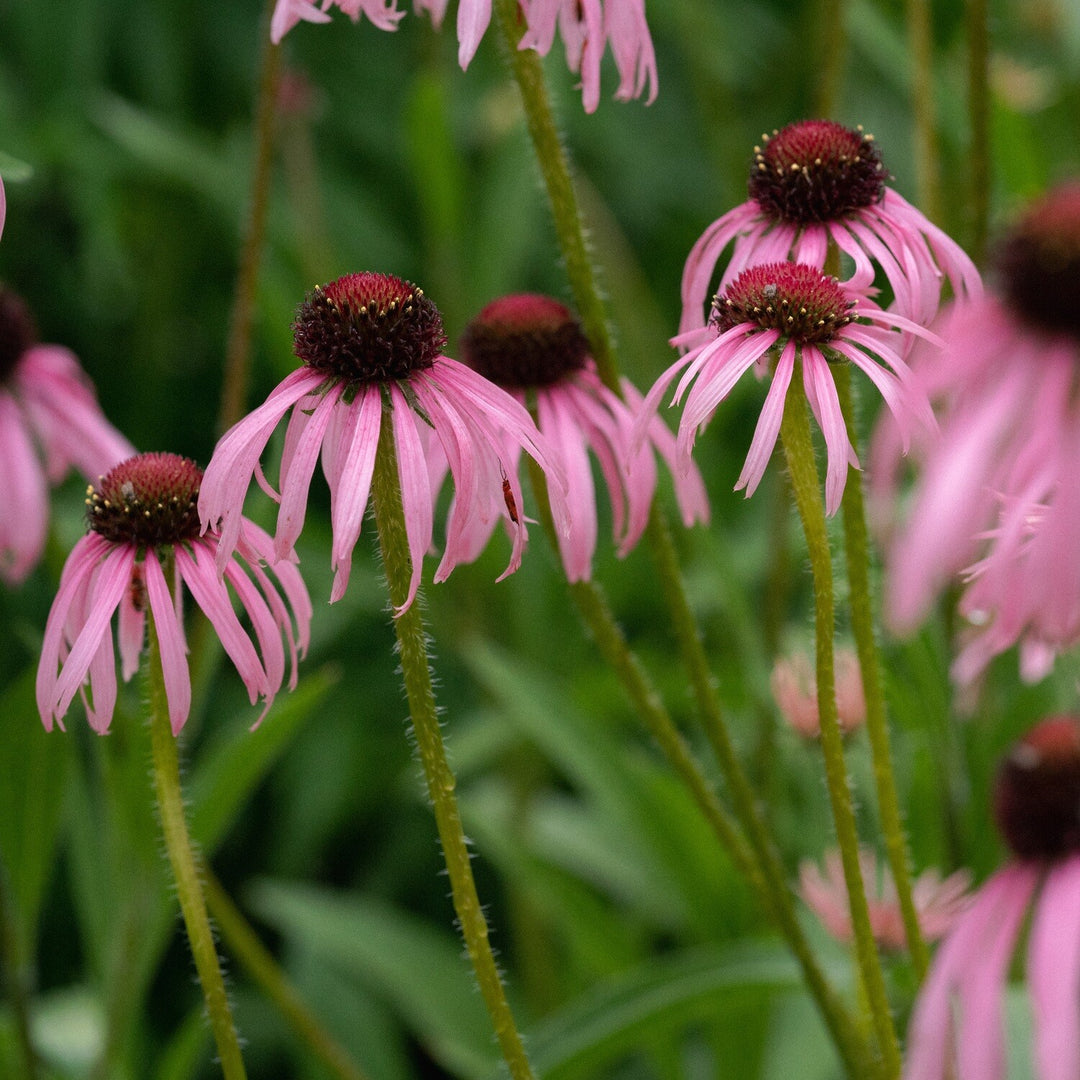
Long, skinny, drooping petals in pale pink, like a ballerina mid-swoon after a very dramatic second act. This coneflower is all elegance on top and pure grit below, shrugging off drought like a minor inconvenience. A DIVA WITH A WORK ETHIC.
Plant Characteristics:
- Botanical Name: Echinacea pallida
- Common Name: Pale Purple Coneflower
- Height: 60–120 cm (2–4 ft)
- Spread: 30–45 cm (12–18 in)
- Flowers: Very narrow, drooping petals in pale pink to light lavender, rarely white, around a spiny coppery-brown cone, 8–12 cm (3–5 in) across
- Bloom Time: Early to midsummer (June to July)
- Foliage: Long, narrow, dark green leaves, mostly near the base
- Features: Seeds feed goldfinches
Where to Plant: Plant it in groups in prairie and meadow gardens, pollinator plantings and naturalistic borders, where its airy, swaying flowers can mingle. It handles hot, dry sites, poor soil, and both acidic and alkaline conditions.
Companion Plants: Give pale purple coneflower a sunny, dry bed with red pasque flowers in spring and purple pinks in summer. Pulsatilla vulgaris 'Red Bells' opens red pasque flowers at 15 to 30 cm in April and May. Silene Forged By Fire™ adds bright red stars at 38 to 45 cm in May and June. Dianthus Rockin'™ Purple brings fringed purple clusters at 45 to 60 cm from June to September. Panicum Prairie Winds® 'Totem Pole' rises behind at 180 cm on stiff, powdery blue stems.
Plant Care: Plant in full sun in average to lean, well-drained soil. It tolerates clay that drains, but not standing water. Water through the first season, then let it fend for itself. It grows a deep taproot, so pick its spot carefully and avoid moving it later. Division isn't needed. Leave the seed heads standing for winter interest and the goldfinches, then cut stems back in early spring. It may self-seed lightly in open ground.
History: Pale purple coneflower grows wild from Wisconsin and Michigan south to Georgia and eastern Texas, and it has been recorded in Ontario, though it is rare east of the Mississippi. The species name pallida means pale, after the soft petal colour.
Final Thoughts: Let it sway in a meadow-style planting and leave the seeds for the goldfinches. THE CURTAIN CALL LASTS INTO WINTER.