

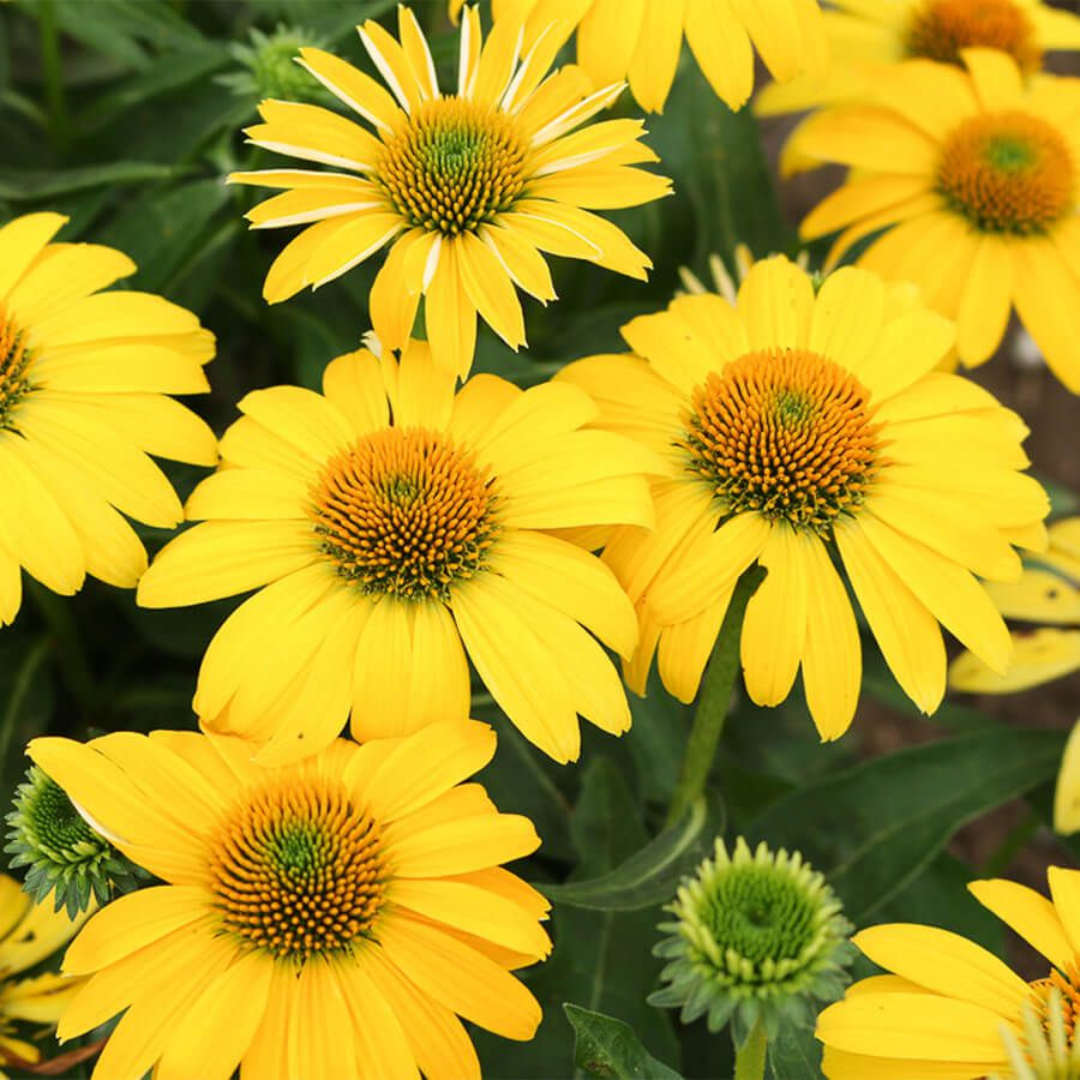
Echinacea Sombrero® Lemon Yellow Improved
- In stock, ready for delivery
Echinacea Sombrero® Lemon Yellow Improved: Lemony Daisies on a Low, Tidy Plant
The first version was good. This one went to the gym, came back a richer yellow and picked up a light fragrance along the way. A coneflower that took its own feedback seriously, which is MORE THAN WE CAN SAY FOR YOUR BROTHER-IN-LAW.
Plant Characteristics:
- Botanical Name: Echinacea hybrid 'Balsomemyim'
- Common Name: Coneflower
- Series: Sombrero®, a Proven Winners® perennial
- Height: 46–56 cm (18–22 in)
- Spread: 56–61 cm (22–24 in)
- Flowers: Rich yellow, lightly fragrant petals around a copper cone
- Bloom Time: Early to late summer (June to August)
- Foliage: Dark green, on an upright, sturdy clump
- Features: Good cut flower
Where to Plant: Its low, tidy habit keeps it in scale with smaller beds, the front of a border or a container on a sunny deck. In a pollinator garden it fills the summer gap between early and late bloomers, and it handles hot, sunny sites with average to dry soil.
Companion Plants: Give 'Lemon Yellow Improved' a sunny, dry bed with violet-blue and a soft cloud of light blue. Aubrieta 'Rock On Pink' carpets the front at 10 to 15 cm with bright pink flowers from April to June. Calamintha nepeta 'Blue Cloud' adds a haze of light blue flowers at 25 to 30 cm from June to September. Baptisia Decadence® 'Sparkling Sapphires' brings violet-blue spikes at 75 to 90 cm in June and July. Panicum 'Prairie Sky' rises behind at 120 to 150 cm with steel-blue blades.
Plant Care: Plant in full sun to part sun in average, well-drained soil. Wet winter soil is the main thing that kills coneflowers, so improve heavy clay or plant on a slight rise. Water regularly the first season, then only during long dry spells. Deadhead for more flowers. Leave the last seed heads standing for winter, then cut the stems back in early spring. Divide in spring if the clump becomes crowded.
History: The Sombrero® series was bred by Darwin Perennials for compact, well-branched coneflowers that bloom heavily. Coneflowers themselves are native to central and eastern North America, and the genus name comes from the Greek word for hedgehog.
Final Thoughts: Plant it, ignore it, enjoy it. THE UPGRADE YOU DIDN'T HAVE TO PAY EXTRA FOR.