

Darmera peltata
- In stock, ready for delivery
Darmera peltata: Soggy Ground? Bring On the Parasols
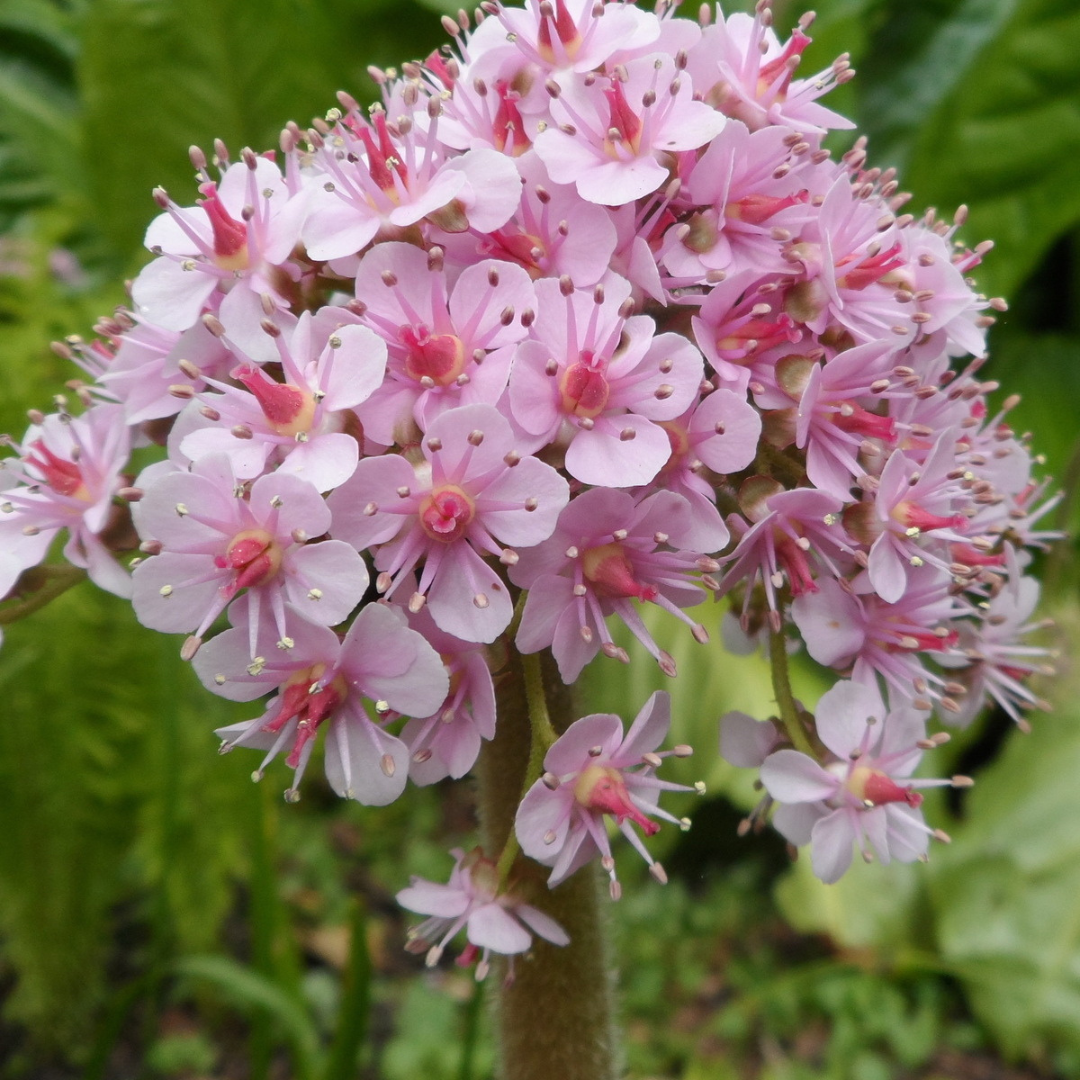
Umbrella Plant does everything backwards. Pink flowers shoot up on bare stalks first, then giant round leaves pop open like somebody brought umbrellas to a pool party. WET FEET? IT LIVES FOR THEM.
Plant Characteristics:
- Botanical Name: Darmera peltata (formerly Peltiphyllum peltatum)
- Common Name: Umbrella Plant, Indian Rhubarb
- Height: 90–120 cm (3–4 ft)
- Spread: 90–120 cm (3–4 ft), slowly widening by thick rhizomes
- Flowers: Rounded clusters of small, star-shaped pale pink to white flowers on tall, leafless stalks, before the leaves appear
- Bloom Time: Early to mid-spring (April to May)
- Foliage: Large, round, lobed and toothed leaves up to 45 cm (18 in) across, held on tall stems with the stalk attached at the centre. Deep green in summer, turning red to bronze in fall.
- Features: Thrives in wet soil, early spring flowers, bold foliage, good fall colour
Where to Plant: This is a waterside plant for the edge of a pond, stream or rain garden, a low spot that stays damp, or boggy ground. Its rhizomes help hold muddy banks together, and heavy clay that holds moisture suits it well. Give it full sun only where the soil stays wet.
Companion Plants: Give umbrella plant a moist, sunny or part-shade spot by water, with fine and spiky textures beside its huge leaves. Campanula 'Blue Magic'® edges the front with deep blue bells at 10 to 20 cm from June to September. Iris 'Ruffled Velvet' adds velvety red-purple Siberian iris at 55 to 75 cm in May and June. Persicaria polymorpha brings big, feathery white plumes at 120 to 180 cm from June to August. Deschampsia 'Northern Lights' edges the bed with cream-striped blades at 30 to 40 cm.
Plant Care: Plant in moist to wet, rich soil. It will grow in shallow water at a pond's edge. In full sun, the soil must never dry out, or the leaves will scorch. In drier gardens, give it part shade and water often. Hot, dry summers are its main stress. The early flowers and young leaves can be nipped by a late spring frost, so a spot sheltered from early morning sun helps. Cut the leaves back after they collapse in fall, or in early spring before the flowers appear. The thick rhizomes spread slowly near the soil surface. Divide in spring or early fall if the clump outgrows its space.
History: Darmera peltata is native to cold, rocky streams in the mountains of southwestern Oregon and northern California, and it holds the Royal Horticultural Society's Award of Garden Merit. The genus honours Karl Darmer, a 19th-century German horticulturist, and peltata means shield-shaped, describing leaves attached at the centre.
Final Thoughts: Plant it by the pond or a soggy low spot and enjoy red and bronze leaves in fall. FINALLY, A REASON TO LOVE THE PUDDLE.