

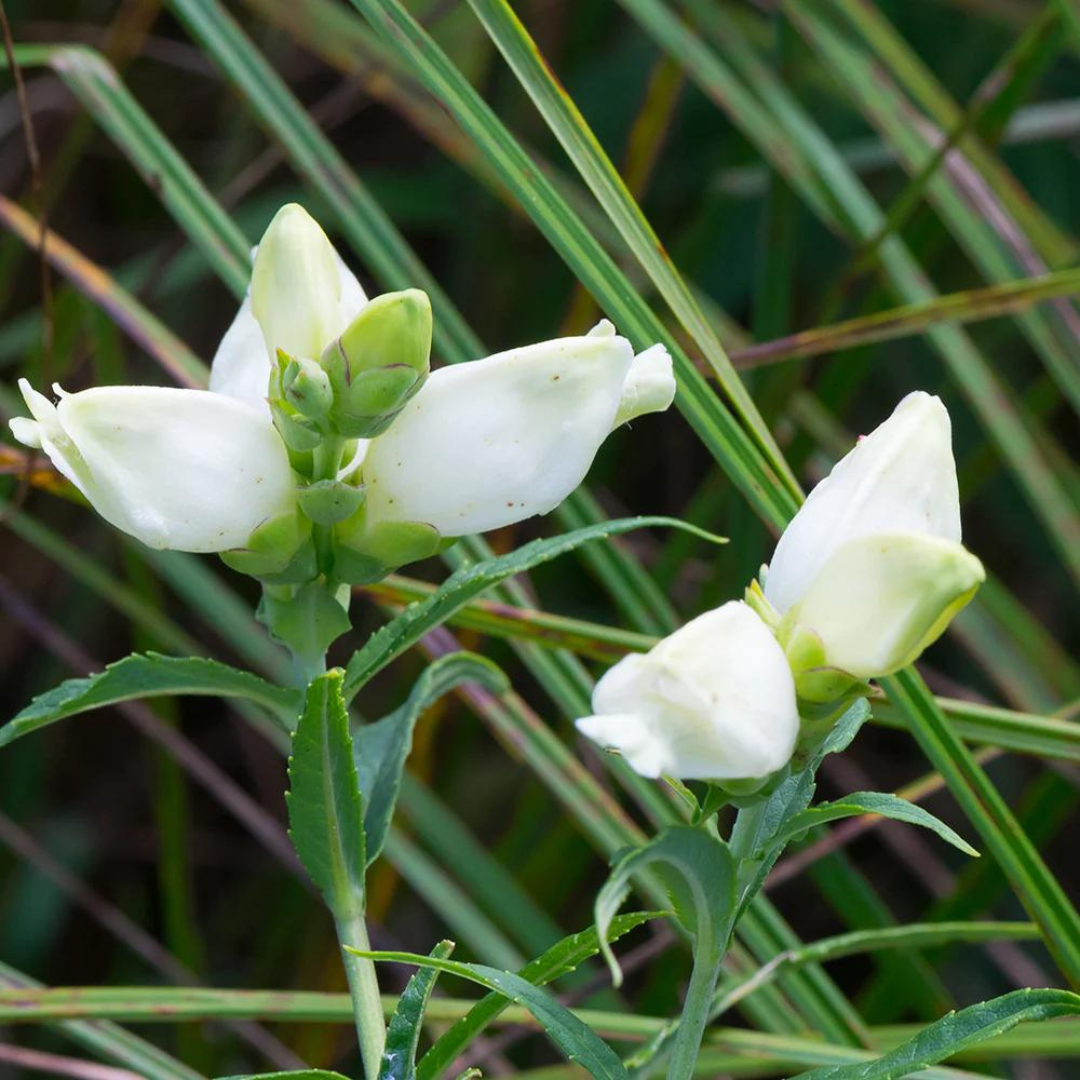
Chelone glabra
- In stock, ready for delivery
Chelone glabra: Wet Feet, White Hoods, Checkerspot Snacks
White Turtlehead is the native that does a bit of everything. It thrives in wet soil, feeds the bumblebees and is literally a nursery for Baltimore checkerspot caterpillars. THE MULTITASKER OF THE MARSH.
Plant Characteristics:
- Botanical Name: Chelone glabra
- Common Name: White Turtlehead
- Height: 60–120 cm (2–4 ft)
- Spread: 45–60 cm (18–24 in)
- Flowers: White, sometimes tinged pink, hooded, snapdragon-like blooms in dense clusters at the stem tips
- Bloom Time: Late summer to early fall (August to September)
- Foliage: Dark green, lance-shaped, toothed leaves in opposite pairs
- Features: Thrives in wet soil, hosts Baltimore checkerspot caterpillars
Where to Plant: This is a natural for rain gardens, pond and stream edges, ditches and any low spot where water collects, and it handles heavy clay and seasonal flooding. Plant it in groups in a naturalized planting, or toward the back of a moist border for late-season white.
Companion Plants: Plant white turtlehead in a wet, sunny or part-shade native bed, at a pond edge or in a rain garden. Caltha palustris opens golden marsh marigolds at 30 to 45 cm in April and May. Lobelia siphilitica adds blue lobelia spikes at 60 to 90 cm from July to September. Eupatorium maculatum rises behind at 120 to 180 cm with dusky pink Joe Pye heads from July to September. Hierochloe odorata adds sweetgrass at 30 to 60 cm, its blades scented of vanilla.
Plant Care: Plant in moist to wet soil rich in organic matter. It grows in full sun as long as the soil stays wet, and in part shade it copes with soil that is merely moist. Don't let it dry out, particularly in the first year. Mulch helps. Pinch the tips in late spring if you'd like a shorter, fuller plant. Leave the flowers alone after bloom if you want seed for the birds. Cut back in late fall or early spring. The clump spreads slowly by rhizomes and can be divided in spring.
History: Chelone glabra grows wild across eastern North America, from Newfoundland to Minnesota and south to Georgia, including Ontario and Quebec, and glabra means smooth, for the hairless leaves. It's the main food plant for caterpillars of the Baltimore checkerspot butterfly.
Final Thoughts: Plant it by the pond or a soggy ditch and you've just opened a butterfly daycare. NO WAITLIST.