

Ceratostigma plumbaginoides
- In stock, ready for delivery
Ceratostigma plumbaginoides: Gentian Blue Just as Summer Quits
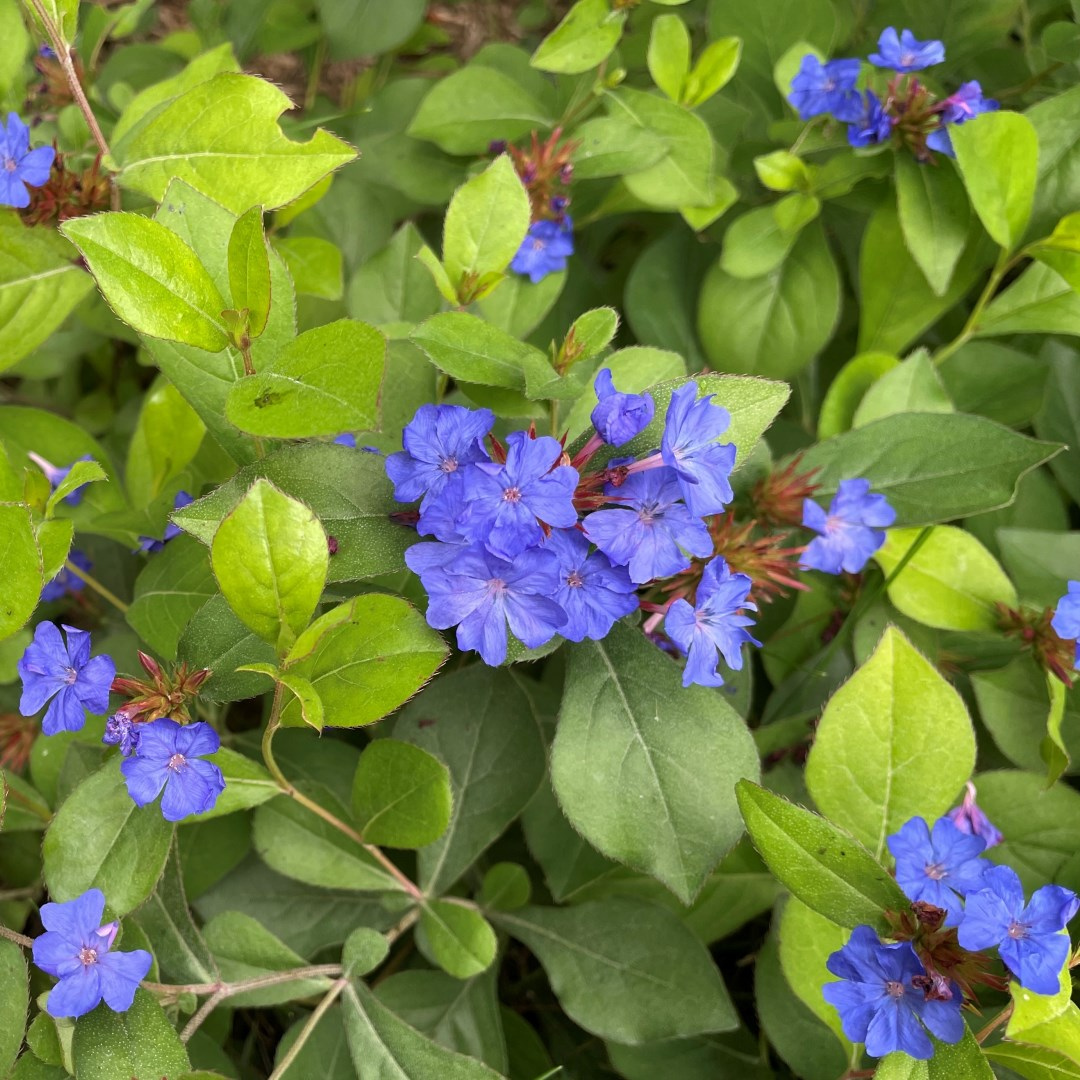
Blue Leadwort waits until everybody else is tired, then shows up with brilliant gentian-blue flowers and leaves turning bronze-red. It saves its best outfit for the end of the party. CLOSING TIME IS SHOWTIME.
Plant Characteristics:
- Botanical Name: Ceratostigma plumbaginoides
- Common Name: Blue Leadwort, Hardy Plumbago
- Height: 20–30 cm (8–12 in)
- Spread: 45–60 cm (18–24 in), spreading by rhizomes
- Flowers: Clusters of brilliant gentian-blue flowers about 2 cm (3/4 in) across at the stem tips
- Bloom Time: Late summer to fall (August to October)
- Foliage: Medium green leaves that turn bronze-red to maroon in fall
Where to Plant: Use it as a groundcover at the front of a border, along paths, on a sunny slope or spilling over a low wall. It's slow to emerge in spring, so it can fill in over spots where earlier bloomers are fading.
Companion Plants: Use leadwort as a late-season carpet at the front of a sunny or lightly shaded bed. Paeonia 'First Arrival' opens lavender-pink peonies at 60 to 75 cm in May and June. Geranium 'Rozanne' adds violet-blue saucers at 45 to 50 cm from June to September. Hemerocallis 'Summer Wine' brings wine-rose daylilies at 60 cm in July and August. Calamagrostis 'Avalanche' stands behind at 90 to 120 cm with white-centred, upright blades.
Plant Care: Plant in full sun to part sun in well-drained soil. It tolerates clay and sand, but soggy winter soil is its biggest enemy. Water through its first season. Once established, it handles dry spells. Don't panic in spring. It's one of the last perennials to leaf out, so mark its spot and wait until late May or early June. Cut back the old stems in early spring. In zone 5, a light winter mulch helps, especially for young plants. It spreads moderately by rhizomes. Divide in spring just before new growth starts if you want more plants or need to keep it in bounds.
History: Blue leadwort is native to rocky foothills in northern and eastern China, including the area around Beijing, and was named by Alexander von Bunge in 1833. Plants from Shanghai first flowered in England in 1846, and it holds the Royal Horticultural Society's Award of Garden Merit.
Final Thoughts: Low, deer resistant and drought tolerant once settled. Tuck it along the edge where you'll see it. LEAVE THEM WANTING MORE.