

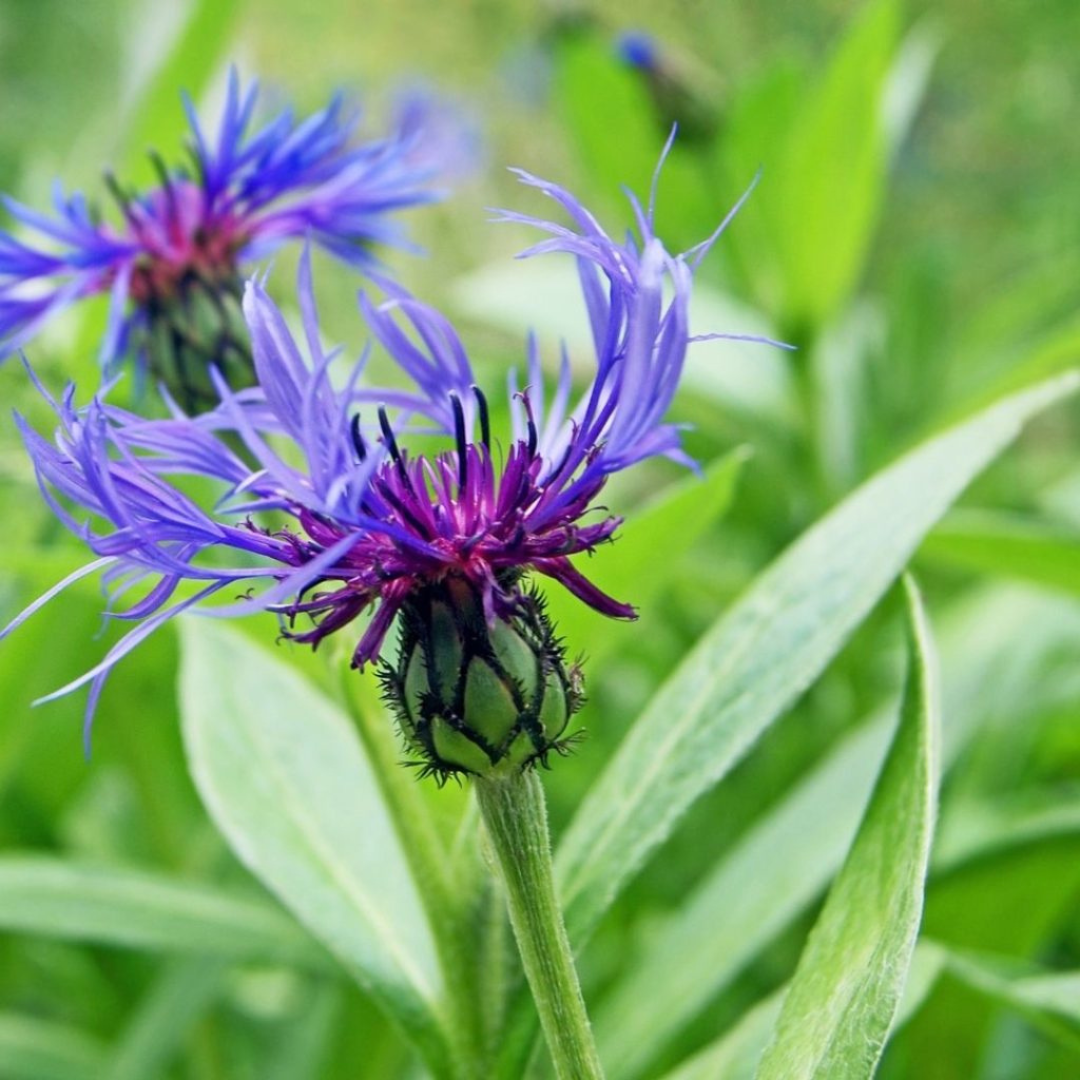
Centaurea montana
- In stock, ready for delivery
HEADS UP. THIS ONE SPREADS.
Mountain bluet spreads by creeping roots and self-seeds, so it can pop up well beyond where you planted it. Cut it back after the first flush of flowers to cut down on seedlings, and keep it out of woodlands, ravines and other natural areas.
Centaurea montana: Spidery True Blue, Old-School Charm
Mountain Bluet looks like a cornflower that stuck its finger in a light socket. Fringed, rich blue petals around reddish-violet centres, spiky in all the best ways. ELECTRIC BLUE, NO WIRING NEEDED.
Plant Characteristics:
- Botanical Name: Centaurea montana
- Common Name: Mountain Bluet, Perennial Cornflower
- Height: 30–60 cm (1–2 ft)
- Spread: 30–60 cm (1–2 ft)
- Flowers: Fringed, rich blue flowers about 5 cm (2 in) across with reddish-violet centres and dark-edged bracts
- Bloom Time: Late spring to early summer (May to July), with some rebloom if cut back
- Foliage: Lance-shaped, silvery-green leaves with a soft, downy texture
Where to Plant: Mountain bluet fits right into cottage gardens, sunny borders, slopes and informal plantings. It's tough enough for lean soils and dry spells, and its early flowers make a nice cut flower.
Companion Plants: Use mountain bluet in a sunny, dry bed with violet, pink and deep red partners. Sedum SunSparkler® 'Wildfire' carpets the front at 10 to 15 cm with deep pink flowers in August and September. Salvia Marcus® adds compact violet-blue spikes at 25 to 30 cm in June and July. Iris 'Sultan's Palace' opens velvety maroon-red Siberian iris at 75 to 85 cm in June and July. Panicum Prairie Winds® 'Niagara Falls' arches behind at 120 cm with wide, powder-blue blades.
Plant Care: Plant in full sun in average, well-drained soil. It tolerates poor soil and clay, but doesn't want soggy ground. Water through the first season, then only in long dry spells. Deadhead regularly to stop self-seeding. After the first big flush, cut the plant back hard; it grows a fresh mound of leaves and often reblooms lightly in late summer. Mountain bluet spreads by underground stolons as well as seed, so divide every two to three years in spring to keep it vigorous and in its space.
History: The species is native to the mountains of central and southern Europe, hence the name montana, and has been grown in European gardens for centuries before arriving in North America as an ornamental. In parts of British Columbia it has escaped gardens.
Final Thoughts: Drought tolerant once established and deer resistant. Cut it back after the first flush and it comes back swinging. SHOCKINGLY EASY.