

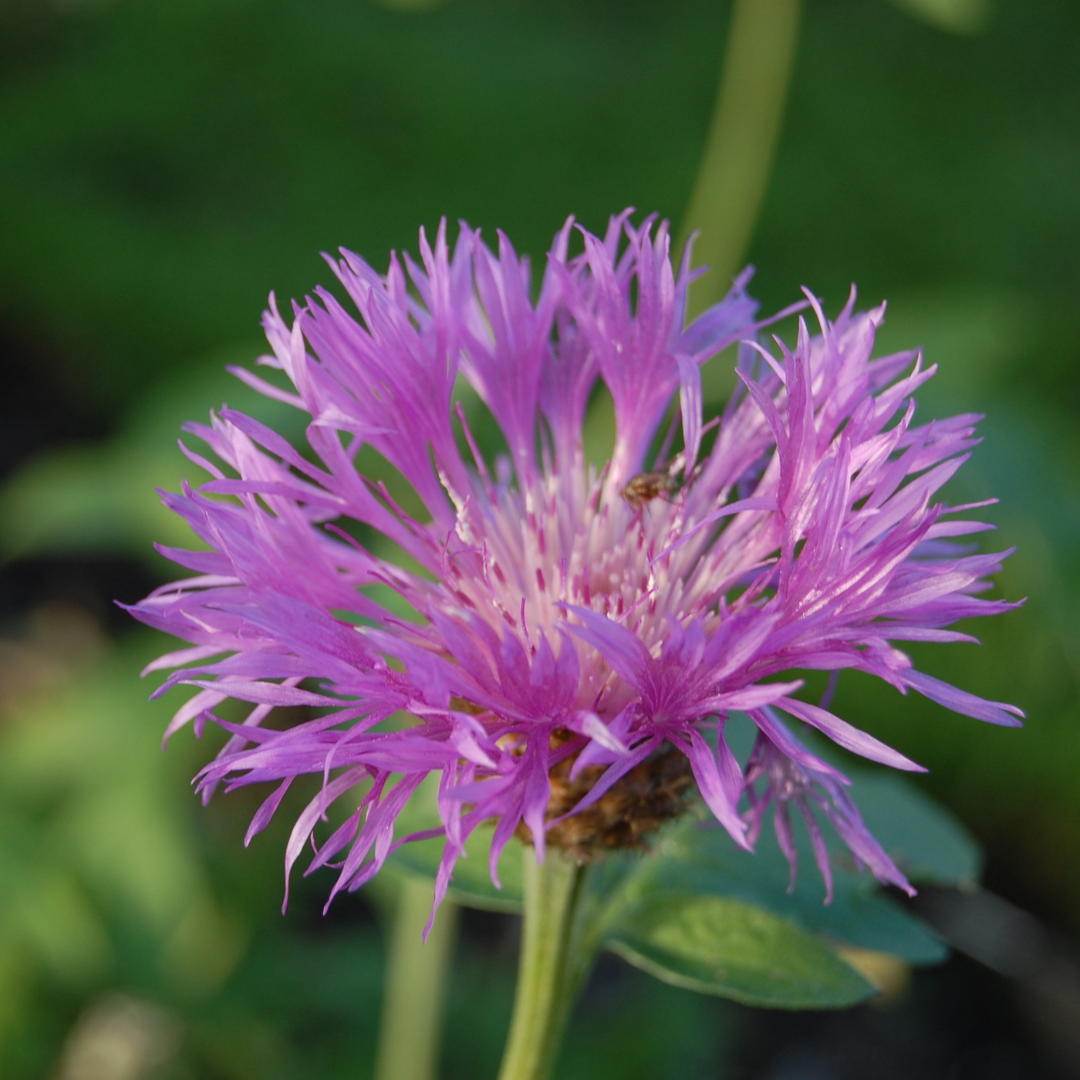
Centaurea dealbata
- In stock, ready for delivery
Centaurea dealbata: Fringed Pink Pinwheels Over Cut Leaves
This cornflower is pretty, fringed and absolutely unbreakable. Rosy-pink, thistle-like heads sit over leaves that flash silver underneath like a petticoat peeking out. SOFT LOOK. IRON CONSTITUTION.
Plant Characteristics:
- Botanical Name: Centaurea dealbata
- Common Name: Persian Cornflower
- Height: 45–75 cm (18–30 in)
- Spread: 45–60 cm (18–24 in)
- Flowers: Rosy-pink, thistle-like heads with fringed petals and a paler centre
- Bloom Time: Early to midsummer (June to July), with repeat bloom if deadheaded
- Foliage: Deeply lobed leaves, green on top and silvery white underneath, in a bushy clump
- Features: Rabbit resistant, very hardy
Where to Plant: Persian cornflower suits cottage gardens, sunny borders, and meadow-style or prairie-inspired plantings. It's a good cut flower too.
Companion Plants: Plant Persian cornflower in a sunny, dry bed with red iris in spring and steel blue in summer. Thymus 'Elfin' creeps at the front at 2 to 8 cm with lavender-pink flowers in July and August. Iris pumila 'Lady in Red' opens soft red dwarf iris at 30 cm in May and June. Eryngium 'Blue Glitter' adds steel-blue sea holly at 90 cm in flower from June to August. Panicum 'Prairie Fire' rises behind at 120 to 150 cm with blades that turn red by midsummer.
Plant Care: Plant in full sun in average to lean, well-drained soil. It handles sandy and clay soils, but rich soil makes it flop and may mean staking. Water regularly the first season, then occasionally in long dry spells. Deadhead faded flowers to encourage more blooms and prevent self-seeding. A hard cut back in midsummer keeps the plant compact and refreshes the foliage. Cut it to the ground in fall or early spring. Divide in spring every few years when the clump gets crowded. Good air flow helps prevent powdery mildew late in the season.
History: This cornflower comes from mountain meadows in the north Caucasus, Transcaucasia and Turkey, and dealbata means whitened, for the pale undersides of its leaves. It has been a familiar sight in European cottage gardens for generations.
Final Thoughts: Bees and butterflies love it, deer and rabbits don't. Deadhead it and it goes again. TOUGH COOKIES DESERVE A PLACE IN THE SUN.