

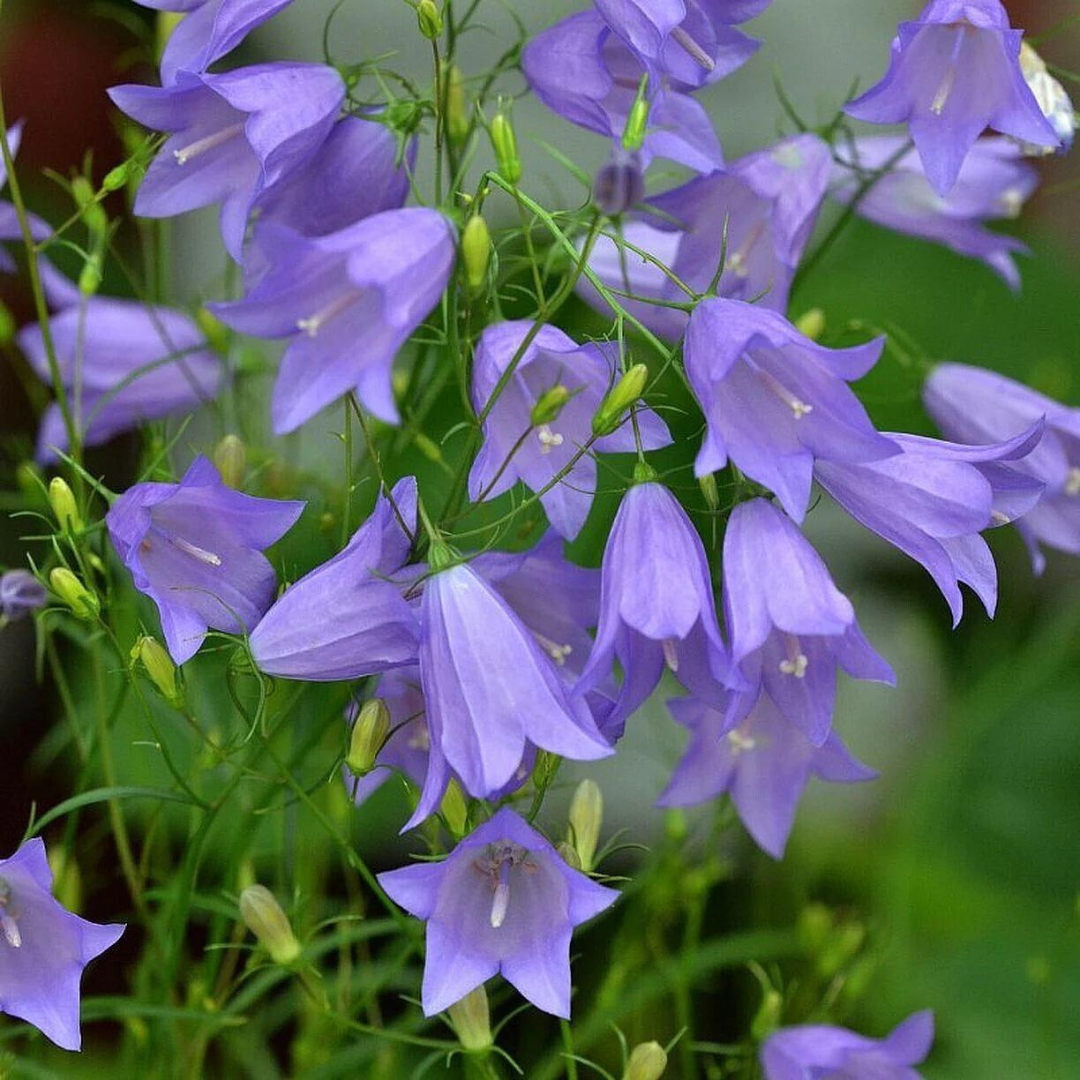
Campanula rotundifolia
- In stock, ready for delivery
Campanula rotundifolia: Dainty Blue Bells With Clifftop Grit
Harebell looks so delicate you'd think a sneeze would knock it over. Then it shrugs off dry spells and nosy deer like they're nothing. Native, nodding blue bells with a SPINE OF STEEL.
Plant Characteristics:
- Botanical Name: Campanula rotundifolia
- Common Name: Harebell (also called Bluebell of Scotland)
- Height: 15–45 cm (6–18 in)
- Spread: 15–30 cm (6–12 in)
- Flowers: Nodding, pale blue to violet-blue bells about 2 cm (¾ in) long
- Bloom Time: Early summer to early fall (June to September)
- Foliage: Small round leaves at the base, with narrow, grass-like leaves up the stems
Where to Plant: Harebell is at home in rock gardens, gravel beds, meadow plantings, dry slopes and the gaps between flagstones. It looks best in loose drifts in lean soil, where its bells seem to float.
Companion Plants: Tuck harebell into a sunny or lightly shaded native bed with lean, well-drained soil. Penstemon hirsutus opens lavender trumpets at 30 to 60 cm in May and June. Coreopsis lanceolata adds golden daisies at 30 to 60 cm from May to July. Symphyotrichum shortii brings pale blue asters at 60 to 90 cm from August to October. Elymus virginicus stands behind at 90 to 125 cm, a native wild rye.
Plant Care: Plant it in full sun to part sun, in well-drained, lean soil. Sandy or rocky ground suits it best. Rich soil or soggy clay makes it floppy or short-lived, so skip the compost. Water through the first season, then let it fend for itself. It spreads slowly by underground stems and drops seed, so a few new plants may pop up nearby. Leave some seed heads if you want that, or trim the stems after flowering if you don't. It rarely needs dividing. Clean up old stems in fall or early spring.
History: Harebell grows wild across much of the Northern Hemisphere, including Ontario and Quebec, on rocky bluffs, open woods, prairies and shoreline slopes. In Scotland it is the bluebell of Scotland, and rotundifolia means "round-leaved," for the basal leaves that are often gone by flowering time.
Final Thoughts: Plant it in a sunny crack by the patio and let it ring in the summer. DAINTY IS A DISGUISE.