

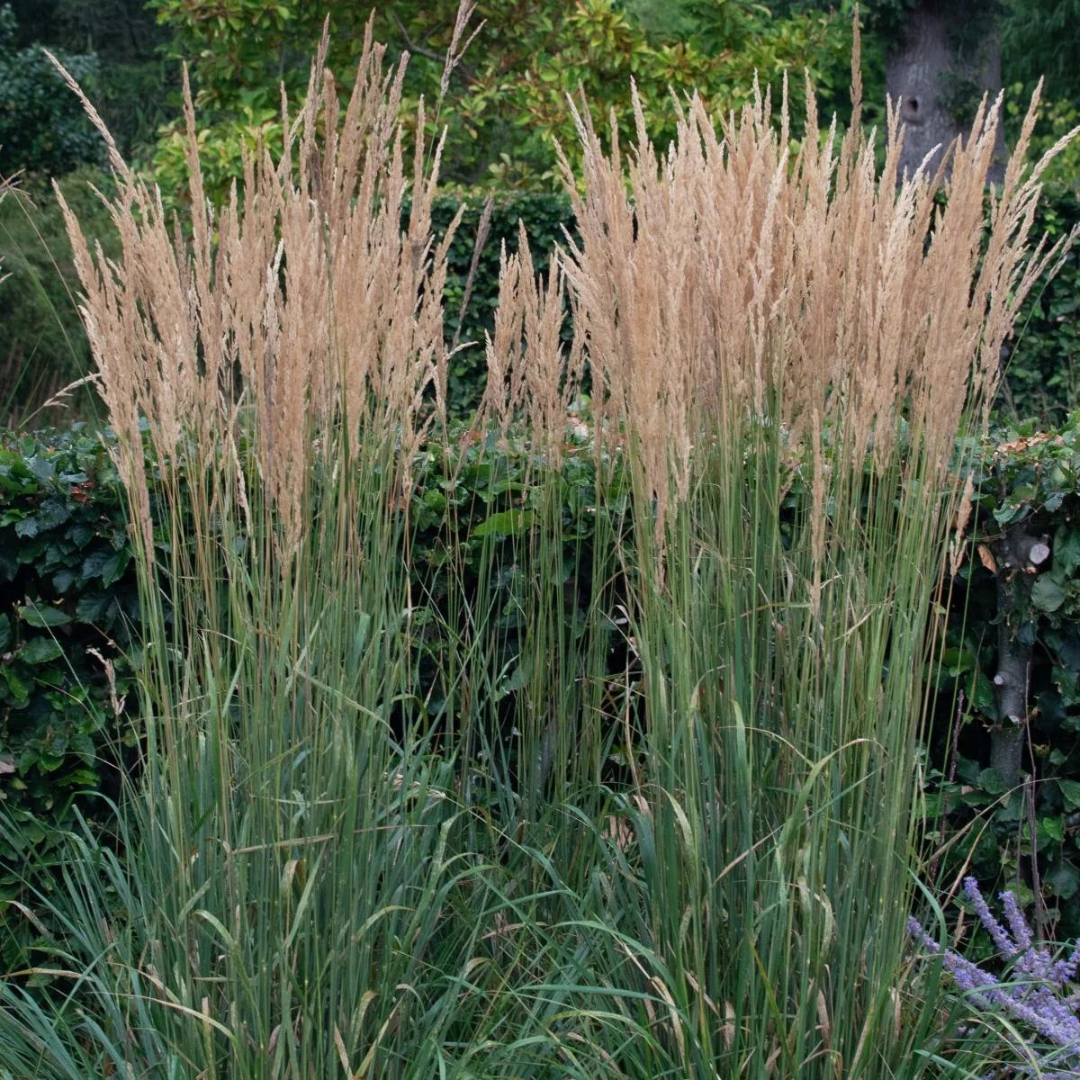
Calamagrostis 'Karl Foerster'
- In stock, ready for delivery
Calamagrostis 'Karl Foerster': Ramrod-Straight Plumes Ripening to Gold
Some grasses have kids everywhere. This one doesn't self-seed, so no surprise relatives show up in your lawn. Tall plumes go from pinkish-bronze to gold and stay standing right through winter. CHILD-FREE AND THRIVING.
Plant Characteristics:
- Botanical Name: Calamagrostis × acutiflora 'Karl Foerster'
- Common Name: Feather Reed Grass
- Height: 120–180 cm (4–6 ft) in flower; foliage about 60–90 cm (2–3 ft)
- Spread: 60–70 cm (2–2.3 ft)
- Flowers: Narrow, upright plumes that open pinkish-bronze and age to golden tan
- Bloom Time: Early to late summer (June to August), with plumes standing into winter
- Foliage: Glossy deep green, upright, turning golden tan in late fall
- Features: Tolerates clay, sterile (does not self-seed)
Where to Plant: Plant it in rows for a living screen, in groups for rhythm along a long border, or as a single exclamation point among rounded perennials. It handles heavy clay and the stop-start moisture of Canadian summers, and it stands tall with snow caught in the plumes.
Companion Plants: Use these tall, upright plumes as the backbone of a sunny prairie-style bed, with long-blooming flowers filling in around the base. Sedum 'Hot Stuff' sits at the front at 25 to 30 cm with bright pink heads in August and September. Echinacea SunMagic® Vintage White adds white coneflowers at 45 to 60 cm from June to September. Rudbeckia 'Goldsturm' fills the middle with golden daisies from July to September, a classic match for the wheat-coloured plumes. Perovskia 'Prime Time' brings blue-lavender spikes at 75 to 90 cm, soft against the stiff, upright grass.
Plant Care: Give it full sun for the most upright growth. It will take part sun, but too much shade can make it flop. Average to moist, well-drained soil is ideal, though it adapts to clay. Water through the first season, then only in long dry spells. Leave the plumes standing for winter. In late winter or very early spring, cut the whole clump down to about 15 cm (6 in) before new growth starts. It's a cool-season grass, so it gets going early. Divide in spring or fall if the centre thins out.
History: 'Karl Foerster' is a natural hybrid of Calamagrostis epigejos and Calamagrostis arundinacea, introduced by German nurseryman Karl Foerster around 1950 and brought to North America from Denmark in 1964. In 2001 it became the first ornamental grass named Perennial Plant of the Year by the Perennial Plant Association.
Final Thoughts: Clay soil, dry spells, curious deer: it handles all three. Plant a row along the fence and SKIP THE CONTRACTOR.