

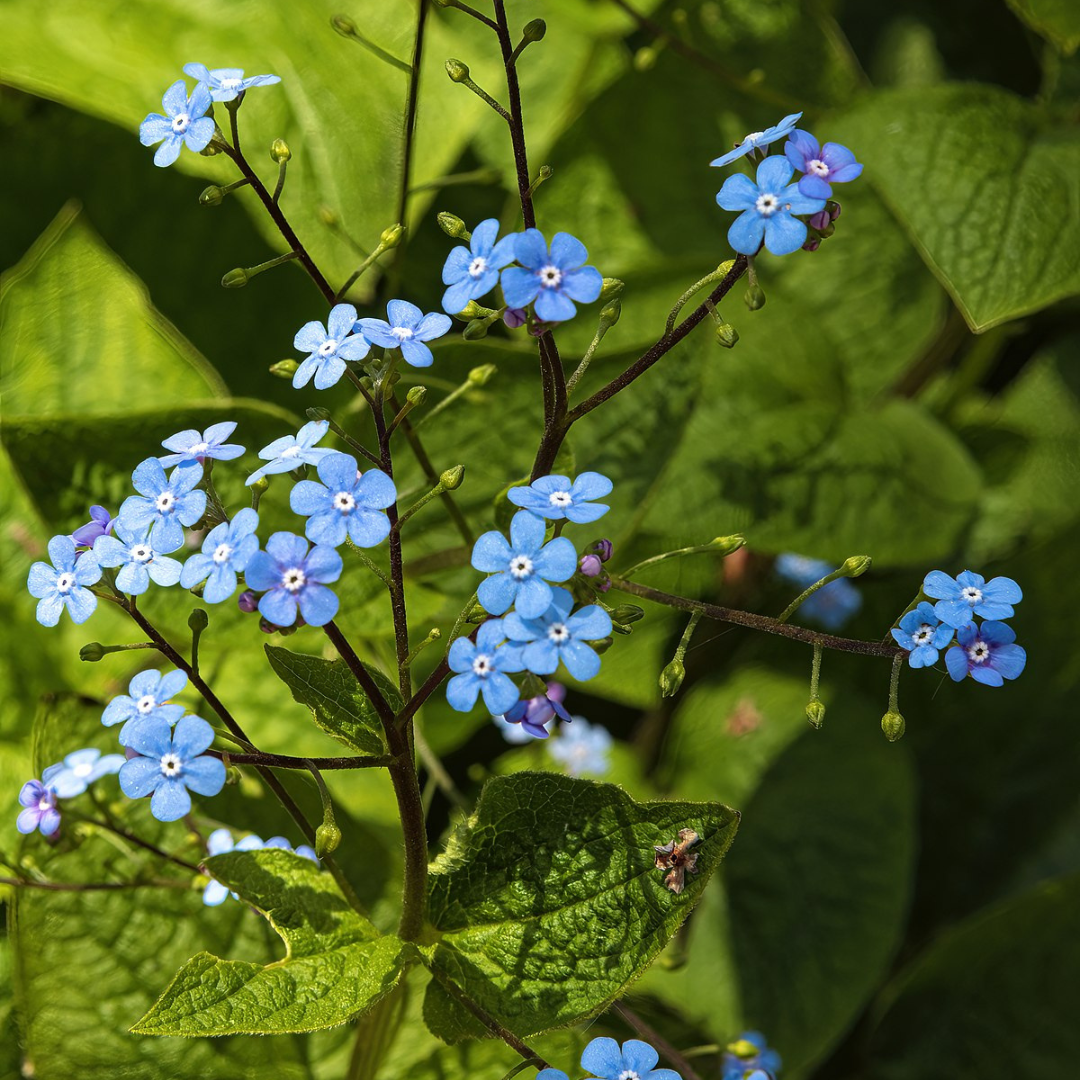
Brunnera macrophylla
- In stock, ready for delivery
Brunnera macrophylla: Sky-Blue Sprays, Then Big Bold Leaves
The plain green original, before the silver cousins got fancy. Big heart-shaped leaves and sprays of sky-blue flowers that look like forget-me-nots dressed for a garden party. NO FILTER NEEDED.
Plant Characteristics:
- Botanical Name: Brunnera macrophylla
- Common Name: Siberian Bugloss
- Height: 30–45 cm (12–18 in)
- Spread: 45–60 cm (18–24 in)
- Flowers: Sprays of tiny sky-blue flowers with small pale centres
- Bloom Time: Mid to late spring (April to May)
- Foliage: Large, rough-textured, heart-shaped, medium to dark green
- Features: Rabbit resistant
Where to Plant: It's a natural for woodland gardens and the shady side of a house. Plant it in groups for a sheet of blue in spring, with the bold leaves as a backdrop for the rest of the season. It may self-seed a little in a happy spot, which is usually welcome in a woodland setting.
Companion Plants: Let Siberian bugloss fill a moist, shady bed with blue in spring and bold plants for summer and fall. Astilbe Mighty® 'Chocolate Cherry' adds tall cherry-red plumes at 120 cm in July and August. Athyrium 'Lady in Red' brings lacy fronds on red stems at 45 to 75 cm. Cimicifuga 'Atropurpurea' rises behind at 150 to 180 cm with fragrant white spikes from August to October. Carex grayi adds glossy blades at 60 to 90 cm with spiky, mace-like seed heads.
Plant Care: Plant it in part shade to full shade, away from hot afternoon sun. It does best in fertile, humus-rich soil that stays consistently moist but drains well. It tolerates clay, especially with some compost worked in. Water regularly during dry spells. Dry soil and heat are the main things that set it back. Cut the flower stems down after blooming if you want to limit seedlings. Remove tattered leaves in fall or early spring. Divide in early spring if the clump gets crowded.
History: Siberian bugloss is native to the mountain forests of the Caucasus and northeastern Turkey, despite the "Siberian" in its name. The species is the parent of all the popular silver-leaved selections, including the RHS Award of Garden Merit winner 'Jack Frost'.
Final Thoughts: Deer and rabbit resistant, low maintenance and happy under trees where the grass gave up. CLASSICS NEVER NEED A REBOOT.