

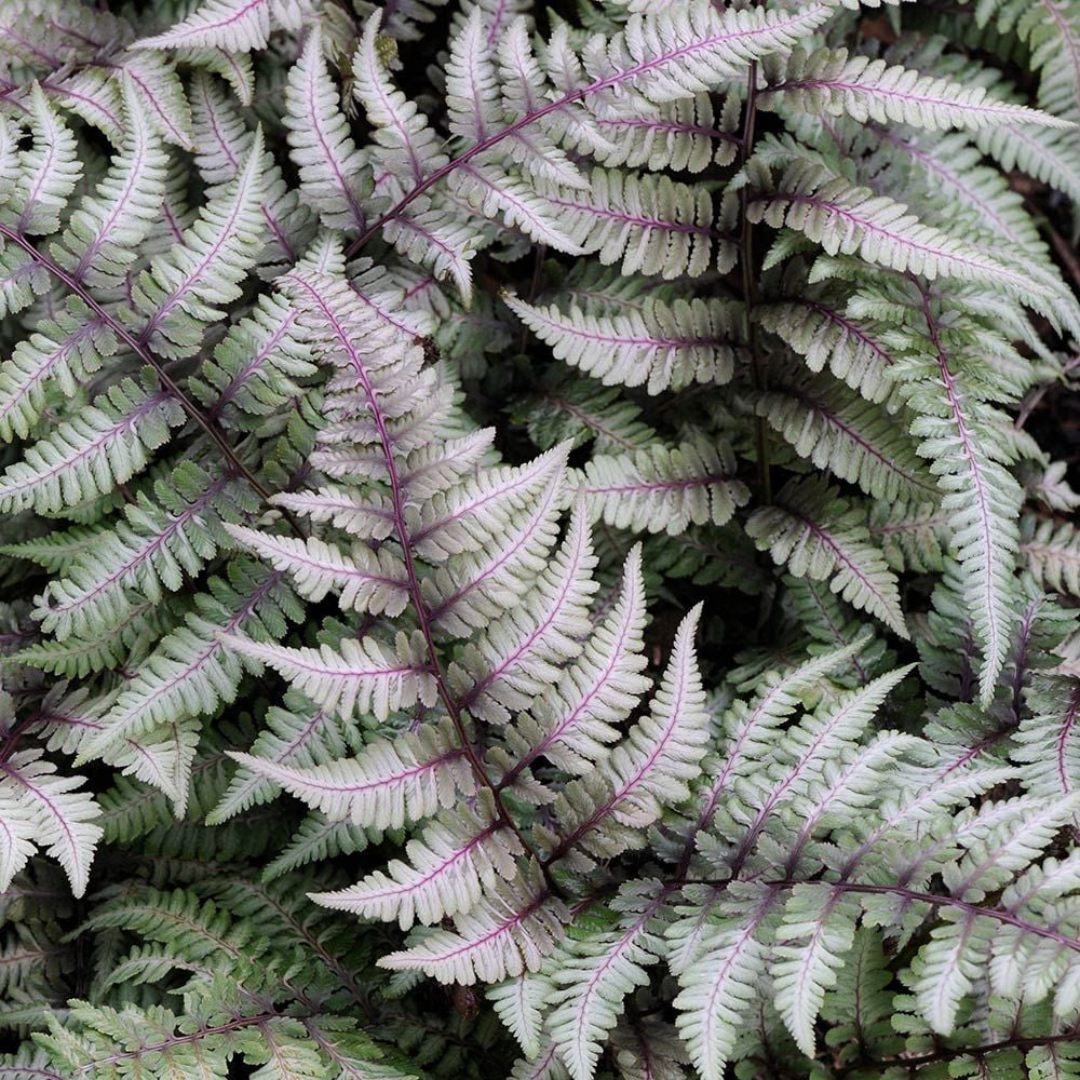
Athyrium niponicum var. pictum
- In stock, ready for delivery
Athyrium niponicum var. pictum: Silver Fronds Dipped in Wine
This fern looks like somebody let an art student loose with silver paint and a burgundy marker. Arching fronds in soft grey and green, with wine-coloured midribs. FRAME IT OR PLANT IT. YOUR CALL.
Plant Characteristics:
- Botanical Name: Athyrium niponicum var. pictum
- Common Name: Japanese Painted Fern
- Height: 45 cm (18 in)
- Spread: 60 cm (24 in)
- Flowers: None. Ferns reproduce by spores.
- Foliage: Arching, finely divided fronds in silvery grey and soft green, with burgundy stems and midribs. Deciduous.
- Features: Perennial Plant of the Year 2004
Where to Plant: Plant it along shady paths, at the front of woodland beds or in drifts in shade, where its silver fronds brighten dark corners. It also does well in containers on a shaded porch.
Companion Plants: Build a cool, silvery shade bed around Japanese painted fern, with plants that share its moist, rich soil. Pulmonaria Opal opens pale opal-blue bells at 30 to 35 cm in April and May over spotted leaves. Lamium 'Pink Pewter' carpets the front at 15 to 20 cm with silver leaves and salmon-pink flowers from May to July. Hosta 'Get Nekkid' adds a mound of foliage at 30 cm with spidery lavender flowers in July and August. Carex 'Ice Dance' edges the bed with white-edged blades at 30 cm, echoing the fern's silver.
Plant Care: Plant it in moist, well-drained soil enriched with compost. Light shade gives the best colour. A little morning sun is fine, but strong afternoon sun will bleach and scorch the fronds. Don't let the soil dry out, especially in the first summer. Top-dress with compost or shredded leaves each spring or fall. It needs very little feeding. It dies back after frost; cut the old fronds down in early spring before the new ones unfurl. Divide in early spring if the clump gets large.
History: Japanese painted fern is native to Japan, Korea, Taiwan and northern China, and pictum means "painted". It was the Perennial Plant Association's Perennial Plant of the Year in 2004.
Final Thoughts: Deer resistant, low maintenance, and it makes dark corners look curated. GALLERY OPENING IN THE SHADE GARDEN, FREE ADMISSION.