

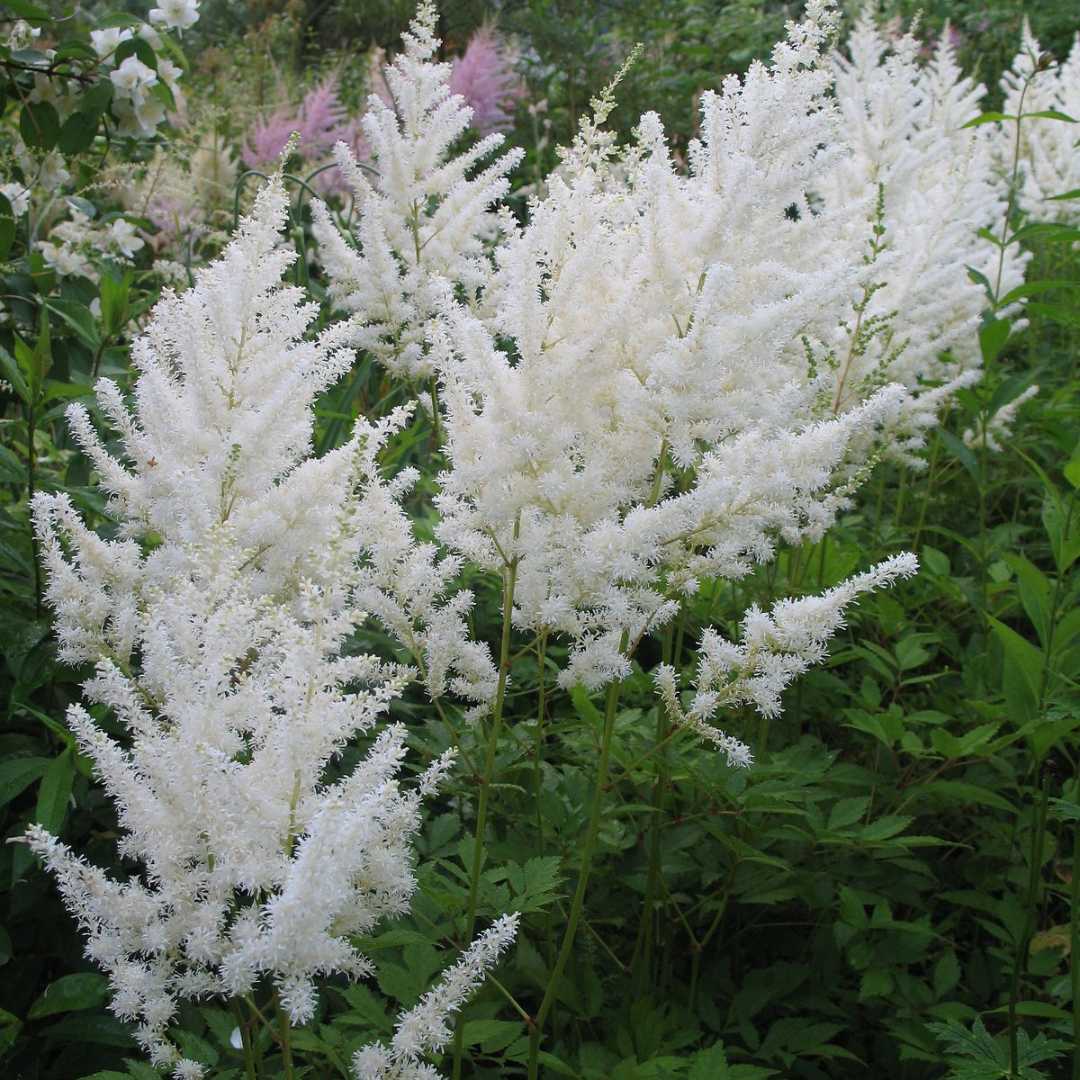
Astilbe 'Diamond'
- In stock, ready for delivery
Astilbe 'Diamond': Bright White Spires, Instant Flashlight
Long, dense white plumes over lacy green leaves, sparkling in the shade like they caught the light just right. 'Diamond' doesn't need sun to shine. FLAWLESS CUT, ZERO CARATS OF EFFORT.
Plant Characteristics:
- Botanical Name: Astilbe × arendsii 'Diamond' (also sold as 'Diamant')
- Common Name: False Spirea, Astilbe
- Height: 75–80 cm (30–31 in) in bloom
- Spread: 45–60 cm (18–24 in)
- Flowers: Long, narrow, dense plumes of white
- Bloom Time: Early to late summer (June to August)
- Foliage: Lacy, deep green leaves, tinted bronze as they emerge in spring
- Features: Rabbit resistant, good cut flower, dried plumes add winter interest
Where to Plant: White plumes are one of the best tools for brightening a dark corner. Use it in the middle of a shade border, along a woodland path, or in a white garden. It handles moist clay and damp spots near water, as long as the soil doesn't dry out in summer.
Companion Plants: Give white 'Diamond' a moist, shady bed with soft pink and gold to keep it from looking plain. Helleborus HGC® Ice N' Roses® Rose opens soft pink flowers at 45 to 60 cm from March to May. Heucherella Fun and Games® 'Eye Spy' adds bubblegum-pink flowers at 20 to 25 cm in May and June. Hosta 'Silly String' brings narrow, wavy leaves at 36 cm. Hakonechloa 'All Gold' edges the bed at 23 to 36 cm with bright gold, arching blades.
Plant Care: Plant in part shade in rich soil that stays evenly moist. Work in compost and add mulch to keep the roots cool. Water during dry spells. Astilbes dislike drought, and too much hot sun scorches the leaves. Leave the faded plumes in place for winter and cut back in early spring. Divide every three to four years in spring if flowering slows down.
History: 'Diamant' is German for diamond, and this cultivar belongs to the Arendsii group of hybrids developed in Germany in the early twentieth century by Georg Arends from several East Asian astilbe species. It has stayed in gardens for generations as a dependable white.
Final Thoughts: Leave the dried plumes up for winter sparkle. Deer and rabbits won't touch the jewels. FOREVER LOOKS GOOD ON YOU.