

Astilbe 'Bridal Veil'
- In stock, ready for delivery
Astilbe 'Bridal Veil': Wedding White for the Darkest Corner
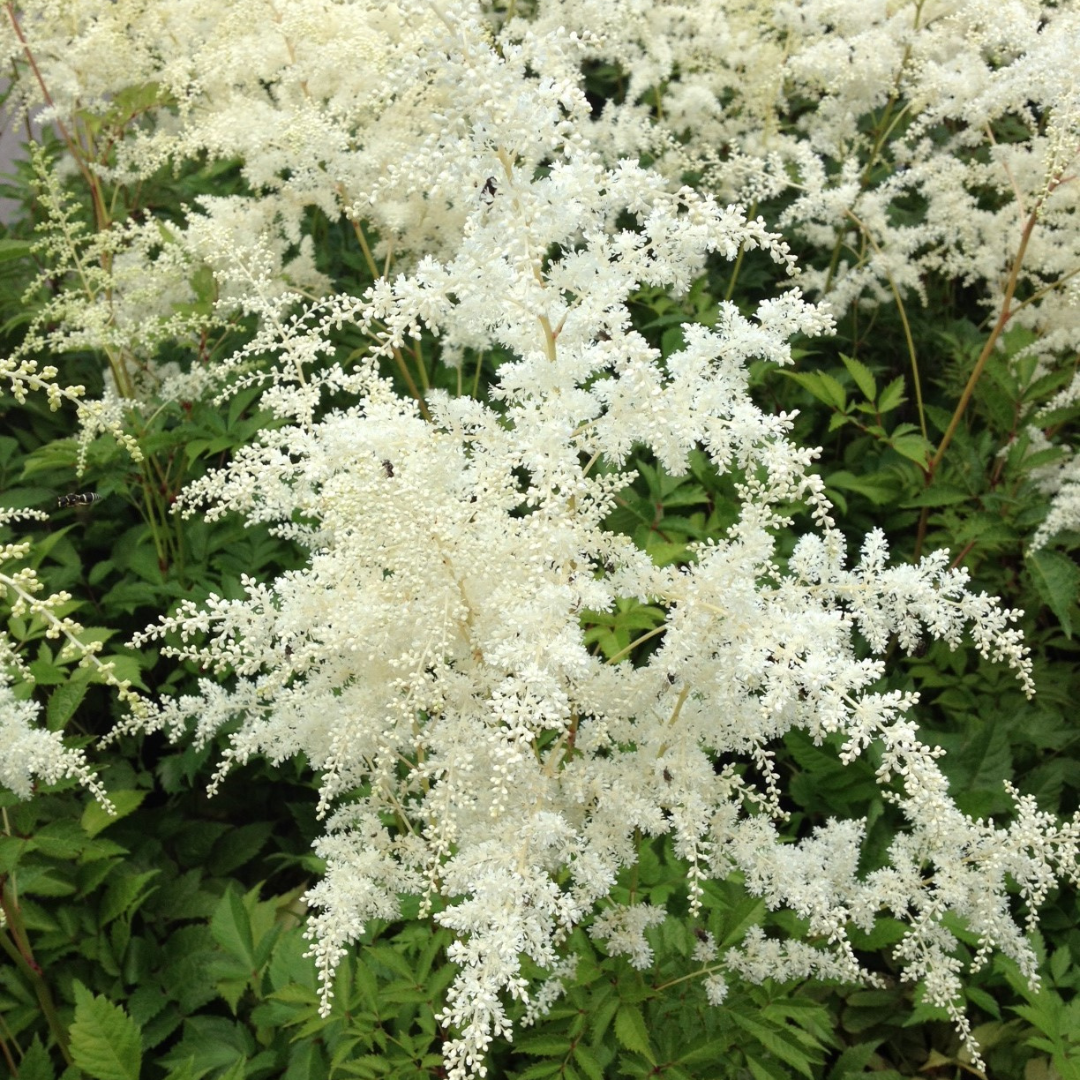
Pure white lacy plumes with tips that droop gracefully, like a train trailing down the aisle. 'Bridal Veil' brings the whole wedding to the shade garden. SOMETHING OLD, SOMETHING NEW, SOMETHING SHADE-LOVING.
Plant Characteristics:
- Botanical Name: Astilbe × arendsii 'Bridal Veil' (also sold as 'Brautschleier')
- Common Name: False Spirea, Astilbe
- Height: 70 cm (28 in) in bloom
- Spread: 30 cm (12 in)
- Flowers: Pure white, open, lacy plumes up to about 25 cm (10 in) long, with tips that droop gracefully
- Bloom Time: Midsummer (July)
- Foliage: Glossy, bright green, finely divided leaves
- Features: RHS Award of Garden Merit, rabbit resistant, good cut and dried flower
Where to Plant: Its narrow habit lets it slip into tight spots in a shade bed. White plumes light up dark corners at dusk, so plant it near a patio or path you use in the evening. It's a natural near ponds and in damp beds, and massed along a shady path it makes a soft, white edge.
Companion Plants: Use white 'Bridal Veil' to brighten a moist, shady bed with dark and lime leaves around it. Helleborus HGC® Pink Frost opens pink-flushed flowers at 30 to 40 cm from March to May. Heuchera 'Lime Marmalade' adds ruffled lime-gold leaves at 25 cm. Hosta 'Vulcan' brings leaves with a creamy white centre at 50 to 56 cm. Liriope 'Monroe White' edges the front at 30 to 45 cm with white spikes in August and September.
Plant Care: Plant in part shade in rich soil that stays moist. It doesn't handle drought or hot afternoon sun, so mulch well and water during dry spells. Clay soil is fine if it doesn't bake dry. Leave the faded plumes for winter interest and cut the plant back in early spring. Divide every three to four years in spring when the clump starts to flower less in the middle.
History: 'Brautschleier' is German for bridal veil, and the plant is an Arendsii hybrid from the group Georg Arends developed in Germany in the early twentieth century by crossing several Asian astilbe species. It remains one of the standard white astilbes and carries the Royal Horticultural Society's Award of Garden Merit.
Final Thoughts: Plant a few in a moist, shady spot and cut some for the bouquet. Deer won't crash the reception. YOU MAY NOW KISS THE GARDENER.