

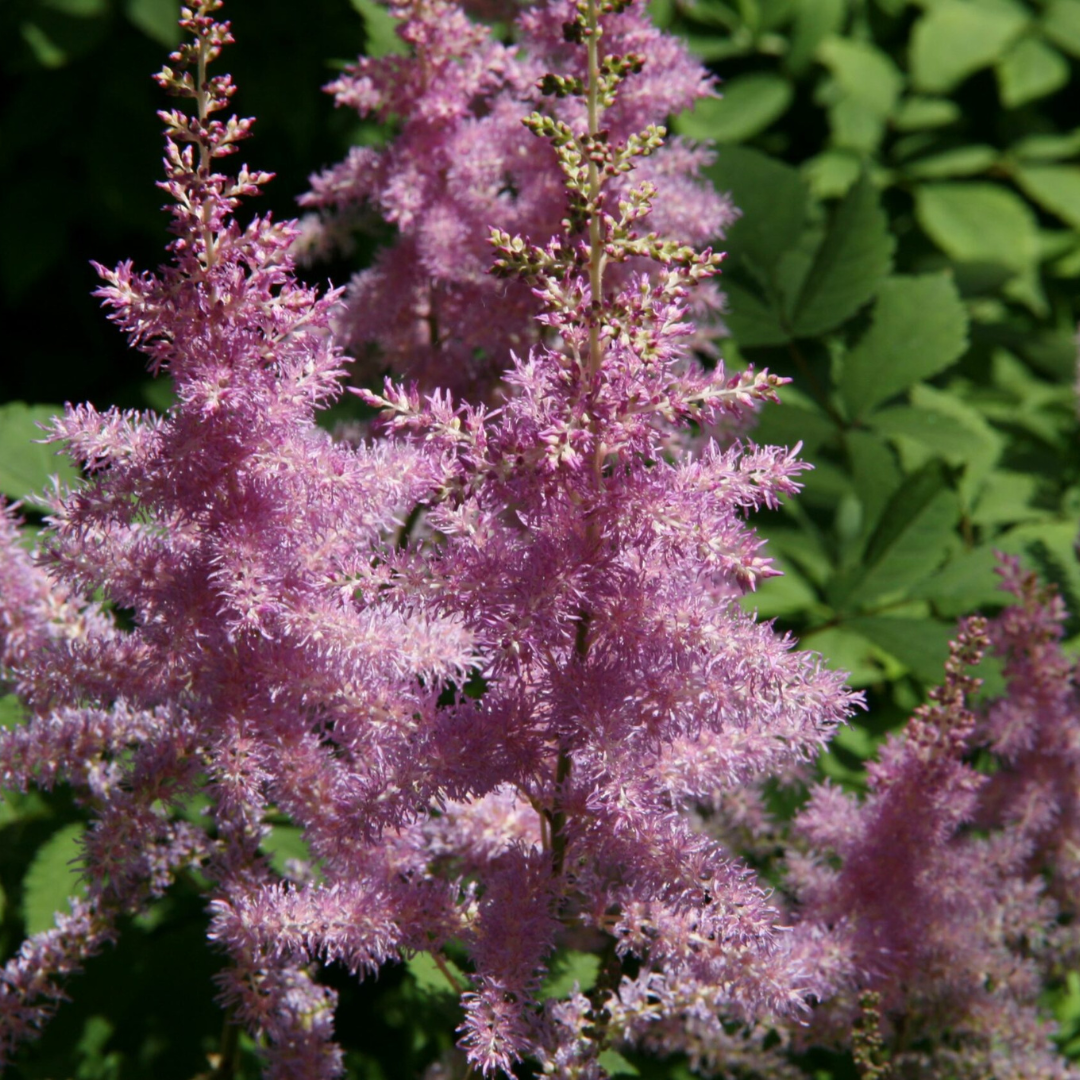
Astilbe 'Amethyst'
- In stock, ready for delivery
Astilbe 'Amethyst': Tall Lilac Plumes, No Shyness Allowed
Lilac-purple plumes on dark red stems, sparkling in the shade like somebody dropped their birthstone ring. 'Amethyst' is a gem for gardens without much sun. NO JEWELLER REQUIRED.
Plant Characteristics:
- Botanical Name: Astilbe × arendsii 'Amethyst'
- Common Name: False Spirea, Astilbe
- Height: 90–100 cm (3–3.3 ft) in bloom
- Spread: 45 cm (18 in)
- Flowers: Large, airy plumes of lilac-purple to purplish pink
- Bloom Time: Early to midsummer (June to July)
- Foliage: Matte, dark green, finely divided leaves on dark red stems
- Features: Rabbit resistant, seed heads add winter interest, good cut flower
Where to Plant: Its height makes it a good back-of-the-border plant in a shady bed, or a middle-row plant where the border is deep. Plant three or five together for a real block of colour. It loves moist ground near ponds, streams and downspouts, and heavy clay is fine as long as it isn't bone dry in August.
Companion Plants: Give 'Amethyst' a moist, shady bed where its lilac plumes rise over bold leaves and gold grass. Brunnera 'Queen of Hearts' opens baby-blue flowers at 41 to 46 cm in April and May over silvery heart-shaped leaves. Heucherella Fun and Games® 'Eye Spy' adds bubblegum-pink flowers at 20 to 25 cm in May and June. Hosta 'Elegans' brings big, puckered blue leaves at 65 to 75 cm. Hakonechloa 'All Gold' edges the bed at 23 to 36 cm with bright gold, arching blades.
Plant Care: Plant in part shade, in rich soil that stays evenly moist. A layer of compost or shredded leaves helps hold moisture. Water during dry spells, because astilbe that dries out gets crispy brown leaf edges fast. Morning sun is fine. Hot afternoon sun is not. Leave the dried plumes up through winter and cut everything back in early spring. Divide every three or four years in spring when the centre of the clump starts to thin out. Feeding with compost each spring keeps the plumes big.
History: Astilbes are native to East Asia, and the Arendsii group was developed in Germany in the early twentieth century by nurseryman Georg Arends, who crossed several Asian species for brighter, bigger plumes. 'Amethyst' is one of the classic cultivars from this group and is still a shade garden standard.
Final Thoughts: Plant it in part shade, keep it moist and leave the seed heads up for winter. Deer and rabbits pass. PRECIOUS, BUT NOT HIGH MAINTENANCE.