

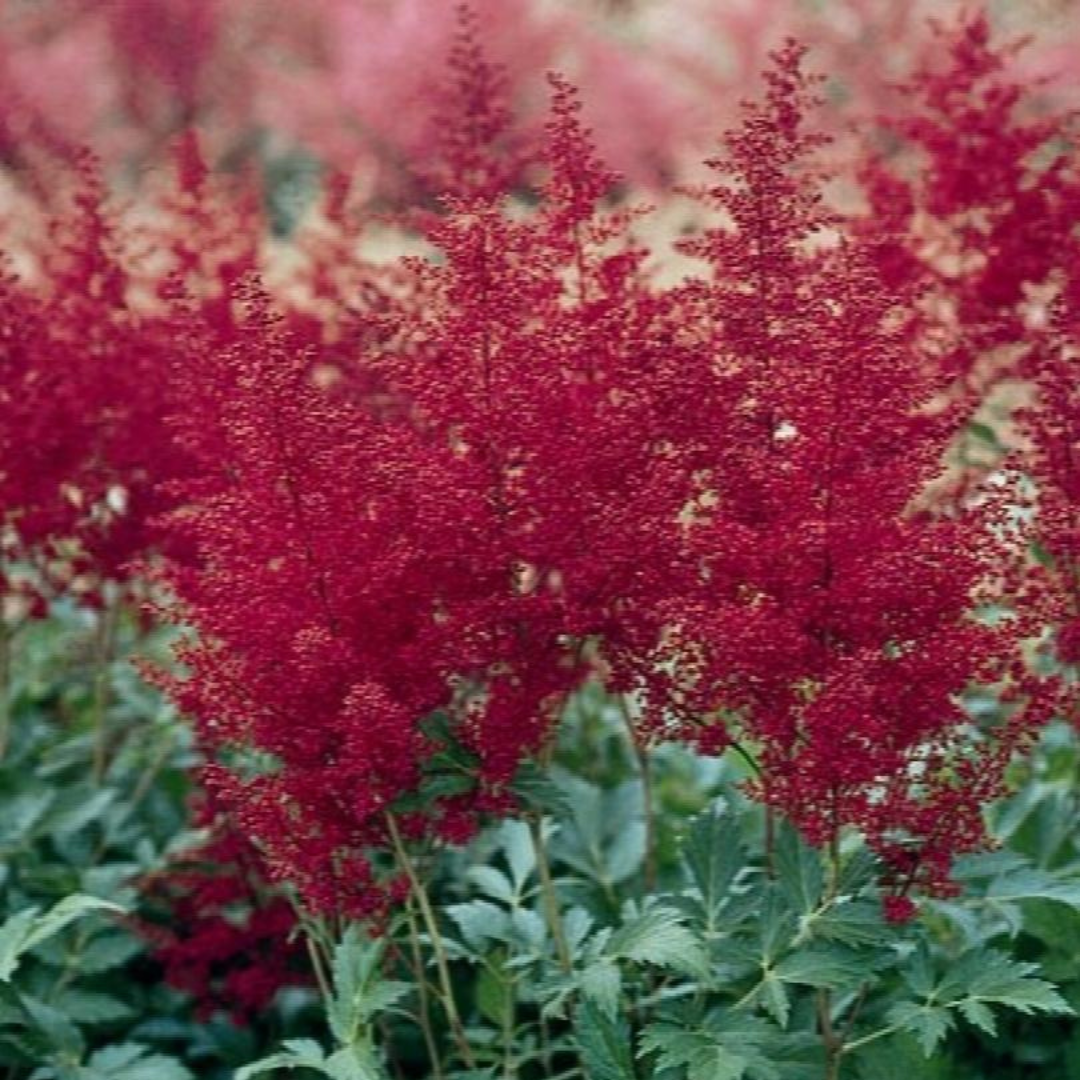
Astilbe 'Montgomery'
- In stock, ready for delivery
Astilbe 'Montgomery': Deep Red, Zero Subtlety
Deep red tapered plumes over glossy leaves that open bronze-red, like a velvet couch in a shady den. 'Montgomery' is old money in the shade garden. OLD MONEY, NEW LEAVES.
Plant Characteristics:
- Botanical Name: Astilbe japonica hybrid
- Common Name: False Spirea, Japanese Astilbe
- Height: 50–60 cm (20–24 in)
- Spread: 45–60 cm (18–24 in)
- Flowers: Deep red, in dense, tapered plumes that cut and dry well
- Bloom Time: Early to midsummer (June to July)
- Foliage: Finely divided and glossy, emerging bronze-red and maturing to dark green
- Features: Rabbit resistant, good cut and dried flower, RHS Award of Garden Merit
Where to Plant: Plant it in groups in the middle of a shade border, along a woodland edge, or near water where the soil stays damp. The red stands out against lime and gold foliage. Cut a few plumes for the vase, or let them dry on the plant.
Companion Plants: Give deep red 'Montgomery' a moist, shady bed with lavender, gold and bold leaves around it. Epimedium 'Lilafee' opens lavender-violet flowers at 25 to 30 cm in April and May. Hosta 'Maui Buttercups' adds small, cupped gold leaves at 20 to 25 cm. Rodgersia aesculifolia brings big chestnut-like leaves and cream plumes at 90 to 120 cm in June and July. Hakonechloa macra edges the bed at 30 to 45 cm with bright green, cascading blades.
Plant Care: Plant in spring or early fall in rich, moist soil with lots of organic matter. Morning sun with afternoon shade is ideal. In more sun, it needs steady water to keep the leaves from scorching. Never let the soil dry out completely. A layer of mulch helps a lot, especially in clay that cracks in August. Feed lightly in spring with compost. Leave the plumes standing for winter interest or trim them after flowering. Cut the stems down in late fall or early spring. Divide every three or four years in spring when the centre gets woody.
History: Astilbe japonica grows wild in the moist mountain woodlands of Japan, and European nurseries crossed it with other species in the early 1900s to create today's brightly coloured garden astilbes. 'Montgomery' is one of the best-known red forms and holds the RHS Award of Garden Merit.
Final Thoughts: Plant it where moisture stays put and cut a few for drying. Deer and rabbits aren't welcome. RED VELVET, NO CAKE.