

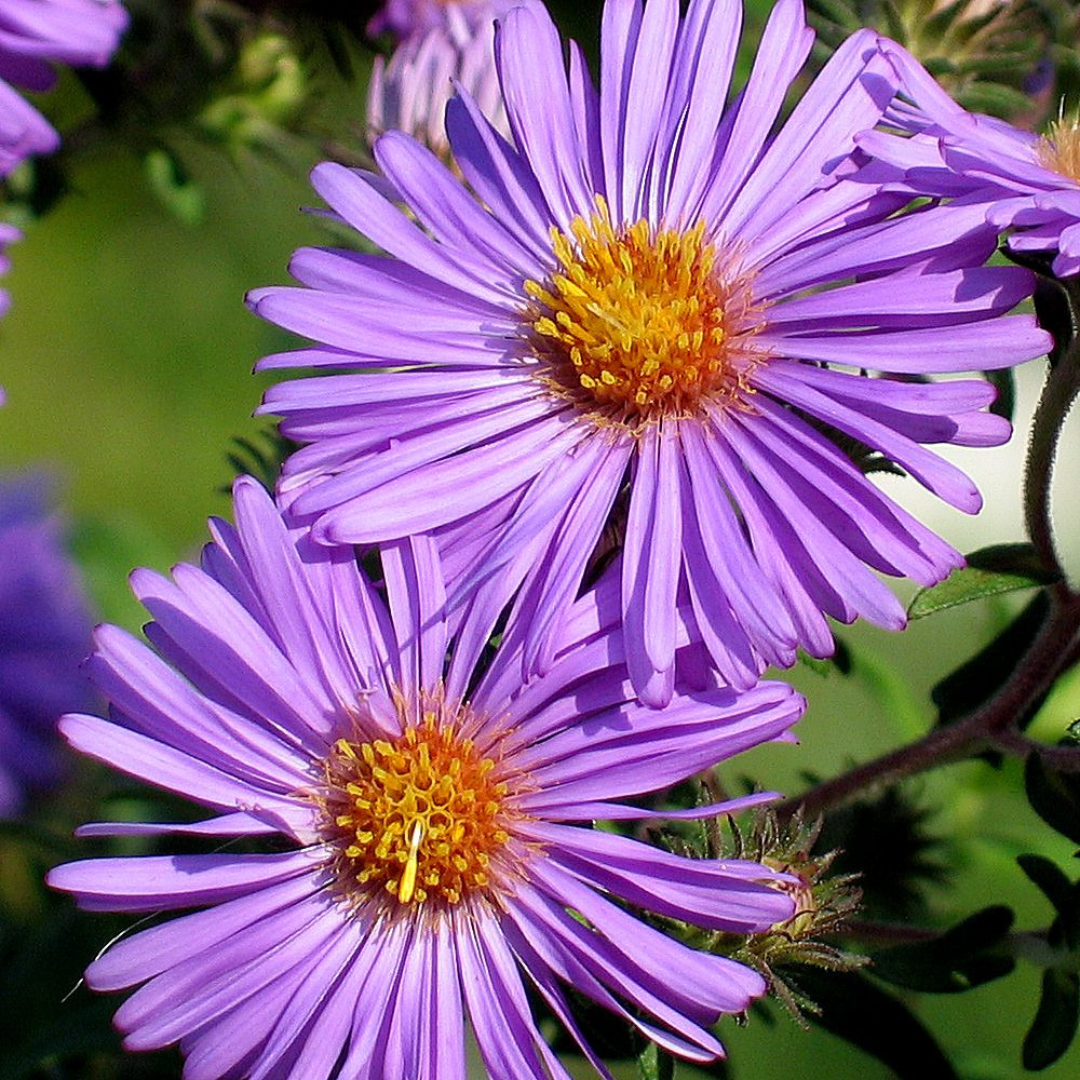
Symphyotrichum novae-angliae
- In stock, ready for delivery
Symphyotrichum novae-angliae: Tall Purple Daisies Built for Clay and Cold
New England aster is the late-season rest stop on the monarch highway. Tall purple to rose daisies with sunny centres, open for business when everybody else has shut the doors. FILL 'ER UP, YOUR MAJESTY.
Plant Characteristics:
- Botanical Name: Symphyotrichum novae-angliae (formerly Aster novae-angliae)
- Common Name: New England Aster
- Height: 90–180 cm (3–6 ft)
- Spread: 60–90 cm (2–3 ft)
- Flowers: Purple to rose-purple daisies about 4 cm (1.5 in) across, with yellow centres. Wild plants vary, and some lean pink or lavender.
- Bloom Time: Late summer to fall (August to September), often carrying on into October
- Foliage: Narrow, lance-shaped, slightly hairy leaves along stiff, upright stems
- Features: Host plant for pearl crescent butterflies, tolerates clay
Where to Plant: This is a back-of-the-border plant, or a big clump in a meadow or pollinator garden. Plant something medium-height in front, because the lower leaves can look tired by fall. It handles heavy clay, cold winters, damp spots and rain garden edges without complaint.
Companion Plants: Plant New England aster in a sunny or part-shade native meadow with wild geranium, bergamot and sneezeweed. Geranium maculatum opens pale pink wild geranium at 45 to 60 cm in May and June. Monarda fistulosa adds lavender wild bergamot at 60 to 120 cm from June to August. Helenium autumnale brings golden sneezeweed at 90 to 150 cm from July to October. Bouteloua curtipendula adds a native side-oats grama at 60 to 75 cm in flower.
Plant Care: Plant it in full sun to part sun, in average to moist soil. Clay is fine. Water during the first season and during long dry spells. Good air flow helps keep powdery mildew down, so don't crowd it. For a shorter, bushier plant that rarely needs staking, pinch or cut the stems back by about half a couple of times between late spring and early July. Stop by mid-July so it has time to set buds. After flowering, cut it back if you want to limit self-seeding, or leave the stems up for the birds that eat the seed. Divide the clump every few years in spring to keep it vigorous.
History: New England aster is native from Quebec and Maine south to the Carolinas and west to the Great Plains, in meadows, damp thickets and along stream banks. It was long called Aster novae-angliae until most North American asters moved to Symphyotrichum, and the Xerces Society counts it among the most valuable plants for native bees.
Final Thoughts: It tolerates clay and puts up with a little deer pressure. Plant it at the back and watch the traffic. THE BUTTERFLIES ARE RUNNING LATE. BE READY.