

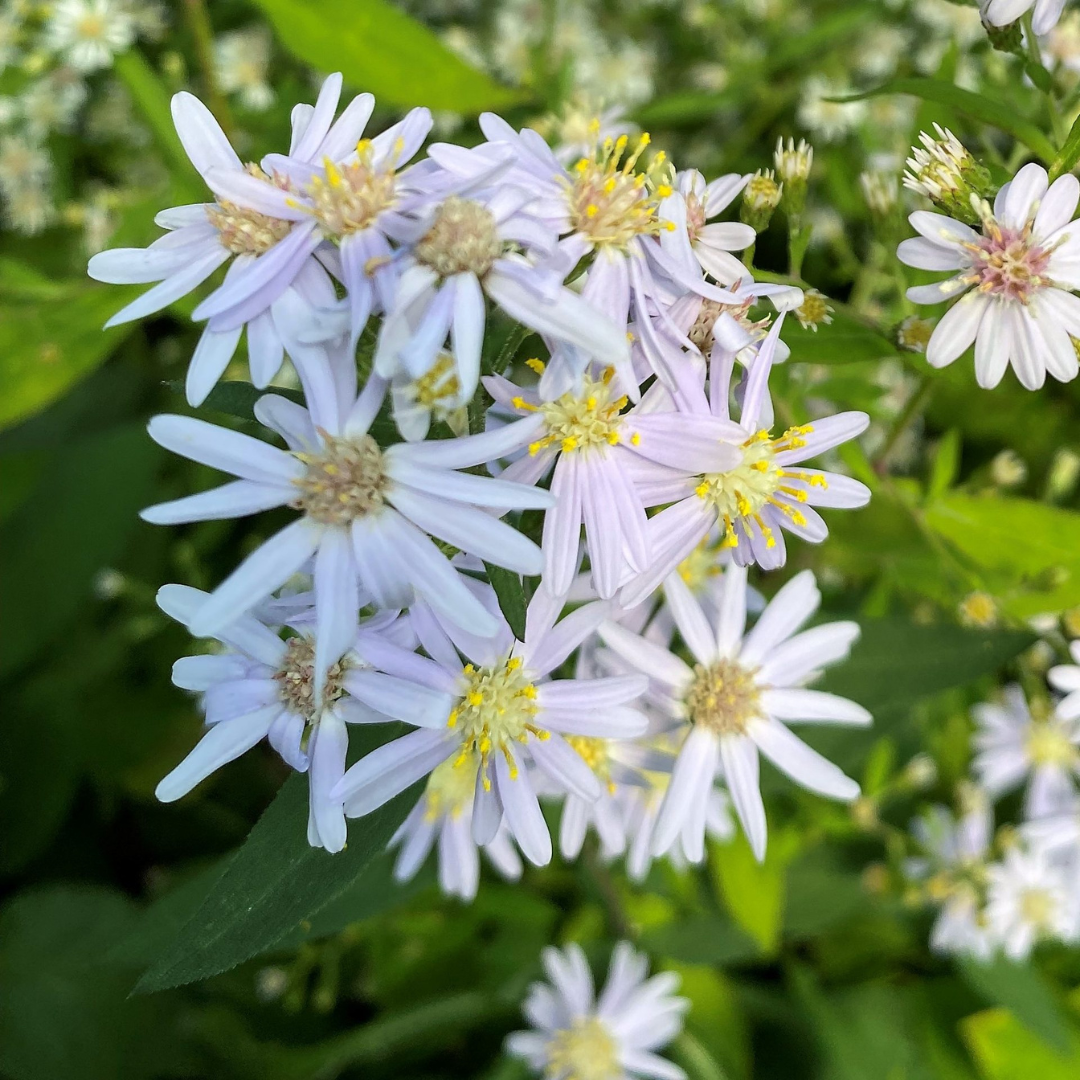
Eurybia macrophylla
- In stock, ready for delivery
Eurybia macrophylla: Big Green Hearts Carpeting the Shade
Big, rough, heart-shaped leaves form a groundcover so dense it practically has a property line. This native aster follows up with pale lavender daisies late in summer. IT DOESN'T DO SMALL TALK. IT DOES COVERAGE.
Plant Characteristics:
- Botanical Name: Eurybia macrophylla (formerly Aster macrophyllus)
- Common Name: Large-leaved Aster, Big-leaf Aster
- Height: 60–100 cm (2–3 ft) in flower
- Spread: 45–75 cm (1.5–2.5 ft), slowly spreading into colonies
- Flowers: Pale lavender to white daisies, 2–4 cm (3/4–1.5 in) across, with yellow centres that turn purplish, in loose flat-topped clusters
- Bloom Time: Late summer to early fall (August to September)
- Foliage: Large, rough, heart-shaped basal leaves with toothed edges, 5–15 cm (2–6 in) long
- Features: Groundcover, tolerates dry shade once established
Where to Plant: Use it to fill large areas under trees, cover a shady slope, or naturalize a woodland edge where you want something green and low that takes care of itself. Many basal leaves never send up a flower stem, so expect a leafy carpet with scattered blooms.
Companion Plants: Plant big-leaved aster as a native ground layer in dry shade, with woodland plants that share the conditions. Phlox divaricata opens pale blue woodland phlox at 30 to 38 cm in April and May. Solidago flexicaulis adds zigzag goldenrod at 60 to 90 cm from August to October. Dryopteris marginalis brings leathery, blue-green evergreen fronds at 45 to 60 cm. Carex appalachica fills in at 15 to 30 cm with fine, thread-like blades.
Plant Care: Plant in part shade to full shade in average woodland soil. It prefers moist, humus-rich soil but tolerates dry conditions once established. Water through the first season. A layer of leaf litter or shredded leaves keeps it happy and mimics the forest floor. It spreads by rhizomes to form colonies, so give it room or plant it where spreading is welcome. Cut flower stems back in late fall or leave them for winter. Divide in spring if you want to move pieces elsewhere.
History: Large-leaved aster grows wild across eastern North America and is widespread in Ontario and Quebec forests, where it is often one of the first asters to bloom. It was long known as Aster macrophyllus, and macrophylla means large-leaved, which is exactly what you notice first.
Final Thoughts: Plant a patch under the trees where nothing else wants to live. THE LANDSCAPER'S SECRET WEAPON, NOW IN YOUR CART.