

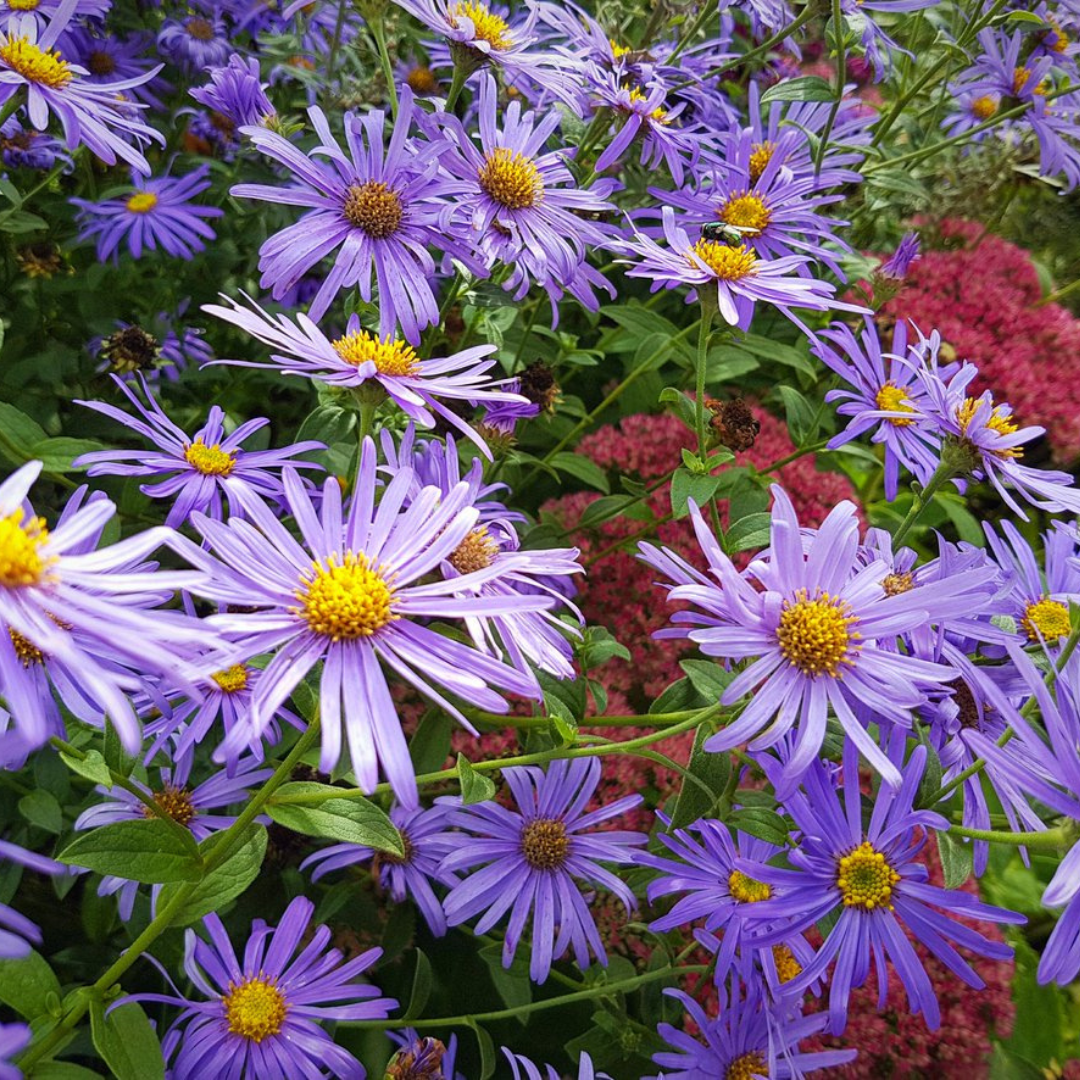
Aster 'Mönch'
- In stock, ready for delivery
Aster 'Mönch': Lavender Blue That Refuses to Clock Out
Lavender-blue daisies that bloom so long you'll start looking for a hidden off switch. 'Mönch' is calm, clean and shrugs off mildew. MEDITATION IN FLOWER FORM.
Plant Characteristics:
- Botanical Name: Aster × frikartii 'Mönch'
- Common Name: Frikart's Aster, Michaelmas Daisy
- Height: 60–75 cm (24–30 in)
- Spread: 45–60 cm (18–24 in)
- Flowers: Lavender-blue daisies about 5 cm (2 in) across, with yellow to orange centres
- Bloom Time: Midsummer to early fall (July to September)
- Foliage: Grey-green to mid-green leaves on a bushy, branching mound
- Features: Very long bloom season, good mildew resistance, RHS Award of Garden Merit
Where to Plant: It's a natural fit for the middle of a sunny border, cottage gardens and pollinator plantings, and it works in large containers too. Its soft blue bridges summer and fall and goes with almost anything. The lean stems may rest on neighbours late in the season, so plant it where a relaxed look suits.
Companion Plants: Give 'Mönch' a sunny bed where its lavender-blue daisies run alongside hot reds and golds. Geum TEMPO™ 'Coral' fronts the bed with coral-red flowers at 18 to 30 cm from April to June. Helenium 'Mariachi Bandera' adds red and gold daisies at 40 to 50 cm from July to September. Helianthus 'Sunshine Daydream' rises behind at 150 to 180 cm with double gold blooms from July to October. Miscanthus 'Little Kitten' adds a compact, fine-bladed clump at 60 to 90 cm in flower.
Plant Care: Plant in full sun in well-drained, moderately fertile soil. Good drainage matters most, especially in winter. Frikart's asters dislike sitting in wet, heavy clay over winter, so amend clay generously or plant on a slight rise. Water through the first season and during long dry spells. In zone 5, leave the stems standing over winter and cut them back in spring once new growth appears; this helps the crown survive the cold. A light mulch after the ground freezes also helps. Divide in spring every few years if the clump gets crowded.
History: 'Mönch' was bred by Swiss nurseryman Carl Ludwig Frikart from a cross of Aster amellus and the Himalayan Aster thomsonii, introduced around 1918 and named after the Mönch, a Swiss Alps peak beside the Eiger and the Jungfrau. It holds the Royal Horticultural Society's Award of Garden Merit.
Final Thoughts: Plant it in sun and let it outlast every other flower in the bed. Bees and butterflies visit all season. THE MARATHON RUNNER OF ASTERS.