

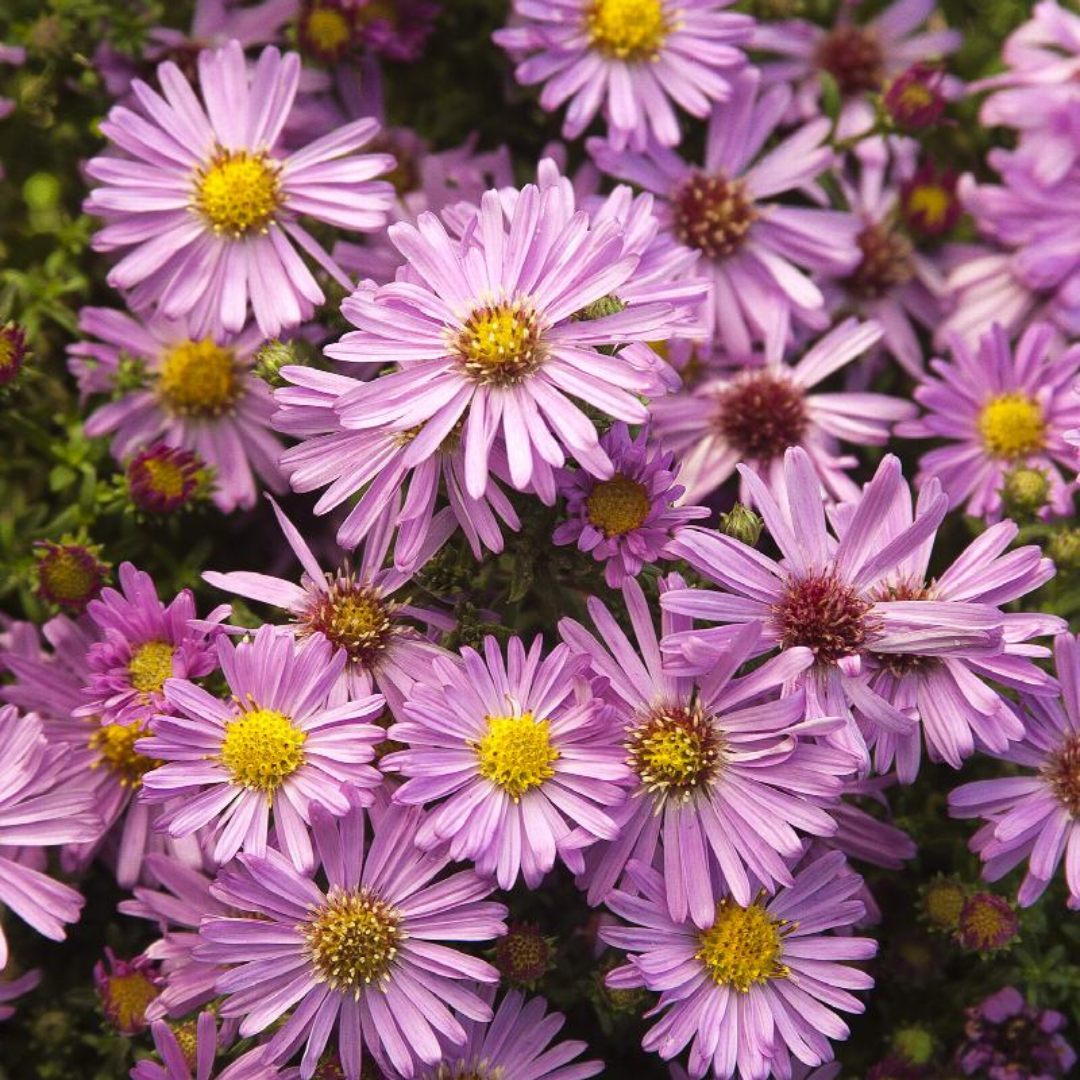
Aster 'Wood's Pink'
- In stock, ready for delivery
Aster 'Wood's Pink': Clear Pink Daisies Hugging the Path
Clear pink daisies piled on glossy foliage that blushes burgundy in fall. 'Wood's Pink' is the bubblegum of the late border. POP IT.
Plant Characteristics:
- Botanical Name: Symphyotrichum 'Wood's Pink' (sold as Aster dumosus)
- Common Name: Dwarf Aster, Michaelmas Daisy
- Height: 30–40 cm (12–16 in)
- Spread: 40–50 cm (16–20 in)
- Flowers: Small clear pink to lilac-pink daisies with yellow centres, borne in masses at the stem tips
- Bloom Time: Late summer to fall (August to October)
- Foliage: Narrow, glossy dark green leaves that can take on burgundy tones in fall. Good mildew resistance.
- Features: Compact habit, good for cutting
Where to Plant: It's made for the front of a sunny border, along a walkway, or in groups where you want a low carpet of fall colour. It works in containers too, though in our winters potted plants are best moved into the ground for the cold months.
Companion Plants: Plant 'Wood's Pink' at the front of a sunny or part-shade border full of pinks from May to October. Paeonia 'Pink Hawaiian Coral' opens coral-pink peonies at 90 cm in May and June. Phlox Super Ka-Pow™ Fuchsia adds fragrant fuchsia heads at 45 to 50 cm from June to August. Hemerocallis 'Strawberry Candy' brings strawberry-pink daylilies at 65 cm in July and August. Calamagrostis 'Karl Foerster' rises behind at 120 to 180 cm with upright plumes.
Plant Care: Plant in full sun or part sun in average, well-drained soil. It likes steady moisture and shouldn't dry out completely, especially in its first season. More sun means more flowers. Pinching the stems back by about a third in late spring and again in early summer gives a fuller mound, though it stays compact without it. Cut back to the ground in late fall or early spring. Divide every two or three years in spring to keep it flowering well.
History: The Wood's series is traced to Portland, Oregon nurseryman Edsel (Ed) Wood and was introduced by Lynn Caton. 'Wood's Pink' has good resistance to powdery mildew and is one of the Royal Horticultural Society's Plants for Pollinators.
Final Thoughts: Edge a path, fill a pot or cut a handful for the kitchen. Deer won't chew. BUBBLEGUM WITHOUT THE STICKY SHOES.