

Asclepias tuberosa
- In stock, ready for delivery
Asclepias tuberosa: Blazing Orange, Lean Soil, Happy Monarchs
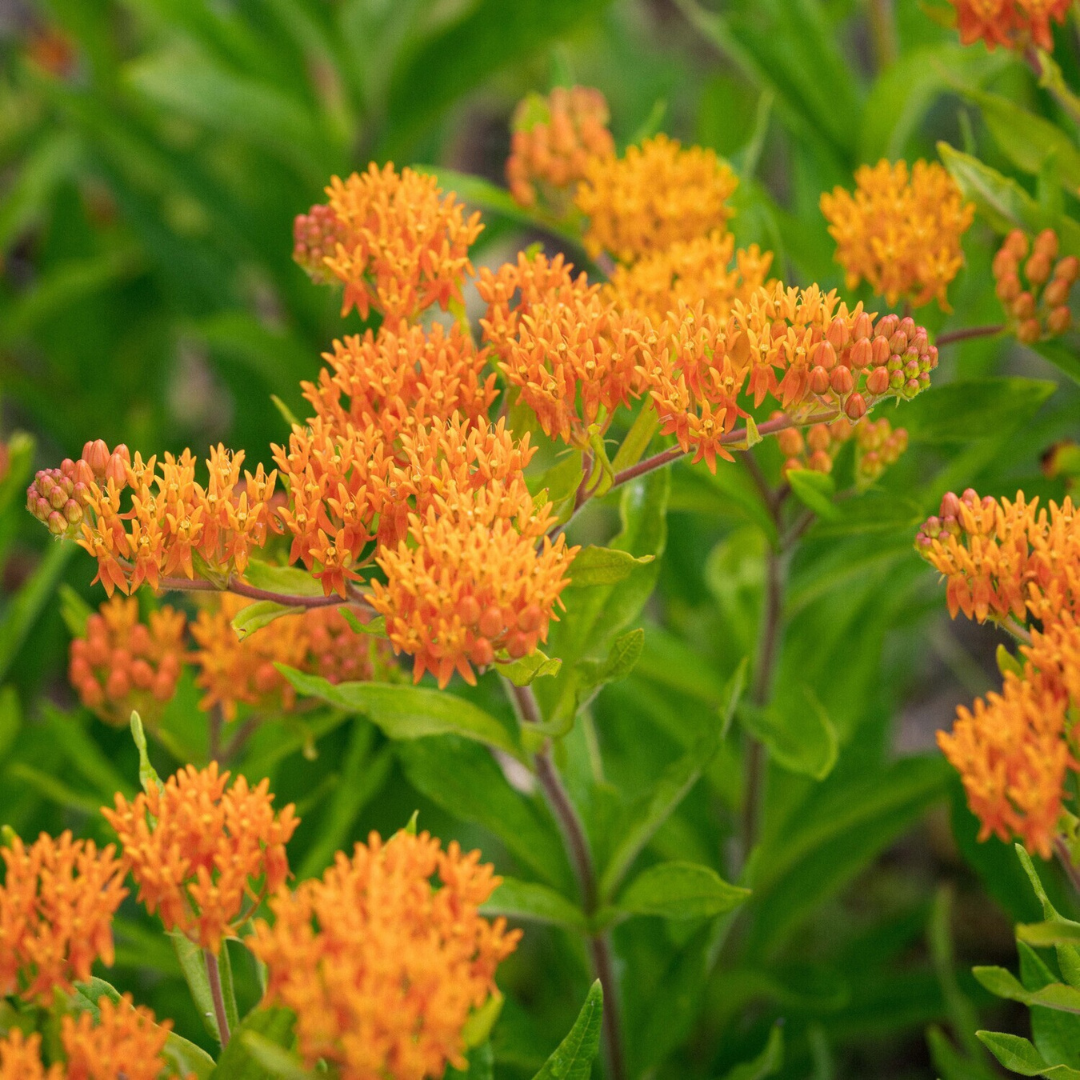
Bright orange clusters on a native plant whose sap runs clear, not milky, like the milkweed that refuses to follow the rules. Butterfly Weed is pure sunshine for monarchs. RULE BREAKER. MONARCH MAKER.
Plant Characteristics:
- Botanical Name: Asclepias tuberosa
- Common Name: Butterfly Weed, Butterfly Milkweed
- Height: 30–75 cm (1–2.5 ft)
- Spread: 30–45 cm (1–1.5 ft)
- Flowers: Flat-topped clusters of bright orange to yellow-orange flowers, followed by narrow seed pods 8–15 cm (3–6 in) long
- Bloom Time: Midsummer (July to August)
- Foliage: Narrow, lance-shaped green leaves on upright stems. Unlike most milkweeds, the sap is clear, not milky.
- Features: Monarch host plant
Where to Plant: Put it where the soil is leanest and hottest: a sunny slope, a gravel bed, a dry border or a meadow planting. If you have heavy clay, plant it on a slope or in a raised bed so water drains away from the crown.
Companion Plants: Build a dry, sunny native bed around butterfly weed, with every plant happy in poor, sandy soil. Opuntia humifusa opens waxy yellow cactus flowers at 15 to 30 cm in June and July. Dalea purpurea adds purple prairie clover heads at 30 to 90 cm in July and August. Symphyotrichum ericoides brings tiny white heath asters at 30 to 90 cm from August to October. Schizachyrium 'Ha Ha Tonka' stands behind at 90 to 120 cm with blue-green blades tinged red.
Plant Care: Plant in full sun in average to sandy, well-drained soil. Rich soil isn't needed. Water through the first season, then water only in long droughts. Wet soil in winter is the main thing that kills it. It grows a deep taproot, so pick its spot once and leave it there. It doesn't divide or move well. New shoots come up late in spring, so mark the spot and don't dig it up by mistake. Cut stems back in late fall or early spring. Remove the pods before they split if you don't want seedlings.
History: Butterfly weed is native to much of eastern and central North America, including southern Ontario, where it grows on dry prairies, sand plains and open roadsides. Its other old name, pleurisy root, comes from its historical use as a remedy for lung complaints.
Final Thoughts: Plant it in your driest, sunniest spot and don't move it. Deer leave it alone. THE ORANGE ALERT EVERY POLLINATOR WAITS FOR.