

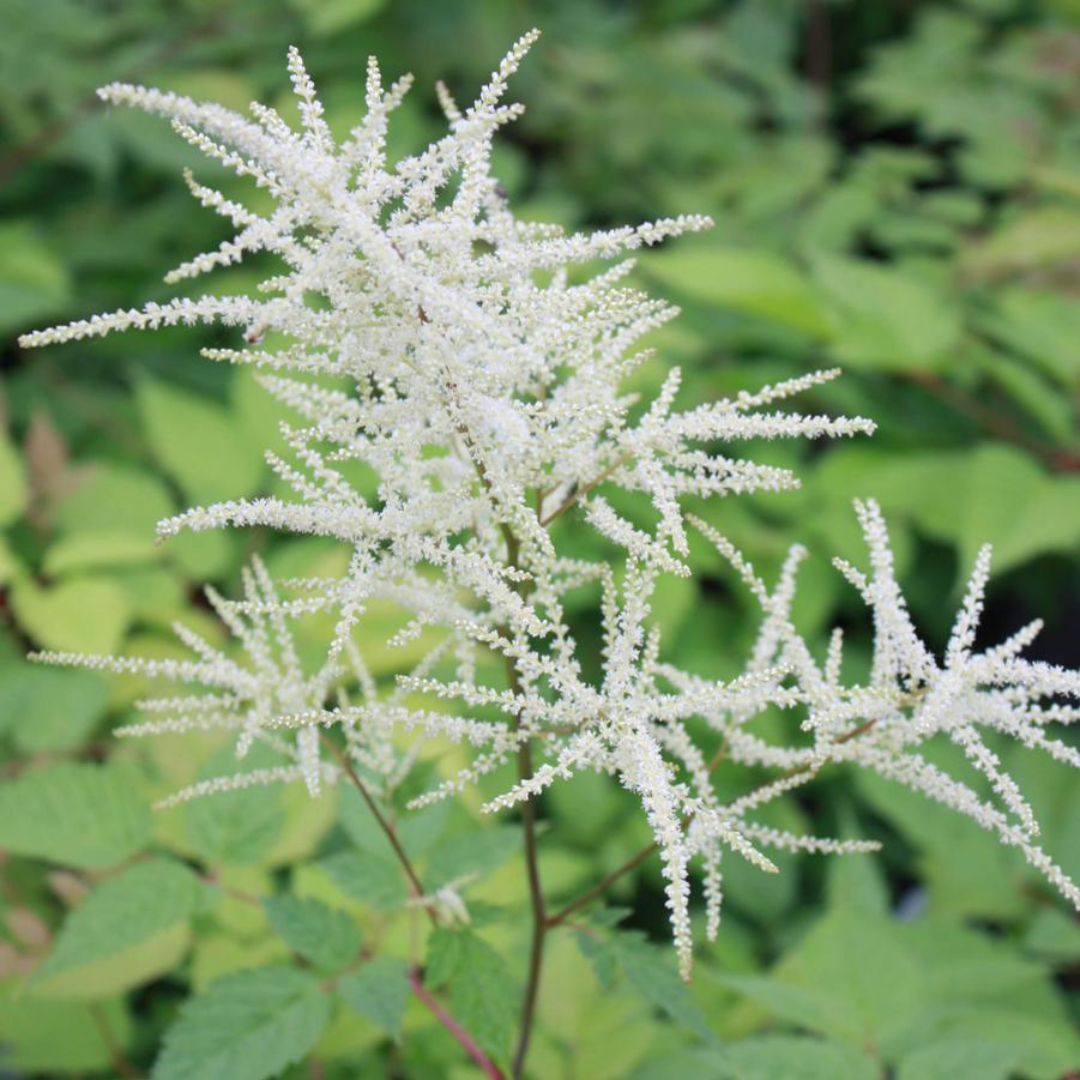
Aruncus dioicus
- In stock, ready for delivery
Aruncus dioicus: Big, Creamy and Built for the Back Row
Giant creamy white plumes towering over the shade garden, and every plant is either male or female. Goat's Beard has a whole dating life you didn't know about. THE PLUMES ARE SPILLING THE TEA.
Plant Characteristics:
- Botanical Name: Aruncus dioicus
- Common Name: Goat's Beard
- Height: 120–180 cm (4–6 ft) in bloom
- Spread: 90–120 cm (3–4 ft)
- Flowers: Tiny creamy white flowers packed into large, branched plumes. Each plant is either male or female. Male plants carry fuller, more upright plumes; female plumes droop a little and set seed.
- Bloom Time: Early summer (June to July)
- Foliage: Large, divided, fern-like leaves in mid green, forming a bushy clump
- Features: Long-lived, good cut flower
Where to Plant: Goat's beard is built for the back of a shady border, a woodland edge, or the moist ground near a pond or stream. One plant makes a fine specimen, and a few in a row read like a soft white screen in early summer. Give it room, because it gets wide.
Companion Plants: Back a moist, part-shade bed with goat's beard and fill the front with pink, red and gold. Sagina 'Aurea' carpets the edge at 2 to 5 cm with golden moss-like leaves and tiny white flowers. Heuchera Spice Curls™ adds ruffled foliage at 30 to 36 cm with red bells in summer. Digitalis 'Candy Mountain' brings upward-facing rose-pink foxgloves at 90 to 120 cm in June and July. Molinia 'Moorflamme' adds a fine clump at about 60 cm that turns orange-red in fall.
Plant Care: Plant it in moist, fertile soil with plenty of compost worked in. Part shade is ideal. It can take full sun, but only if the roots never dry out. Water during dry spells, because the leaves brown quickly in drought. Young plants are slow for the first couple of seasons, then they settle in for the long haul. Cut the stems back to near the ground in fall, or leave the dried plumes standing for winter interest and cut them in spring. Established clumps have a tough, woody rootstock and dislike being moved. If you must divide, do it in early spring, cutting the crown into pieces that each keep at least one growing bud.
History: Goat's beard grows wild in rich deciduous woods of the eastern and central United States and across Europe and Asia, and dioicus means its male and female flowers grow on separate plants. Philadelphia plantsman John Bartram listed it in 1783 as "Indian Pipestem," and nurseryman Bernard McMahon offered it in 1806 as goat's-beard spiraea.
Final Thoughts: Plant it once, let it settle and enjoy it for years. Deer stay out of its business. LONG-LIVED, TALL AND NOT TAKING QUESTIONS.