

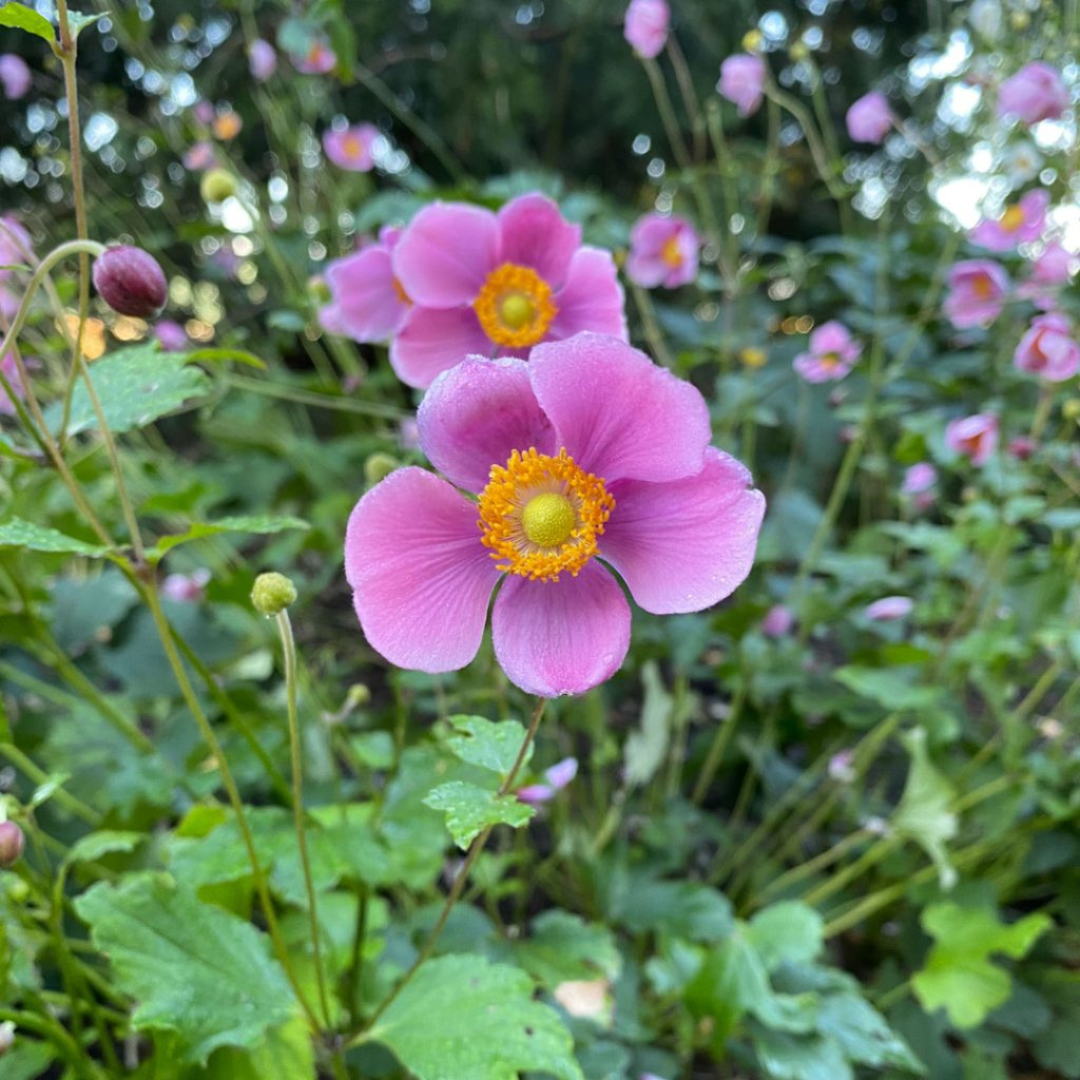
Anemone 'September Charm'
- In stock, ready for delivery
HEADS UP. THIS ONE SPREADS.
This anemone takes a year or two to settle in, then spreads by underground runners into a large patch. Give it room or plant it where a colony is welcome, and keep it out of woodlands, ravines and other natural areas.
Anemone 'September Charm': Soft Rose Cups to Close Out Summer
Light rose-pink cups with golden stamens, opening just as the kids head back to school. 'September Charm' is the back-to-school crush the whole garden has. HALL PASS: GRANTED.
Plant Characteristics:
- Botanical Name: Anemone × hybrida 'September Charm'
- Common Name: Japanese Anemone, Windflower
- Height: 80–90 cm (2.5–3 ft) in flower
- Spread: 60–75 cm (2–2.5 ft), slowly widening by rhizomes
- Flowers: Single, slightly cupped, light rose-pink, 6–8 cm (2.5–3 in) across, with golden stamens
- Bloom Time: Late summer to fall (August to October)
- Foliage: Three-lobed, mid-green leaves in a low clump
- Features: RHS Award of Garden Merit
Where to Plant: Put it in the middle of a border, where the low leaves stay tucked behind shorter plants and the flowers float up just as summer bloomers fade. It also works well along a woodland edge or a fence.
Companion Plants: Plant 'September Charm' in a sunny or lightly shaded bed with bold red and gold to bloom before it. Paeonia 'Flame' opens single scarlet peonies at 55 to 60 cm in May and June. Lilium 'Red Matrix' adds upward-facing red lilies at 30 to 50 cm in June and July. Rudbeckia 'Goldblitz' brings golden daisies at 60 to 70 cm from June to September. Festuca 'Elijah Blue' edges the front with powder-blue tufts at 20 to 30 cm.
Plant Care: Plant in spring, after the last frost, in rich, moist, well-drained soil. Morning sun with some afternoon shade is ideal. Full sun works if the soil never dries out. Water well through its first season, and mulch the first winter. Japanese anemones can be slow to settle in, then spread steadily by underground runners once they're happy. Lift and thin the clump every few years if it wanders. Deadheading isn't needed. Leave the fluffy seed heads, then cut the stems down in late fall or early spring.
History: Despite the name, the species behind Japanese anemones came from China, where plant hunter Robert Fortune found them growing in graveyards before sending plants to England in 1844. 'September Charm' is an English selection, introduced in 1932, and has been a garden standard ever since.
Final Thoughts: Plant it where the late sun hits and let it charm the bees. Deer aren't on the class list. TOP OF THE CLASS, EVERY FALL.