

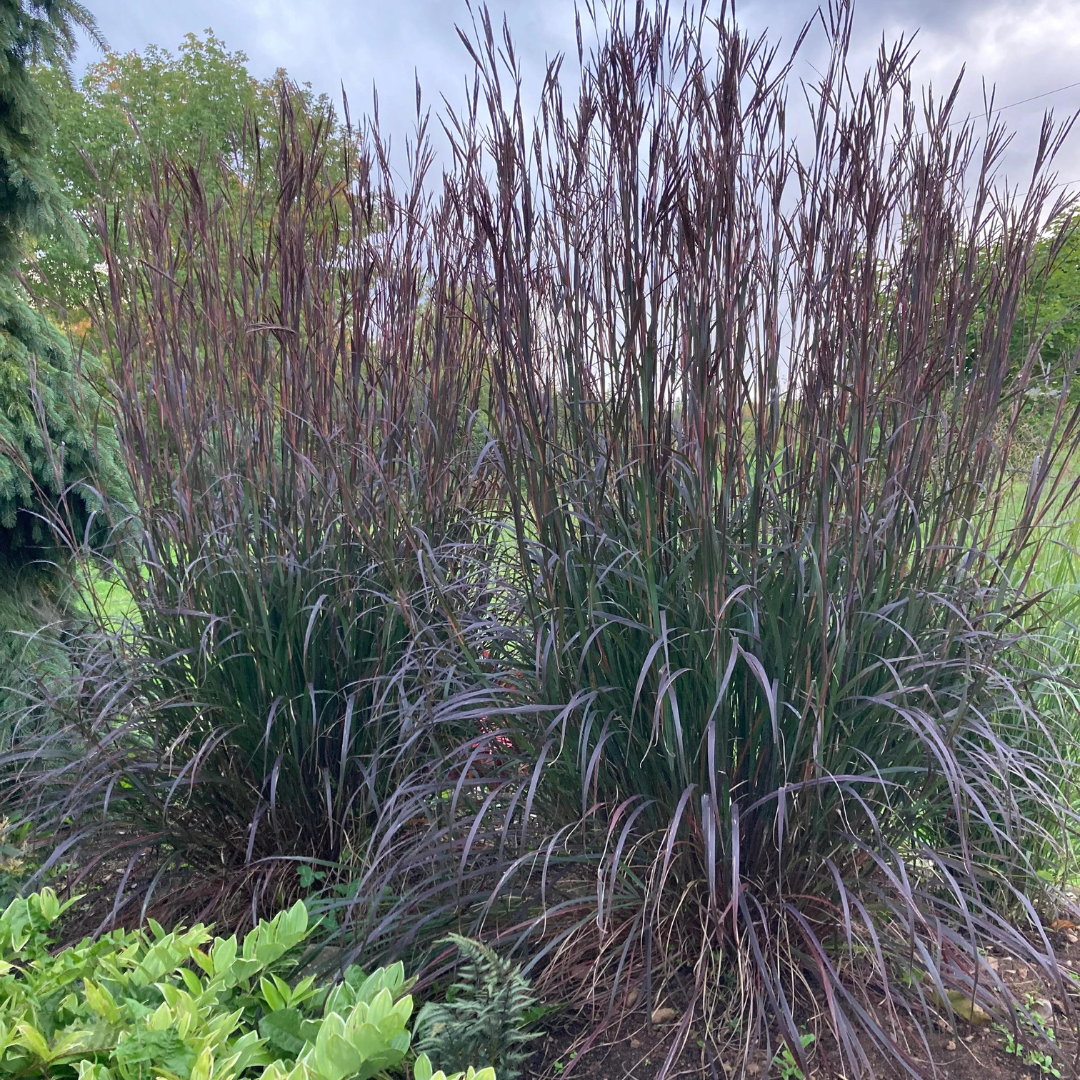
Andropogon gerardii
- In stock, ready for delivery
Andropogon gerardii: Prairie Royalty Taller Than You
Native big bluestem, the grass that used to cover the prairie and still remembers it. Blue-green all summer, copper and red-bronze in fall, with turkey-foot flower heads on top. THE PRAIRIE NEVER LEFT.
Plant Characteristics:
- Botanical Name: Andropogon gerardii
- Common Name: Big Bluestem, Turkey Foot
- Height: 120–200 cm (4–6.5 ft)
- Spread: 60–90 cm (2–3 ft)
- Flowers: Purplish-bronze flower heads, usually three-branched like a turkey's foot
- Bloom Time: Late summer to fall (August to October)
- Foliage: Blue-green in summer, turning copper, orange and reddish-bronze in fall
- Features: Tolerant of clay and salt, tolerates deer browsing, host plant for skipper and wood-nymph butterfly caterpillars
Where to Plant: Use it in meadows, prairie plantings, rain garden edges and the back of large sunny borders. Its deep roots make it great for holding slopes, and it tolerates road salt and heavy clay. Leave the stems up in winter for birds and for structure in the snow.
Companion Plants: Make big bluestem the backbone of a sunny native prairie bed in dry or average soil. Arctostaphylos uva-ursi carpets the front at 10 to 20 cm with spring flowers and red berries. Oenothera fruticosa adds bright yellow sundrops at 30 to 60 cm from June to August. Dalea purpurea brings purple thimble heads at 30 to 90 cm in July and August. Asclepias incarnata adds rose-mauve milkweed flowers at 90 to 150 cm from July to September for monarchs.
Plant Care: Plant in full sun. Average, well-drained soil is ideal, but it handles poor, clay or sandy soil. Rich soil and fertilizer make it lanky, so skip both. Water through the first season while it builds roots. After that, it's very drought tolerant. Big bluestem is a warm-season grass, so don't panic when it's slow to wake up in spring. Cut it to the ground in late winter or early spring before new growth starts. Divide in spring if needed.
History: Big bluestem was one of the dominant grasses of the tallgrass prairie, with a range reaching into southern Ontario and Quebec, and bison grazed it while early settlers cut it for hay. The species name honours the 18th-century French botanist Louis Gérard.
Final Thoughts: Clay, salt, drought, hungry caterpillars? It feeds the butterflies and laughs off the rest, so plant it big. THE ORIGINAL TALL GRASS ICON.