

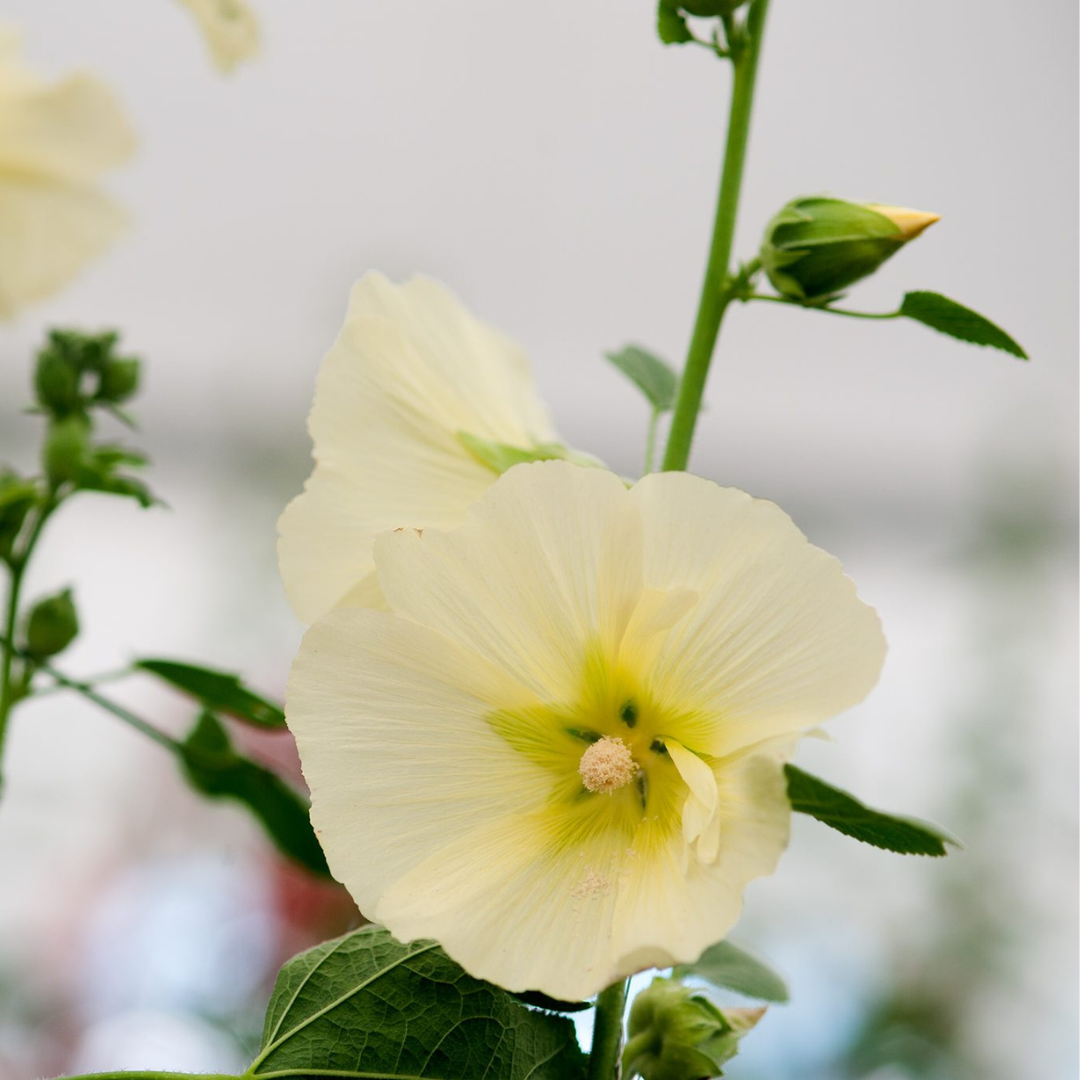
Alcea 'Sunshine'
- In stock, ready for delivery
Alcea 'Sunshine': Yellow Saucers Stacked Up the Fence
Old-fashioned bright yellow blooms on spikes that tower over the veggie patch like a lifeguard on duty. 'Sunshine' is pure nostalgia that actually comes back. YOUR CHILDHOOD SUMMERS, NOW IN YELLOW.
Plant Characteristics:
- Botanical Name: Alcea rosea 'Sunshine'
- Common Name: Hollyhock
- Series: Spotlight Series, bred by Jelitto Perennial Seeds
- Height: 150–180 cm (5–6 ft)
- Spread: 45–60 cm (1.5–2 ft)
- Flowers: Large, single, old-fashioned blooms in bright yellow on tall spikes
- Bloom Time: Midsummer to late summer (July to September)
- Foliage: Light green, rounded leaves in a low mound
- Features: Strong vertical accent, bred to be perennial rather than biennial
Where to Plant: Put it at the back of a sunny border, along a fence, or against a wall where the yellow can glow. It brings height to a narrow bed without taking much ground.
Companion Plants: Give yellow 'Sunshine' a sunny, dry border with pink and steel blue to cool it down. Armeria 'Alba' edges the front with white pompoms at 15 to 20 cm in May and June. Coreopsis 'American Dream' adds light pink daisies at 30 to 40 cm from June to September. Sedum 'Autumn Joy' brings broad pink to rust heads at 45 to 60 cm from August to October. Helictotrichon 'Sapphire' adds a stiff steel-blue clump at 60 to 100 cm in flower, blue all season.
Plant Care: Plant in full sun in average, well-drained soil. Water through the first season, and during long dry spells after that, watering at the base. Hollyhock rust can show up as orange spots on the undersides of leaves. Give plants space, pull off spotted leaves, and clean up the foliage in fall. A stake helps in windy spots. After blooming, cut the plant back to about 20 cm (8 in) to tidy it up. It grows a deep taproot, so it doesn't divide or transplant well.
History: The garden hollyhock comes from wild plants native from Turkey into Asia. Jelitto Perennial Seeds in Germany began breeding the Spotlight Series in 1992 for single hollyhocks in stable colours that live on as perennials, and launched it in 2010 with 'Sunshine' as its yellow member.
Final Thoughts: Plant it where it can soak up every bit of sun and wave at the neighbours over the fence. THE TALLEST GOOD MOOD ON THE BLOCK.