

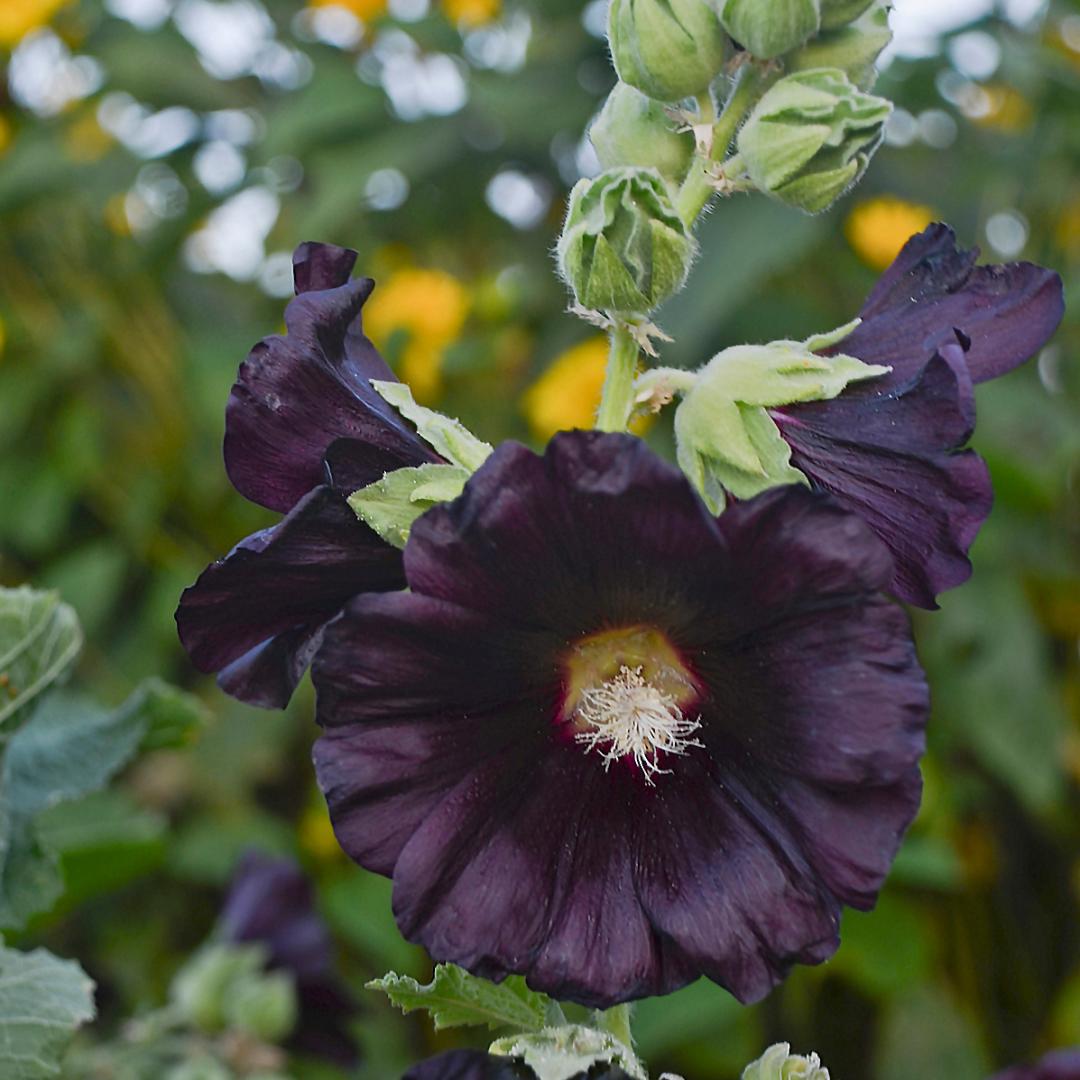
Alcea 'Blacknight'
- In stock, ready for delivery
Alcea 'Blacknight': Tall, Dark and Practically Black
Deep black-purple blooms with a pale yellow eye, marching up spikes taller than most of your relatives. 'Blacknight' is the moody teenager who grew up to be a fashion designer. VERTICAL, VELVET, VILLAINOUS.
Plant Characteristics:
- Botanical Name: Alcea rosea 'Blacknight'
- Common Name: Hollyhock
- Series: Spotlight Series, from Jelitto Perennial Seeds
- Height: 150–180 cm (5–6 ft)
- Spread: 45–60 cm (18–24 in)
- Flowers: Single, deep black-purple blooms with a pale yellow eye, along tall spikes
- Bloom Time: Midsummer to late summer (July to August)
- Foliage: Broad, rounded green leaves at the base
- Features: Good cut flower, vertical accent
Where to Plant: It belongs at the back of the border, along a fence, against a wall or by the side of a garage. The near-black flowers look most dramatic against pale colours, and the tall stems also work in big arrangements.
Companion Plants: Plant these tall black hollyhocks at the back of a dry, sunny cottage bed with blues and whites in front. Iris 'Dream Stuff' opens small white and yellow bearded iris at 25 cm in May and June. Agastache 'Blue Bayou' adds indigo spikes at 41 to 46 cm from July to September. Nepeta Whispurr™ Blue brings lilac-blue spikes at 61 to 71 cm from June to September. Panicum Prairie Winds® 'Cheyenne Sky' adds blue-green blades that turn wine red by midsummer, at about 90 cm in bloom.
Plant Care: Plant in full sun in rich, well-drained soil that stays evenly moist. A spot against a wall or fence gives the tall stems some shelter from wind. Water through the first season and during dry spells. Rust is the classic hollyhock problem. It shows up as orange spots under the leaves, mainly in humid weather. Give plants good air flow, water at the base, remove spotted leaves, and clean up all old foliage in fall. Cut flower stalks down after bloom, or leave a few to drop seed for future plants. Hollyhocks have a long taproot, so plant them where they can stay.
History: Hollyhocks have been cottage garden staples for centuries, and Alcea rosea is often treated as a biennial or short-lived perennial. Jelitto Perennial Seeds introduced the Spotlight Series in 2010, selecting for plants that bloom in their first year and return as perennials.
Final Thoughts: Plant it against a fence where it can loom properly. The hummingbirds will be thrilled. THE COTTAGE GARDEN JUST WENT AFTER HOURS.