

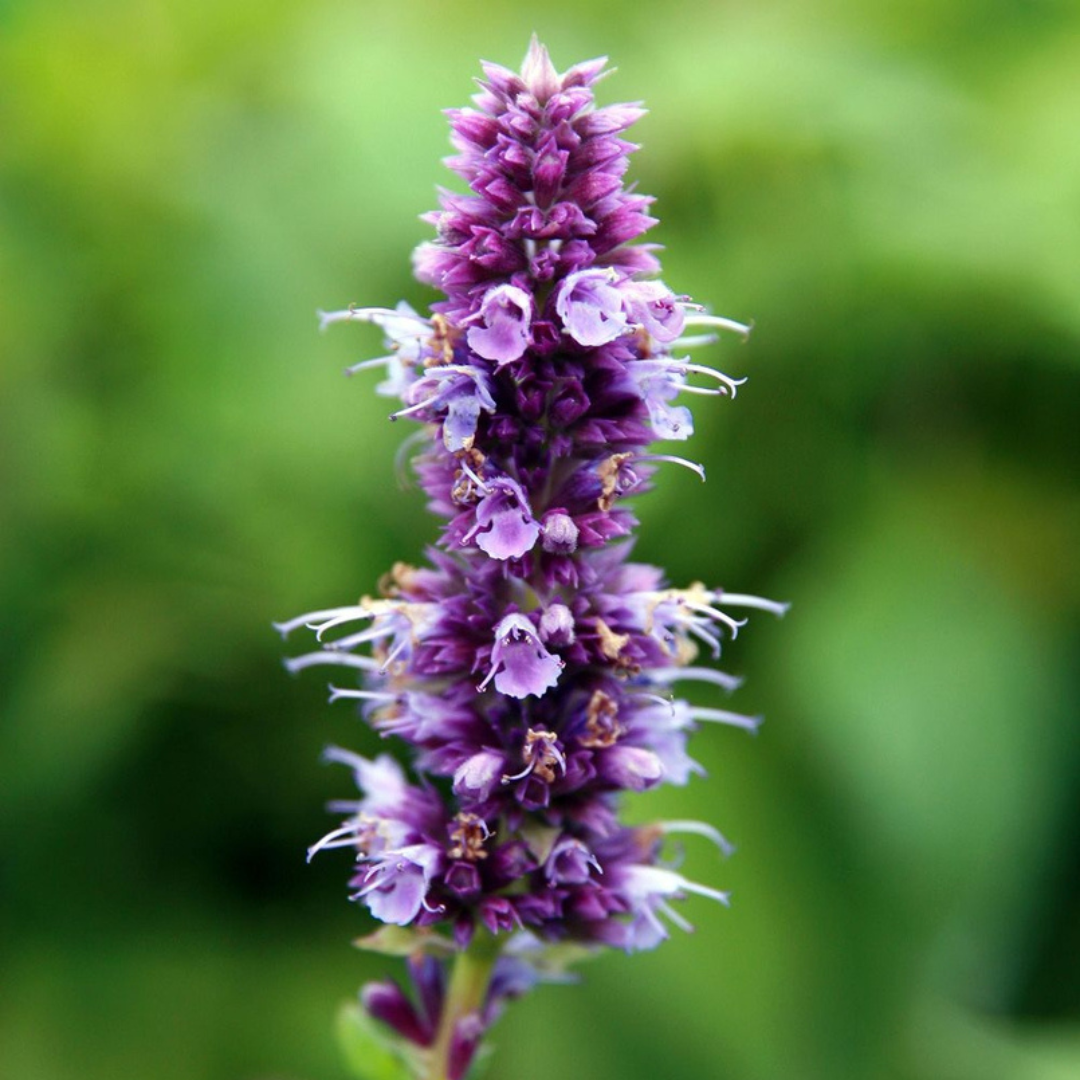
Agastache foeniculum
- In stock, ready for delivery
Agastache foeniculum: Lavender Spikes With an Anise Kick
The native anise hyssop, smelling like a licorice store and covered in lavender-blue spikes. Every bee in the county has this address saved in its phone. THE ORIGINAL SWEET SHOP.
Plant Characteristics:
- Botanical Name: Agastache foeniculum
- Common Name: Anise Hyssop
- Height: 60–120 cm (2–4 ft)
- Spread: 30–90 cm (1–3 ft)
- Flowers: Dense spikes of small lavender-blue flowers, sometimes paler, darkest toward the tips
- Bloom Time: Midsummer to early fall (July to September)
- Foliage: Green, toothed leaves with a sweet anise scent
- Features: Edible, fragrant leaves
Where to Plant: It's a natural fit for pollinator gardens, meadow plantings and the middle of an informal sunny border. It's also at home in an herb garden, since the leaves make a pleasant tea. Leave a few seed heads standing in fall for the goldfinches.
Companion Plants: Plant anise hyssop in a sunny or lightly shaded native bed with lean, well-drained soil. Sisyrinchium angustifolium opens violet-blue stars at 15 to 45 cm from May to July, a native blue-eyed grass. Penstemon hirsutus adds lavender trumpets at 30 to 60 cm in May and June. Campanula rotundifolia nods pale blue harebells at 15 to 45 cm from June to September. Elymus virginicus stands behind at 90 to 125 cm, a native wild rye with upright blades and bristly seed heads.
Plant Care: Plant in full sun or light part shade in average, well-drained soil. It tolerates lean, sandy and even fairly heavy soils as long as water doesn't sit around the crown in winter. Water through the first season, then only in long droughts. Each plant is fairly short-lived, but it self-seeds readily, so a patch carries on for years. Pull extra seedlings in spring, or deadhead before seed sets if you want less of it. Cut the stems back in late winter or early spring rather than fall.
History: Anise hyssop is native to the prairies, dry open woods and fields of the upper Midwest and Great Plains, reaching into Canada from Ontario west to British Columbia. Indigenous peoples used it as a medicine for coughs, fevers and wounds, and despite the name it is related to neither true hyssop nor anise.
Final Thoughts: Brew the leaves for tea, plant it in sun and let it host the pollinator party you never have to cater. Deer decline the invitation. NATIVE, EDIBLE AND ABSURDLY POPULAR.