

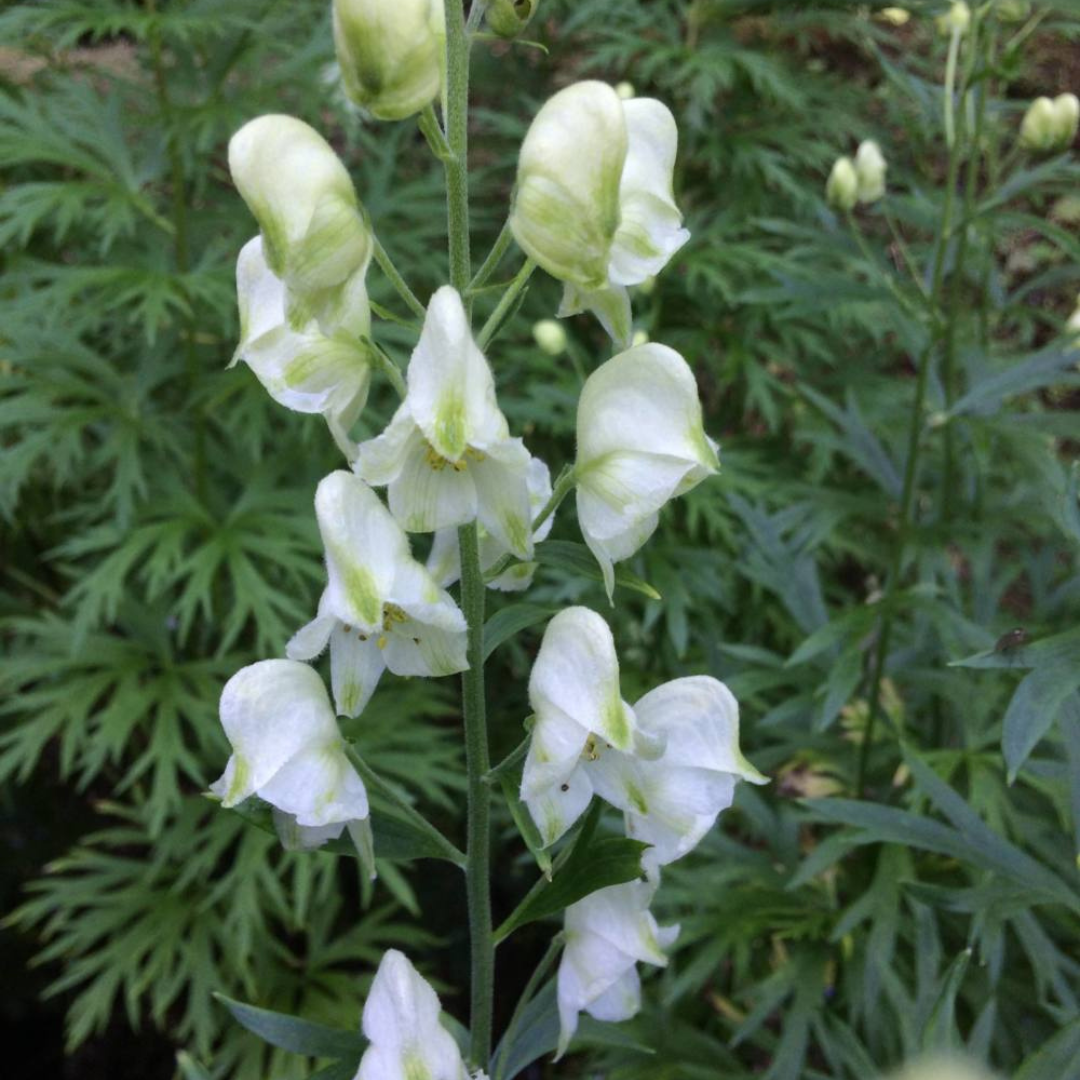
Aconitum 'Album'
- In stock, ready for delivery
Aconitum 'Album': Pretty White Hoods, Poisonous Personality
White hooded flowers on upright spires, looking like a row of very serious figures waiting for a bus. Gorgeous, elegant and poisonous from root to tip. 'Album' is the dinner guest you admire from across the room. LOOK, BUT DON'T TASTE.
Plant Characteristics:
- Botanical Name: Aconitum napellus 'Album'
- Common Name: White Monkshood
- Height: 90–120 cm (3–4 ft)
- Spread: 45–75 cm (1.5–2.5 ft)
- Flowers: Hooded white flowers, sometimes lightly flushed grey, on upright, unbranched spires
- Bloom Time: Mid to late summer (July to August)
- Foliage: Dark green, deeply divided and fern-like
- Features: Rabbit resistant, visited by bumblebees, good cut flower, toxic if eaten, can irritate skin
Where to Plant: Use it in the middle or back of a border, or in a part-shade spot that needs some height. Because it's toxic, keep it away from vegetable beds, play areas and spots where pets like to chew. Plant it where you can admire it rather than brush past it every day.
Companion Plants: Plant this white monkshood in a cool, moist bed in part shade, with blue and white flowers around it. Iris 'Butter and Sugar' opens white and yellow Siberian iris at 65 to 70 cm in May and June. Platycodon 'Astra Blue' adds violet-blue balloon flowers at 20 to 25 cm from June to August. Sanguisorba 'Tanna' sends up burgundy bottlebrushes at 30 to 60 cm from July to September. Deschampsia 'Northern Lights' edges the bed with cream-striped blades at 30 to 40 cm that blush pink in cool weather.
Plant Care: Plant in fertile, moisture-retentive but well-drained soil enriched with compost. It likes cool roots and doesn't like drying out, so give it afternoon shade in hot spots and water during dry spells. Keep it away from thirsty tree roots. Tall stems may need a little support in exposed sites. Cut back after flowering or in late fall. Divide every four or five years in spring or fall if the clump gets crowded. Wear gloves for all of it, and wash your hands afterwards.
History: Aconitum napellus is a European species also known as aconite and wolfsbane, and the ancient Greeks called it the queen of poisons. White forms like 'Album' have been grown in gardens for generations.
Final Thoughts: Wear gloves, keep it away from curious kids and pets, and let the bumblebees do the visiting. Deer already got the memo. BEAUTY WITH A WARNING LABEL.