

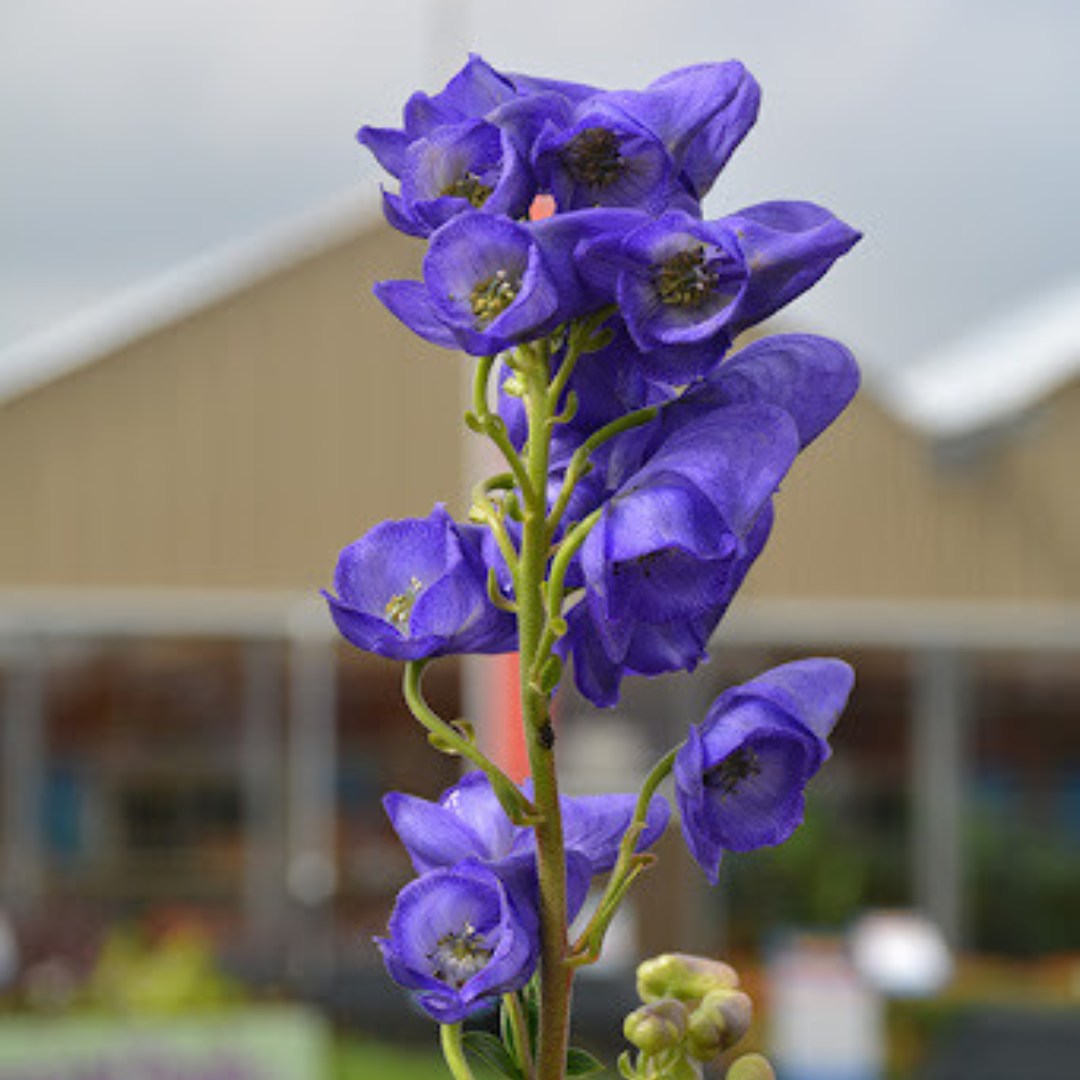
Aconitum fischeri
- In stock, ready for delivery
Aconitum fischeri: Royal Blue in a Sensible Size
Azure Monkshood is the short, sturdy cousin who never needs a stake and never falls over at the party. Deep blue hoods on stiff stems, late in the season. COMPACT, COMPOSED, SLIGHTLY POISONOUS.
Plant Characteristics:
- Botanical Name: Aconitum fischeri
- Common Name: Azure Monkshood
- Height: 45–60 cm (18–24 in)
- Spread: 30–45 cm (12–18 in)
- Flowers: Hooded, deep blue to lavender-blue flowers on upright spikes
- Bloom Time: Late summer to early fall (August to September)
- Foliage: Glossy, dark green and deeply lobed
- Features: Rabbit resistant, sturdy stems that rarely need staking, toxic if eaten, can irritate skin
Where to Plant: Its modest size makes it easy to fit into the middle of a border, and it also works well in part-shade beds. Keep it away from vegetable beds, play areas and pets. It's very cold hardy, so a Canadian winter is no problem.
Companion Plants: Use this late blue monkshood to close out a moist, part-shade bed that starts flowering in April. Bergenia 'Winterglut' opens deep pink to red bells at 30 to 40 cm in April and May above leathery leaves. Heuchera FYRE WING™ 'Rhodonite' adds colourful foliage at 20 cm, with a few white bells in May and June. Thalictrum 'Lavender Mist' floats lavender sprays at 120 to 180 cm in July and August. Deschampsia 'Goldschleier' fills in with fine blades and golden flower clouds at 60 to 90 cm in June and July.
Plant Care: Plant in fertile, moisture-retentive, well-drained soil with plenty of compost. It wants soil that stays evenly moist in summer, so water during dry spells and keep it away from tree roots. In hot spots, afternoon shade helps. Cut back after flowering or in early spring. Divide every four or five years in spring if the clump gets crowded. Always wear gloves when handling it, and wash your hands afterwards.
History: Aconitum fischeri comes from northeastern Asia, including northeastern China, Korea and Siberia, where it grows in forests, grasslands and hillsides. In gardens, the name is often used for the closely related autumn monkshood, Aconitum carmichaelii.
Final Thoughts: Front of the border, gloves on, kids and pets supervised. Deer and rabbits already know better. A LITTLE BLUE NUMBER WITH A BITE.