

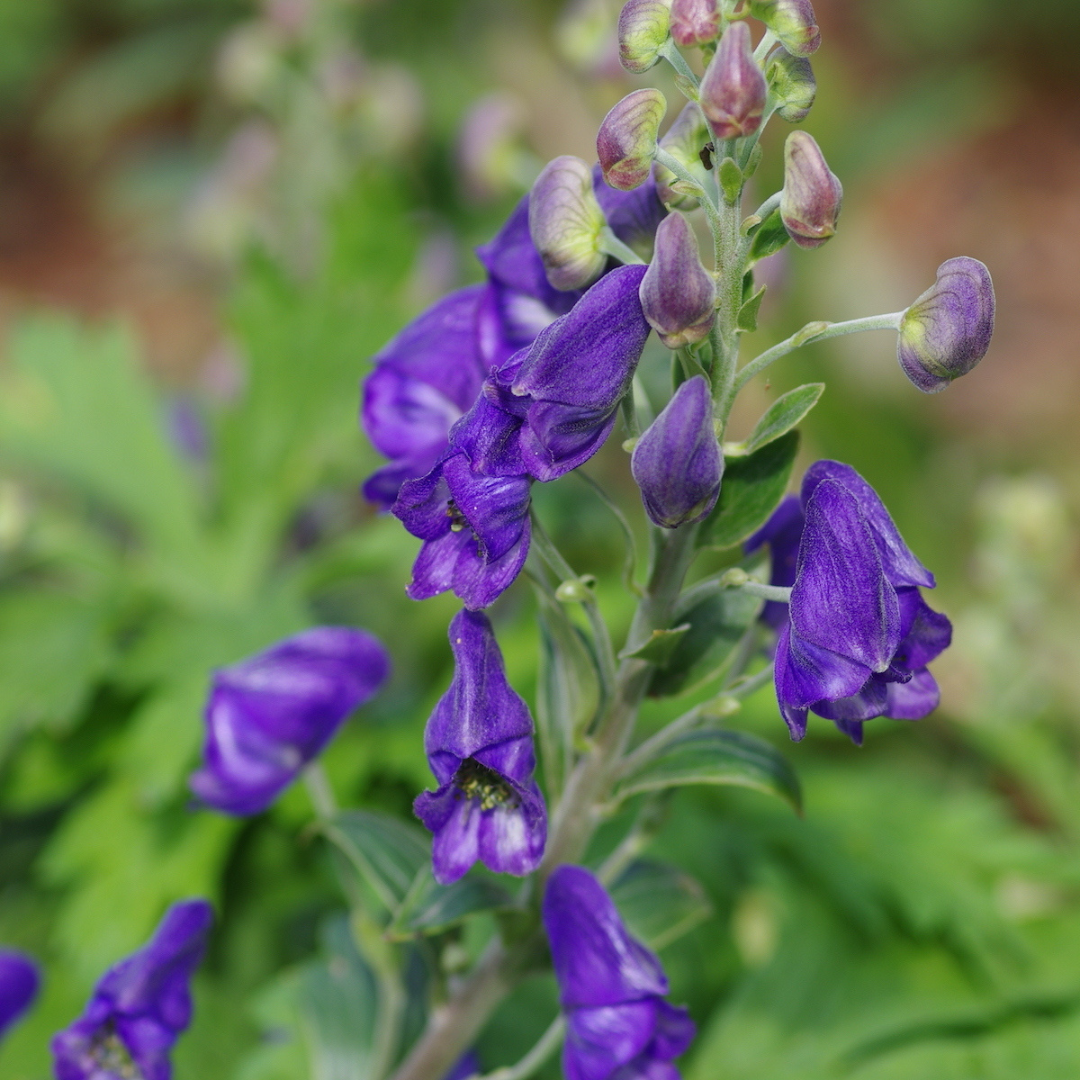
Aconitum carmichaelii 'Arendsii'
- In stock, ready for delivery
Aconitum carmichaelii 'Arendsii': True Blue Spires for the Grand Finale
Deep violet-blue hoods that show up when the rest of the garden is packing for winter. This monkshood is the late arrival who somehow steals the whole party. FASHIONABLY LATE AND DRESSED TO KILL.
Plant Characteristics:
- Botanical Name: Aconitum carmichaelii 'Arendsii'
- Common Name: Autumn Monkshood, Azure Monkshood
- Height: 120–150 cm (4–5 ft)
- Spread: 45–60 cm (1.5–2 ft)
- Flowers: Hooded, deep violet-blue flowers in branched spikes
- Bloom Time: Late summer to mid fall (August to October)
- Foliage: Dark green, glossy and leathery, deeply lobed
- Features: RHS Award of Garden Merit, rabbit resistant, good cut flower, toxic if eaten, can irritate skin
Where to Plant: Plant it at the back of a border or in a part-shade bed where you want late height and true blue colour. Keep it away from vegetable gardens, children's play areas and pets that like to chew. It's very cold hardy, so harsh Ottawa and Montreal winters are no trouble.
Companion Plants: End the season with a moist, part-shade bed that saves its best blue for September. Iris 'Silver Edge' opens blue, silver-edged Siberian iris at 70 to 75 cm in May and June. Polemonium 'Purple Rain' adds violet stars at 50 to 60 cm in June and July over dark foliage. Filipendula 'Venusta' rises behind at 180 to 240 cm with fluffy deep pink plumes from June to August. Deschampsia 'Northern Lights' fronts the bed with cream-striped blades at 30 to 40 cm.
Plant Care: Plant in rich, moisture-retentive, well-drained soil with plenty of compost. It doesn't like drying out in summer, so water during dry spells and keep it away from thirsty tree roots. In hot sites, give it shade from afternoon sun. The stems are thick and sturdy, though they may need support in windy or rich sites. Cut back after flowering or in early spring. Divide every three or four years in early spring. Wear gloves whenever you handle it.
History: 'Arendsii' carries the name of Georg Arends (1863 to 1952), the German nurseryman who founded his nursery at Ronsdorf, now part of Wuppertal, in 1888 and bred some 350 plants that bear his name. The species, Aconitum carmichaelii, comes from eastern Asia.
Final Thoughts: Plant it at the back, wear gloves when you handle it and let the bumblebees crawl inside those hoods. FALL'S MOST DANGEROUS BLUE.