

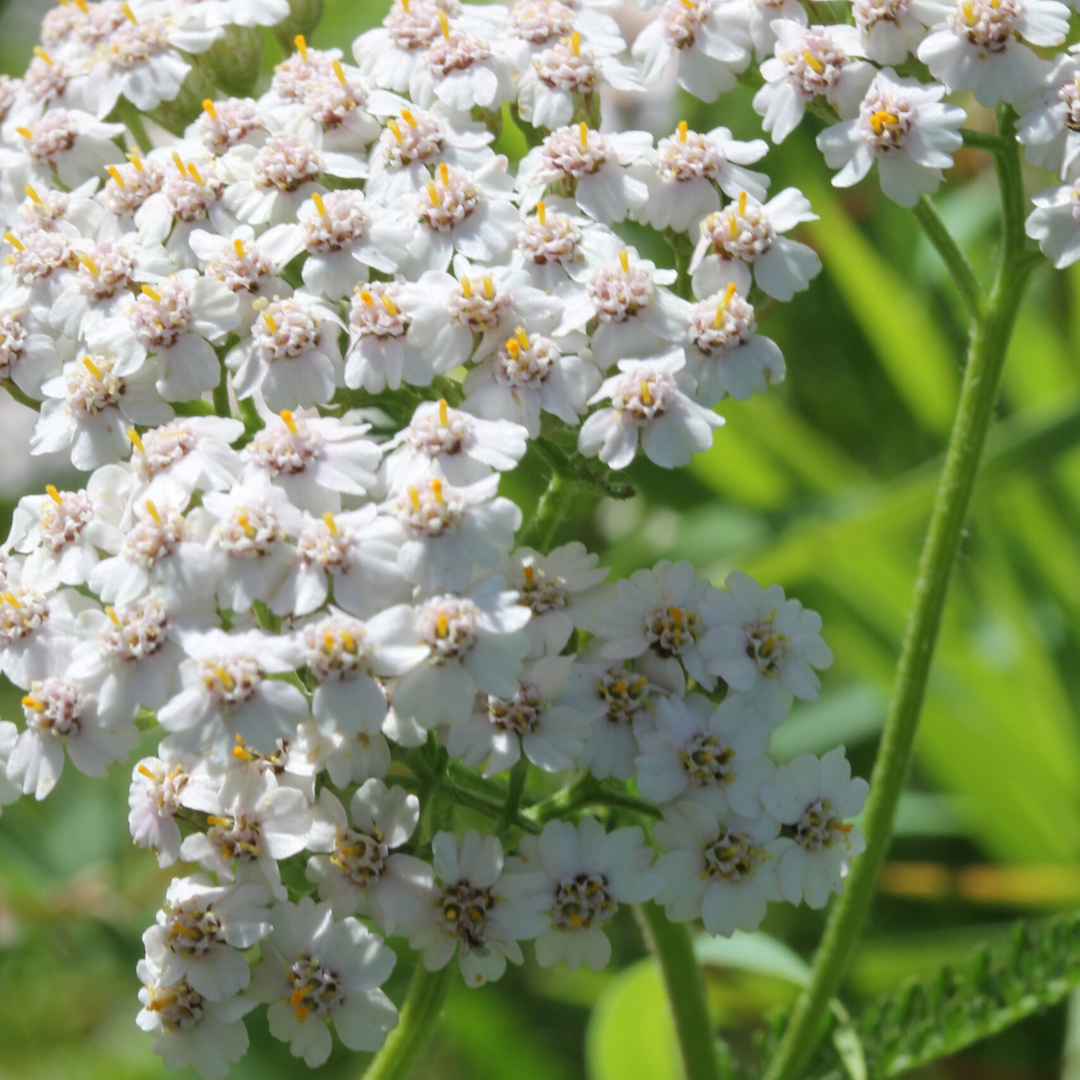
Achillea millefolium
- In stock, ready for delivery
Achillea millefolium: Lacy White Heads, Tough as Gravel
The original yarrow, native to Ontario and Quebec, and it has survived every lawnmower, dry spell and bad winter this country could throw at it. Soft ferny leaves, flat white flowers. GRANDMA'S PLANT. GRANDMA WAS RIGHT.
Plant Characteristics:
- Botanical Name: Achillea millefolium
- Common Name: Yarrow, Common Yarrow
- Height: 60 cm (2 ft)
- Spread: 60 cm (2 ft)
- Flowers: Flat-topped clusters of tiny white flowers
- Bloom Time: Early to midsummer (June to July)
- Foliage: Soft, finely divided, fern-like green leaves with a pleasant scent when brushed
Where to Plant: Common yarrow belongs in meadow plantings, pollinator gardens, naturalized slopes and dry corners where little else wants to grow. It copes well with the hot, lean soil along driveways and boulevards. It spreads by underground runners and can self-seed, so give it room in a meadow rather than a tidy border.
Companion Plants: Plant common yarrow in a dry, sunny meadow-style bed made entirely of native plants. Arctostaphylos uva-ursi carpets the front at 10 to 20 cm with white to pink spring flowers and red berries. Verbena stricta adds lavender-purple spikes at 60 to 100 cm from June to September. Liatris spicata brings tall purple spikes at 90 to 120 cm from July to September, a magnet for butterflies. Andropogon gerardii rises at the back to 120 to 200 cm, blue-green in summer and copper-bronze in fall.
Plant Care: Plant in full sun in lean to average, well-drained soil. Sandy or gravelly soil is ideal; rich, wet soil makes it flop. Water through the first season, then only during long dry spells. No fertilizer needed. Cut spent flower stems back to keep it tidy and reduce self-seeding. Cut back in late fall or early spring. Divide every two or three years in spring to keep the clump in check.
History: Common yarrow grows wild across much of the Northern Hemisphere, including fields, meadows, shores and rocky ledges in Ontario and Quebec, and has a long history in traditional medicine for stopping bleeding. The genus honours Achilles, and millefolium means "thousand leaves".
Final Thoughts: Plant it for the pollinators, plant it for the hot dry corner, plant it because the deer will leave it alone. HOMEGROWN AND HARD AS NAILS.