

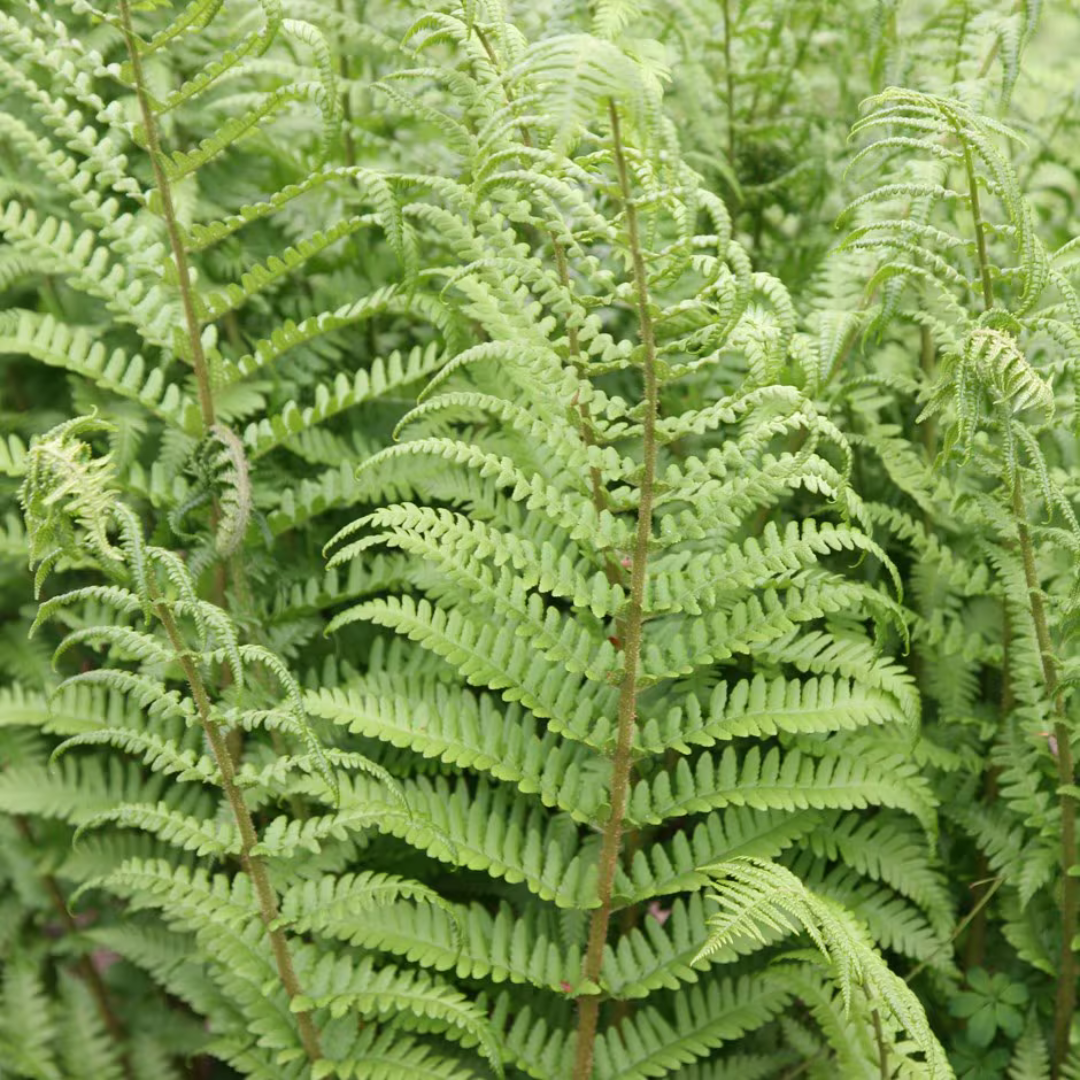
Dryopteris filix-mas
Add to Wishlist- In stock, ready to ship
Dryopteris filix-mas: Tall, Tough and Totally Classic
This native fern doesn't do flashy. Upright green fronds in a tidy vase, a little coppery in fall, and it takes clay, loam or whatever leftovers you've got. THE MOST DEPENDABLE GUEST AT THE PARTY.
Plant Characteristics:
- Botanical Name: Dryopteris filix-mas
- Common Name: Male Fern
- Height: 60–120 cm (2–4 ft)
- Spread: 60–90 cm (2–3 ft)
- Flowers: None. It's a fern.
- Foliage: Upright, dull green, twice-divided fronds in a vase-shaped clump. They turn coppery in fall. Deciduous to semi-evergreen.
- Features: Handles a range of soils
Where to Plant: Use it as the backbone of a woodland garden, to fill the back of a shade border, or to soften the north side of a house. Plant a few in a row along a fence for a summer screen, and don't worry too much about soil, since it handles a range of types.
Companion Plants: Mertensia virginica brings blue bells in April and May while the fern fronds are still unrolling. Ligularia 'Pandora' adds bold leaves and yellow flowers at 30 to 40 cm from July to September. Heuchera 'Autumn Bride' finishes the season with white flowers from August to October. Fine fronds beside broad leaves give this shady corner plenty of texture.
Plant Care: Plant in part to full shade in moist, well-drained soil with plenty of organic matter. It will grow in a wide range of soils, including clay that's been amended, and copes with deep shade. Water well in the first season. Once established it handles short dry spells better than most ferns, but it looks best with steady moisture. Cut back the old fronds in late fall or early spring, before the new fiddleheads unroll. Large clumps can be divided in spring if you want more plants.
History: Male fern has a huge natural range across the northern temperate zone, including Europe, Asia, North Africa and scattered parts of North America such as Ontario and Quebec. The name filix-mas is Latin for male fern, given because it looked sturdier than the lady fern (Athyrium filix-femina).
Final Thoughts: Plant it where the deer have eaten everything else. IT'S STILL THERE NEXT YEAR, ARMS CROSSED.



