



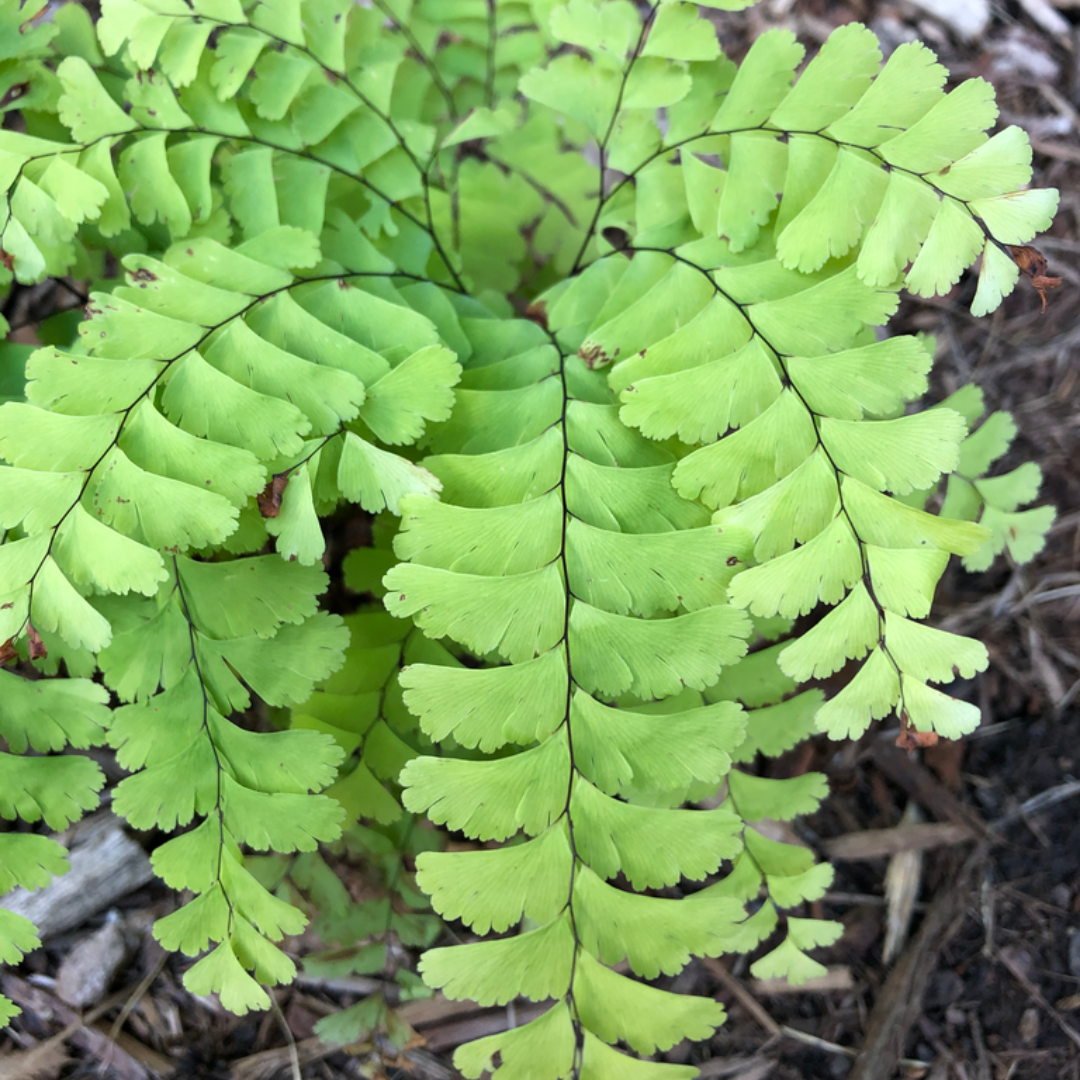
Adiantum pedatum
Add to Wishlist Partial Sun
 Full Shade
 Deer Resistant
 Native
 Low Maintenance
- In stock, ready to ship
Adiantum pedatum: Feathery Fronds, Surprisingly Tough
Bright green fans on wiry purple-black stems, floating like they're posing for a botanical print. Maidenhair Fern is native, delicate-looking and far tougher than its hairdo suggests. THE BEST HAIR IN THE SHADE GARDEN.
Plant Characteristics:
- Botanical Name: Adiantum pedatum
- Common Name: Northern Maidenhair Fern
- Height: 30–60 cm (1–2 ft)
- Spread: 30–60 cm (1–2 ft)
- Flowers: None; ferns reproduce by spores
- Foliage: Bright green, fan-shaped fronds on wiry, glossy purple-black stems
- Features: Rabbit resistant
Where to Plant: Plant it in woodland gardens, shady borders or along a north-facing wall. It's a good choice for the cool side of the house where lawn gives up. It spreads slowly by short rhizomes into a soft, dense patch, so give it a little room.
Companion Plants: Helleborus HGC® Pink Frost opens pink flowers from March to May, long before the fern fills out. Astilbe 'Amethyst' adds purple plumes in June and July at 90 to 100 cm. Tricyrtis hirta closes the season with white flowers in August and September. All three are at home in shade to partial shade.
Plant Care: Plant in rich, humus-filled, moist but well-drained soil. Add leaf mould or compost at planting time. Keep it out of hot afternoon sun, which burns the fronds, and water during dry spells, especially in its first year. It takes two or three seasons to settle in and fill out, so be patient. Cut the old fronds back in late fall or early spring, before the new fiddleheads appear. Divide in early spring if you want to spread it around.
History: Northern maidenhair fern grows wild in rich, moist hardwood forests across eastern North America, including Ontario, Quebec and the Maritimes. The genus name comes from the Greek for unwetted, since water beads up and rolls off the fronds.
Final Thoughts: No flowers, no fuss, no deer, just fronds fanning themselves under the trees. ZERO PRODUCT. ALL NATURAL VOLUME.



