



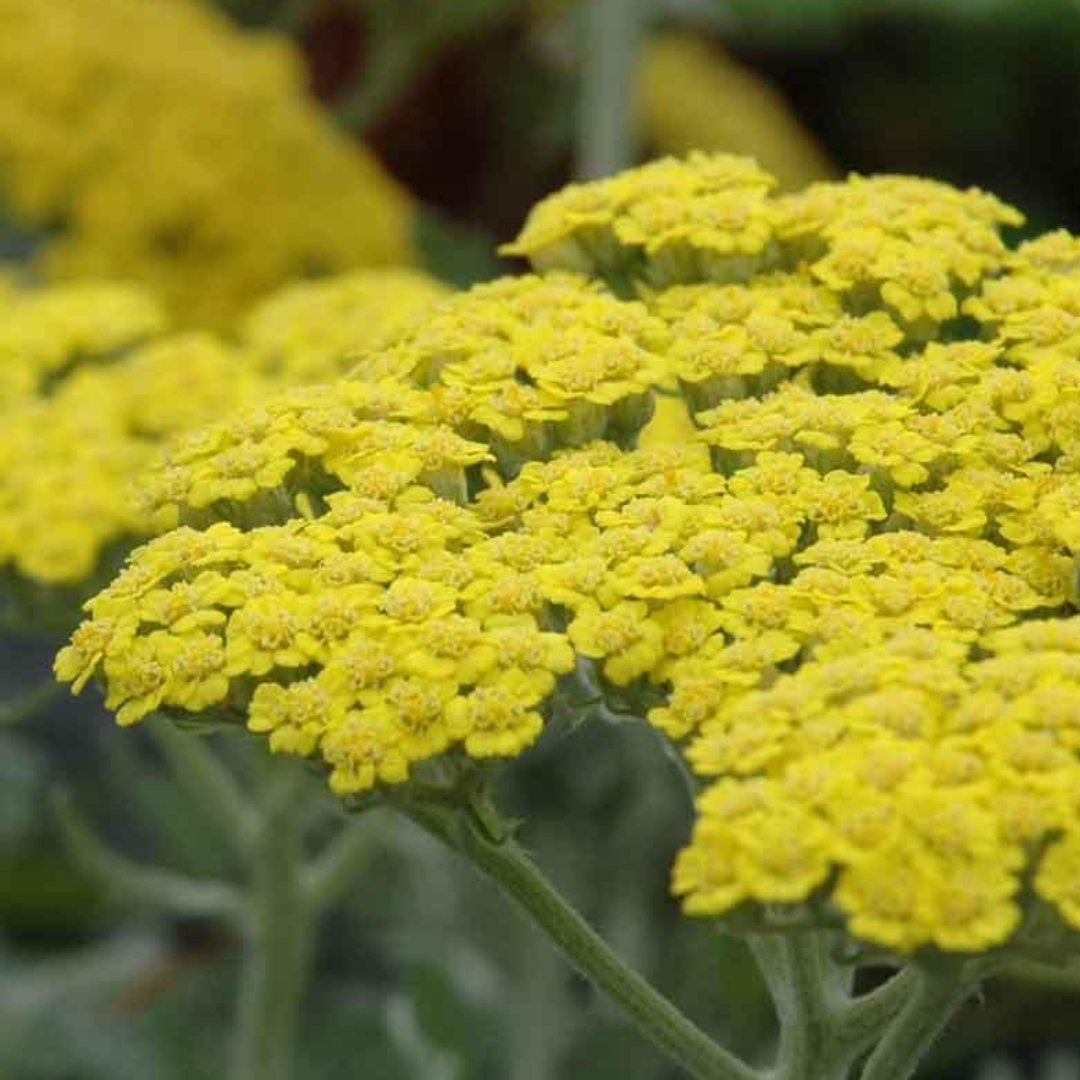
Achillea 'Moonshine'
Add to Wishlist Full Sun
 Drought Tolerant
 Deer Resistant
 Pollinator Friendly
 Low Maintenance
- In stock, ready to ship
Achillea 'Moonshine': Soft Lemon Heads on Cool Silver Leaves
Silver-grey lace topped with flat lemon-yellow plates, glowing like it was distilled in somebody's back shed. 'Moonshine' asks for sun and nothing else. NO WATERING SCHEDULE, NO SUPERVISION, NO REGRETS.
Plant Characteristics:
- Botanical Name: Achillea 'Moonshine' (hybrid)
- Common Name: Yarrow
- Height: 45–60 cm (1.5–2 ft)
- Spread: 30–60 cm (1–2 ft)
- Flowers: Flat-topped clusters of sulphur to lemon yellow, about 5–8 cm (2–3 in) across
- Bloom Time: Early summer to late summer (June to September)
- Foliage: Finely divided, aromatic, silver-grey
- Features: Good for cutting and drying
Where to Plant: Plant it at the front or middle of a sunny border, in a gravel or rock garden, or along a hot, dry strip by the driveway. The silver leaves help cool down a hot colour scheme. Tuck a few into the cutting garden too, since the flowers cut well and dry beautifully.
Companion Plants: Lavandula 'SuperBlue' makes a low blue edge in front from June to August. Allium giganteum opens big purple globes on tall stems in May and June, before the yarrow starts. At the back, Panicum Prairie Winds® 'Totem Pole' rises to 180 cm and holds the bed together from late summer through fall. Give the whole group full sun.
Plant Care: Give it full sun and lean, well-drained soil. Sandy or gravelly ground suits it best. Rich soil, heavy feeding or too much water make the stems soft and floppy. Heavy, wet clay over winter is a problem, so improve drainage before planting there. Water through the first season, then only in long dry spells. Deadhead spent flower stems to keep new flowers coming. Cut the plant back in late fall or early spring. Divide every three or four years in spring to keep the clump vigorous.
History: 'Moonshine' was introduced in the 1950s by Alan Bloom of Bressingham Gardens in Norfolk, England, and is generally attributed to a cross of Achillea clypeolata and Achillea 'Taygetea'. It received the Royal Horticultural Society's Award of Garden Merit in 1993.
Final Thoughts: Cut a few for a vase, dry a few for winter and leave the rest for the butterflies. THIS IS THE GOOD STUFF, AND IT POURS ALL SUMMER.



